

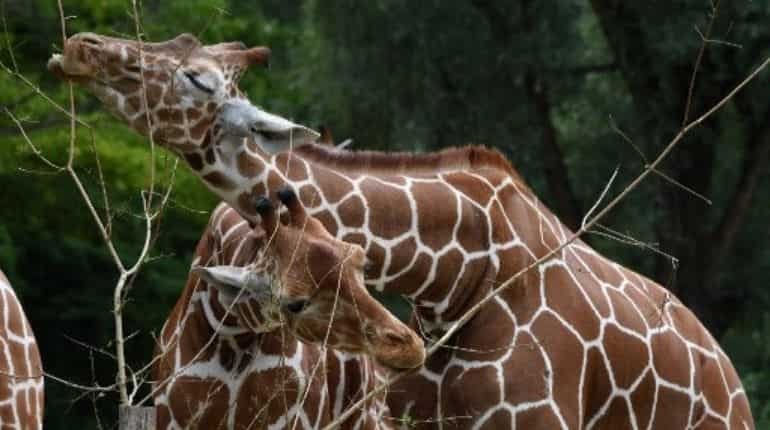
Giraffes are among the tallest animals in the world, with exceptionally long necks. Previous theories suggested that sexual desire and a desire to dominate other males in order to secure mates may have led to the evolution of their long necks, but a new study refutes this conclusion. Biologists at Pennsylvania State University have found that nutritional needs may have driven this evolution.
“Female giraffes, on average, have longer necks.”
In their analysis, the researchers found that female giraffes have proportionally longer necks than males, which leads them to believe that the need to go deeper into trees to find food is behind the evolution of longer necks.
Males have thicker necks and longer front legs, while females have proportionally larger necks and bodies — a pattern seen in both captive and wild giraffes.
“Instead of reaching down to grab leaves from the highest branches, giraffes, especially females, are often seen reaching deeper into the trees,” said Doug Kavenar, a biologist at Pennsylvania State University and lead author of the paper.
“Giraffes are picky eaters and will only eat leaves from a few types of trees. Their long necks enable them to reach deep into trees to get leaves that other animals cannot. Once females reach the age of four or five, they are almost always pregnant and lactating, so we believe their increased nutritional needs are the reason for their longer necks,” he added.
The theory behind sex with the neck
The “sex-neck” hypothesis argues that the main reason for the evolution of long necks is male competition, or “neck sparring,” in which male giraffes shake their heads and bump into each other to demonstrate dominance. Males with longer necks have an advantage in these contests, facilitating reproduction and the transmission of genes to their offspring.
“The neck sex hypothesis predicts that males have longer necks than females,” says Cavener, “and yes, they do have longer necks, but all of the males are longer than the females, and are 30 to 40 percent larger than the females.”
(With input from relevant agencies)
)
