

NEW ORLEANS (WGNO) — Good bread is one of those simple foods that brings joy, but for those watching their carbs, a sandwich craving can feel like you should choose something else.
So first of all, don’t blame bread, especially if it’s a good quality bread like traditional sourdough or a coarse wholemeal bread. Include bread in your macro allotment just like you would any other whole grain, fruit, or milk.
However, if it’s something you consume regularly, it makes sense that it would be better if it was low in carbohydrates yet highly nutritious.
So, from sliced bread to bagels to tortillas, we’ve handpicked the top five best breads: three of them are naturally gluten-free, four are low in carbohydrates, and the fifth is wheat-based yet highly digestible.
5 Top Picks for Better Bread
Base Culture Sliced Bread | GF, Grain Free, Low Carb
- Ingredients include eggs, almond butter, golden flax seeds, psyllium husk powder, almond flour, apple cider vinegar, chia seeds, and sea salt.
- Per slice [7 Nut & Seed variety]: 100 calories, 7g fat, 4g net carbs, 4g fiber, 3g protein
Better Bagel | Low carb, high protein
- Ingredients include wheat protein isolate, added fiber, agave fiber, sea salt, enzymes and yeast.
- Per bagel: 160 calories, 2 grams fat, 5 grams net carbs, 35 grams fiber, 26 grams protein
Siete Foods Almond Flour Tortilla | GF, Grain Free, Low Carb
- Ingredients: Almond flour, tapioca flour, sea salt, xanthan gum
- Per wrap: 95 calories, 5g fat, 10g carbs (8g net carbs), 1.5g fiber, 3g protein
Outer aisle cauliflower sandwich | GF, grain free, low carb, good source of protein
- Ingredients include cauliflower, cage-free eggs, Parmesan cheese, and nutritional yeast.
- Per 2 servings: 100 calories, 5g fat, 3g carbohydrates, 1g fiber, 9g protein
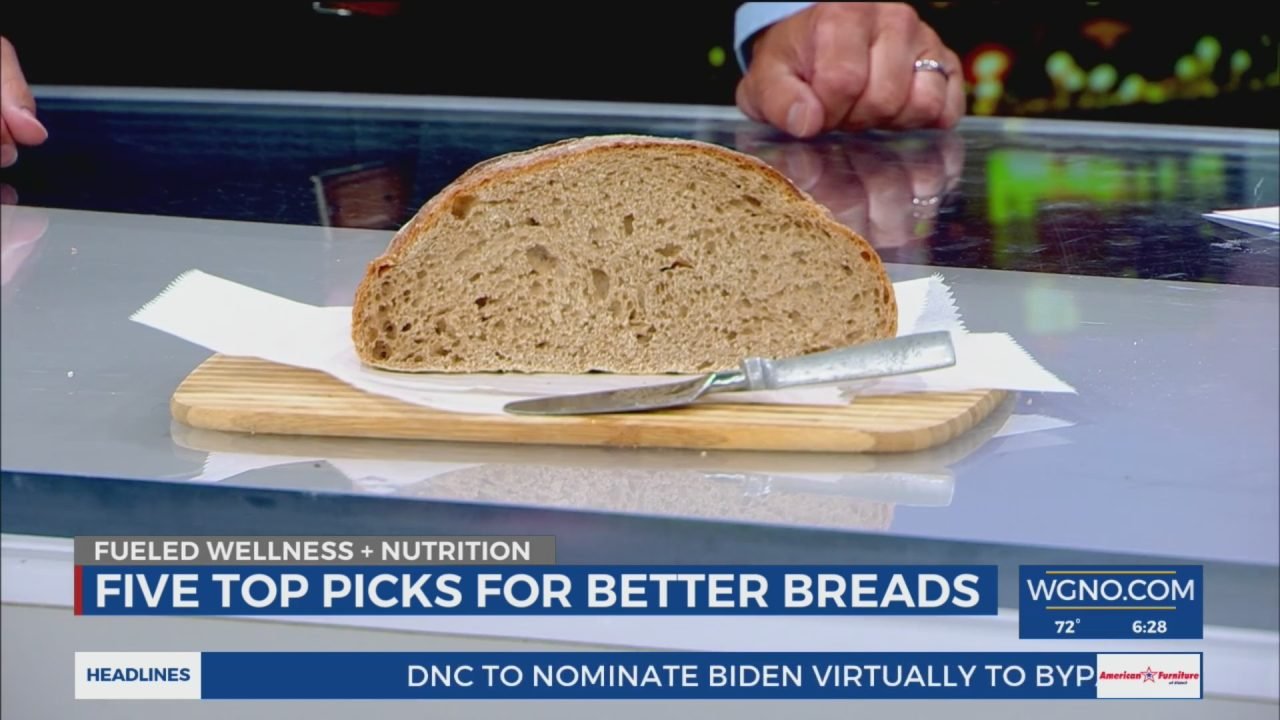
Whole Wheat Sourdough Bread | Whole wheat flour, water, salt
- There is no added yeast, instead traditional sourdough uses environmental yeast to ferment flour and water resulting in a beautifully crisp and delicious bread.
- Proof time is important. Most commercial bread baking methods in the United States only partially proof the dough and then add commercial yeast to speed up the proofing. Shorter proof times typically result in a higher glycemic index and higher amounts of undigested gluten. Traditional bread-making processes, such as homemade sourdough, allow the dough to proof for a longer period of time to allow the yeast and bacteria to activate enzymes that help “digest” the gluten.
Read more from Molly about healthy bread.
FUELED Wellness + Nutrition is powered by evamor. For more information, visit evamor.com.
•
Molly Kimball, RD, CSSD is a registered dietitian and nutrition journalist in New Orleans and founder of the nonprofit restaurant initiative Ochsner Eat Fit. Listen to her podcast, FUELED | Wellness + Nutrition, and follow her on Facebook, Instagram, and Twitter @MollyKimballRD. Find more of Molly’s articles and TV shows at www.mollykimball.com, and sign up for the Eat Fit Wellness Bites weekly newsletter here.

Download the WGNO app on the Apple or Google Play store and subscribe to the WGNO newsletter for the latest news, weather and sports information.
