

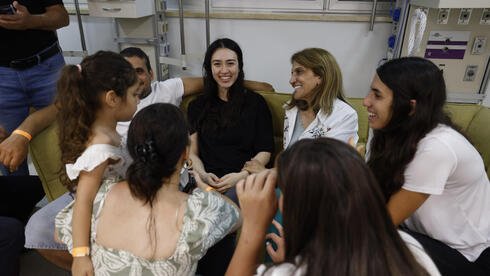
Starving prisoners might conjure images of the Holocaust: haggard faces, hollow eyes, ribs protruding from the skin. When four Israeli hostages were rescued and returned home this month, the world was pleasantly surprised to find that to the naked eye they looked healthy.
“They’re not OK,” said Dana Weiner, director of nutrition at Sheba Medical Center. She was referring to the recently rescued hostages, but also those released in November. “They’re very sick, suffering from severe malnutrition and serious vitamin and mineral deficiencies. It’s going to take them a significant amount of time to physically recover to where they were before October 7.”
Four View Gallery
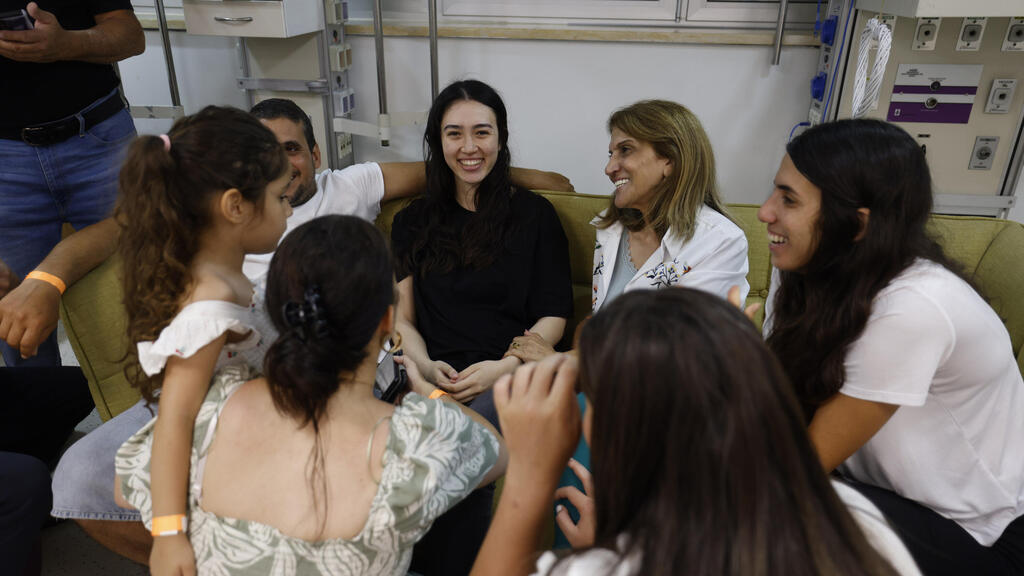
Rescued hostage Noah Al-Ghamani and his family
(Photo: Ziv Koren )
The World Health Organization (WHO) defines malnutrition as “a deficiency or excess in nutritional intake, an imbalance in essential nutrients, or impaired nutrient utilization.” Dana Weiner explained that the WHO sets minimum standards for “nutritional security” (the essential intake needed for survival) and has clear guidelines for identifying hunger, especially in disaster and war zones. According to Weiner, these guidelines recommend a food supply of at least 2,100 calories per person per day to ensure nutritional security and prevent disease and death. She noted that returning hostages received much less than this standard, typically 500 to 800 calories per day.
She said that for the first few months, the hostages were only able to consume about a tenth of their calorie needs and no protein at all — over time their diets improved slightly, but they were still getting just 0 to 10 grams of protein a day, far short of the roughly 100 grams they needed.
The result is a significant loss of muscle mass, strength and performance – a condition medical experts refer to as sarcopenia.
“When you’re in this state, your body breaks down available reserves, primarily muscle,” Wiener explained. “We often think of muscle as being in your arms and legs, but it also includes internal organs like your heart, stomach and diaphragm.” She said that in extreme conditions, the body focuses on the functioning of the heart, brain and respiratory system and shuts down other functions, which can lead to damage to internal organs.
Four View Gallery
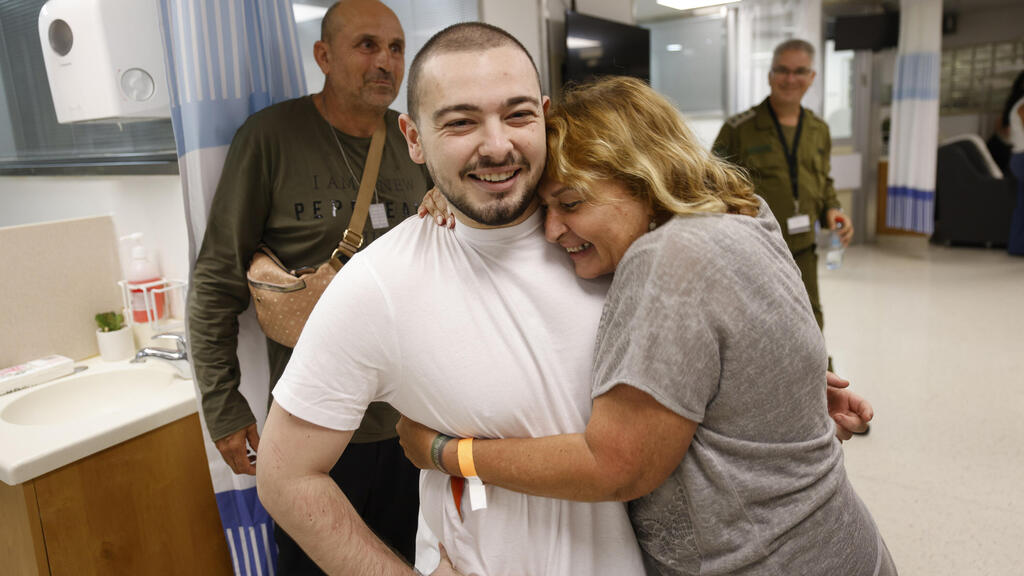
Rescuing Almog Meir and his mother from hostage
(Photo: Ziv Koren)
“We did strength testing,” Weiner added, “and the results were below the low end of our charts.”
The team, led by nutritionist Meital Binyamin, also had to give the rescued hostages vitamin supplements, as they needed Vitamin D due to lack of sunlight, as well as Vitamin B, essential for brain function.
She explains that the hostages did not appear to be particularly thin, because under conditions of extreme starvation, the body stores excess calories as fat, and, unlike the Holocaust, these victims were not forced to work, but rather were sedentary.
“We have similar findings from the Holocaust in that they were starving, but we know that they lost weight because they were working despite being starving, so they lost a lot of energy,” Weiner said. “They were locked in rooms. They didn’t move, and even if they tried to exercise, they didn’t have the protein to build their bodies.”
Wiener noted that many of the 105 hostages released in November had lost up to 15 kilograms during their captivity – more than 10 percent, and sometimes as much as 15 percent, of their normal body weight. This significant weight loss puts them at high risk of malnutrition and other illnesses. Wiener added that their conditions were generally less severe, as they had only been in captivity for around 50 days, compared to 250 days for those like Al-Ghamani, Yang, Kozlov and Ziv.
But she noted that medical studies have shown that malnourished people tend to suffer more complications if hospitalized and have a higher risk of death.
Wiener emphasized that the hostages were starving, even though there was no food shortage in Gaza. She explained that analysis showed that more than 3,000 calories per person entering Gaza would be more than enough to feed the hostages. Wiener said residents and hostages did not receive food because Hamas controlled distribution and restricted access.
“There is no hunger in the Western world,” Weiner added. “We don’t really see this kind of malnutrition.”
Most of the hostages now released or rescued are arriving in a state where recovery is still possible. But the older generation initially released, who already had underlying health conditions, face even greater challenges in physical rehabilitation. Their chances of making a full recovery are significantly reduced, Wiener said.
Four View Gallery
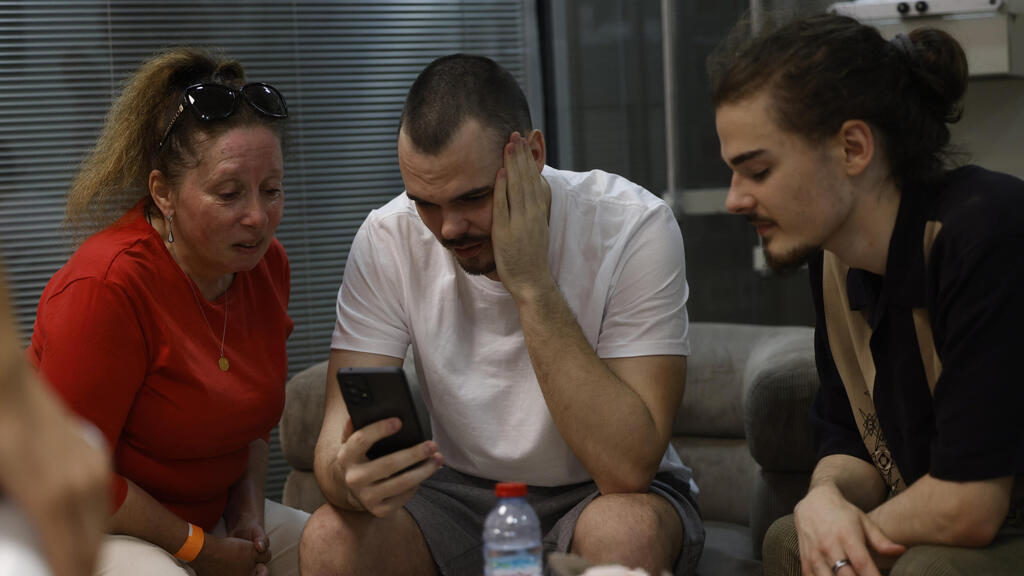
Rescued hostage Andrey Kozlov and his family
(Photo: Ziv Koren )
One hostage suffered serious lung and heart damage, another had trouble swallowing and was unable to eat, and one has dental problems.
“It depends on a lot of factors, including age, whether they’re in a tunnel or a house, how much food they have in the environment, and the physical condition they’re in when they’re abducted,” Weiner says. “Every person is different.”
There are currently 120 hostages still in Gaza who were taken on October 7, and Israel says it knows of at least 41 who have died. Wiener said he didn’t want to cause any grief to the families of those still being held, but warned that there may already be lasting effects for those in poor health who remain in Gaza.
“There’s a point of no return,” Weiner warned.
“The resilience of people is incredible.”
Professor Hagai Levine, who heads the medical team at the Forum for Hostage and Missing Families, said it’s important to include hostage families in the rehabilitation process. He noted that many families have been fighting for nearly nine months to bring their loved ones back, but now they are often focused on rehabilitation and neglecting their health. Levine added that many of the family members are experiencing increased addictions, including smoking, poor eating habits, stress and mental health issues. “Families also need to be taken into account,” Levine said.
Levin advocates for the establishment of a national rehabilitation program for hostages and their families, including specialized centers offering essential services and a platform for doctors to conduct research, which he said could contribute to the development of international protocols and best practices for hostage health care.
He suggested conducting regular questionnaires and health checks on hostages and their families, which he said would allow experts to gather insight into which interventions are most and least effective and help the country improve its reintegration strategies.
“On the one hand, rehabilitation is personal,” Levine told The Media Line, “and on the other hand, we can learn some lessons from what we’ve seen about what we need to understand about rehabilitation.”
Four View Gallery
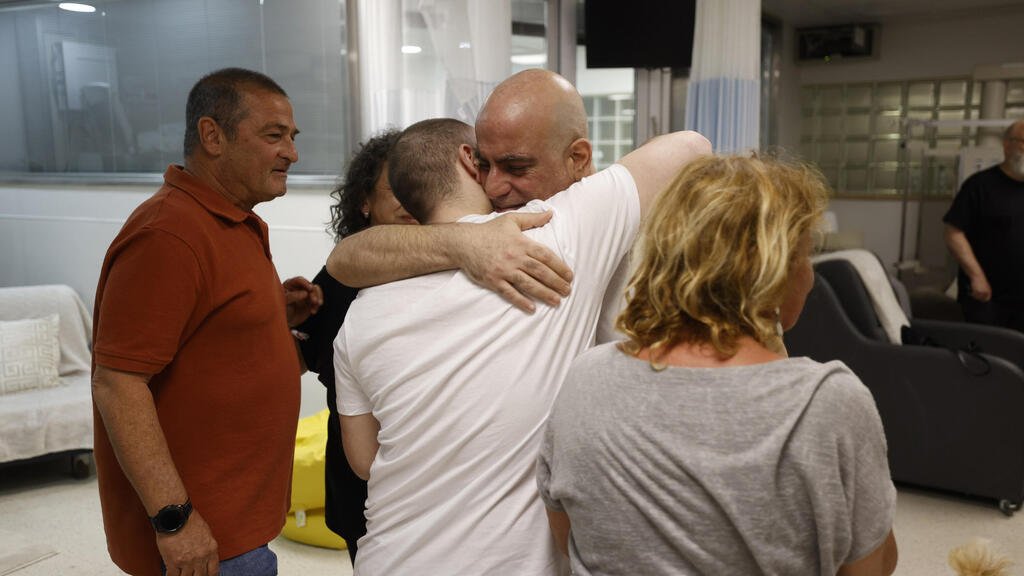
Hostage Shlomi Ziv and his family rescued
(Photo: Ziv Koren )
He said rehabilitation must be holistic, covering “the entire human lifespan.” This includes returning to work, achieving independence, socializing, forming relationships, starting a family and resuming roles as a parent or child. Rehabilitation must also address mental health issues such as sleep and eating disorders, anxiety and depression, and the physical effects on the respiratory, cardiovascular, bone and metabolic systems.
“On the positive side, people are incredibly resilient and there is hope that they will find meaning and bounce back despite very difficult circumstances,” Levine added. “But it’s going to be a very long and difficult struggle.”
