

At night, “a gentle or oil cleanser is best for mature skin,” Magoburn continues. “I prefer a gentle cleanser at night, as the subsequent steps tend to be more active products.” You can also exfoliate as part of your nightly routine one to three times a week. “It may seem counterintuitive, but exfoliating your skin actually helps with moisturization, as it removes dead surface cells that make it harder for moisturizers to penetrate and work effectively,” Magoburn says. “Exfoliants also help stimulate collagen production.” For mature skin, she recommends chemical exfoliants that contain gentle AHAs, such as glycolic or lactic acid, or PHAs, such as gluconolactone, which have moisturizing and antioxidant properties.
The penultimate step before bed is to apply a treatment serum with active ingredients like retinol or peptides that stimulate cell turnover and repair. “Sleep is a time when your cellular machinery is actively restoring and repairing, making it the perfect time to give your skin the nutrients it needs to carry out its nighttime duties,” Magoburn points out.
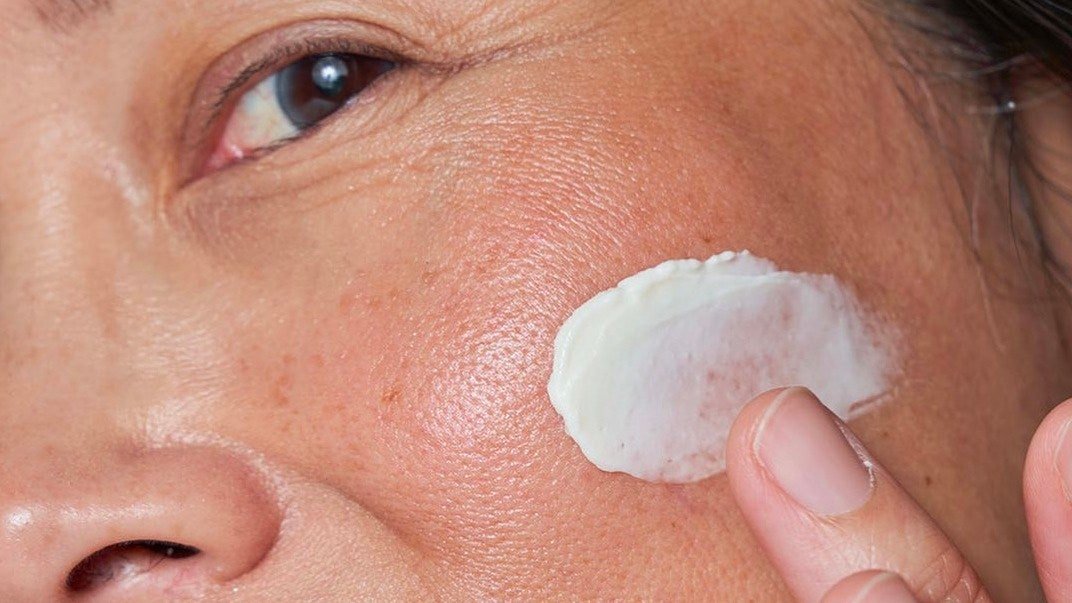
Finally, apply a facial moisturizer to help your skin attract and retain moisture throughout the night. “Sealing your skin with a moisturizer allows the active ingredients you used in the previous step to penetrate deeper and work more effectively,” she says. “The moisturizing step is important to keep your skin nourished and hydrated while you sleep.”
What are the most effective ingredients in a moisturizer for aging skin?
“Humectants like hyaluronic acid and glycerin are important for attracting and retaining moisture in the skin,” says Ashley Magoburn, M.D., a board-certified dermatologist in Manhattan Beach, California, and medical advisor to Dermstore. “But other ingredients are also important in aging skin. Once you’ve attracted moisture, it’s important to lock it in and prevent moisture loss.” Occlusives like jojoba seed oil and shea butter help lock moisture in, while ceramides (lipids that help maintain and repair the skin barrier) “are essential in moisturizers,” says Magoburn.
Additionally, “using a moisturizer containing retinol, or a retinoid or retinol serum in addition to your moisturizer, can help improve elasticity, texture, pigmentation, and wrinkles,” says Nazanin Saedi, MD, FAAD, a board-certified dermatologist in Philadelphia. “Caffeine plumps the skin and temporarily improves the appearance of sagging and wrinkles. Other ingredients to look out for are peptides, vitamin C, niacinamide (vitamin B3), and growth factors, which stimulate and support collagen production.”
What is the ideal texture for a moisturizer for aging skin?
“As a rule of thumb, the higher the viscosity, the more effective it is at locking in moisture by literally creating a barrier on the outermost layer of skin and preventing water from evaporating from the skin’s surface,” says Tony Nakura, M.D., medical director of the OC Skin Institute in Orange County and founder of Eighth Day. “The more occlusive the product is, the more hydrating it will be.”
