


Ollie (Inc) uses AKC and AAHA research studies and news articles to debunk common misconceptions about dog health. – alexei_tm // Shutterstock
Colleen Kilday
A healthy puppy means a happy companion for many years to come, but it’s not always clear what guidelines to follow when it comes to dog health. Even the widely held belief that dogs only see in black and white has been proven false; in fact, dogs see in a range of blue and yellow. Other practices, such as tail docking, have evolved since Roman times with the aim of protecting dogs from disease and injury, but in the modern world, in places such as the UK, Australia and two US states, it is considered a form of mutilation with no medical basis.
Sometimes they make claims without any factual basis: for example, grain-free dog food accounted for approximately 44% of the North American pet food market in 2020, yet gluten intolerance in dogs is extremely rare, and grains are actually nutritious and beneficial in a dog’s diet.
Either way, your best source for dog health advice is your veterinarian, who knows your dog’s medical history, as the best strategies for your dog’s health vary widely depending on the breed, age, and unique needs. For less urgent information, refer to articles that cite reliable sources, like veterinary organizations and peer-reviewed studies.
To better clarify facts and fictions when it comes to dog health, fresh dog food brand Ollie (Inc) used research studies and news articles from the American Kennel Club and the American Animal Hospital Association to clarify five common myths.

Irina Nedikova // Shutterstock
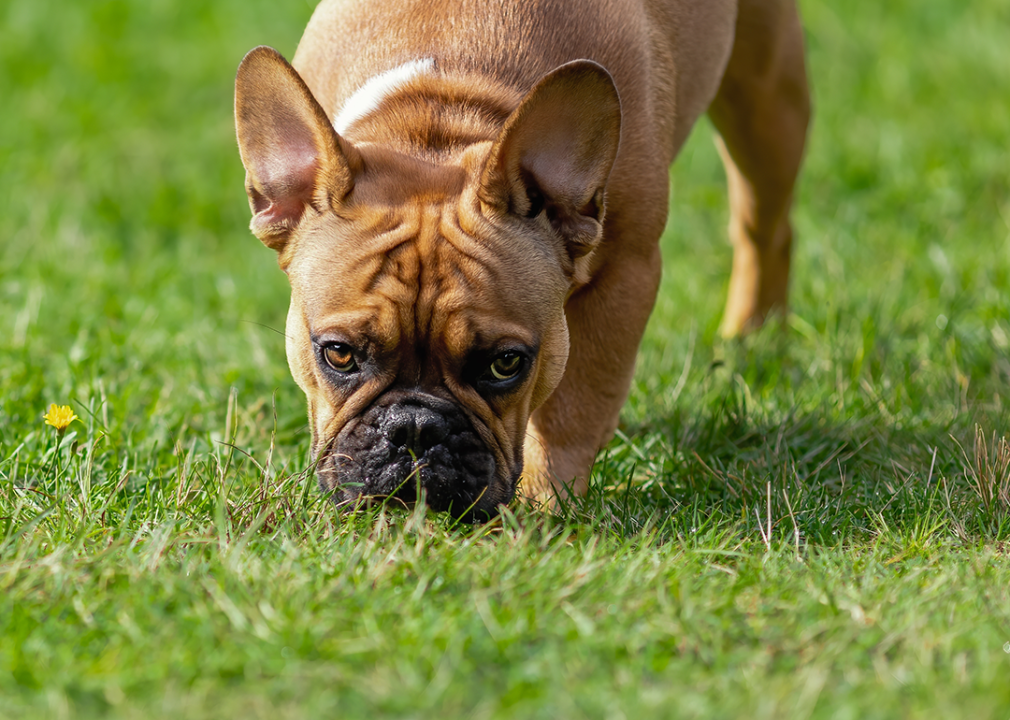
Dogs eat grass when they’re sick
The idea that dogs eat grass to soothe an upset stomach or to help them expel it has been rumored more than the grass itself. A 2010 study published in the journal Applied Animal Behavior Science found that dogs experiencing gastrointestinal upset were actually less likely to eat grass. This makes sense, considering dogs can’t digest grass, so there’s little benefit to ingesting it.
Experts at VCA Animal Hospital theorize that dogs eat grass because of curiosity, hunger, boredom, or to get their owner’s attention — in other words, it’s normal behavior. Analysis of wolf feces has found large amounts of grass, suggesting that foraging for plant matter is consistent with instinctual behavior.

Douce Fleur // Shutterstock
Dog breath smells awful
Considering how many foul-smelling things dogs put in their mouths, it’s not necessarily surprising that Fido’s kisses are a little more intolerable than usual. According to the AKC, lingering bad breath can be a sign of an underlying health problem. Interestingly, dog saliva is more alkaline than human saliva, making it less conducive for odor-causing bacteria to thrive.
As in humans, the main cause of bad breath is poor oral hygiene and can be alleviated by increased brushing, however bad breath accompanied by symptoms such as changes in appetite or elimination can also be a sign of liver or kidney disease.
KPhrom // Shutterstock
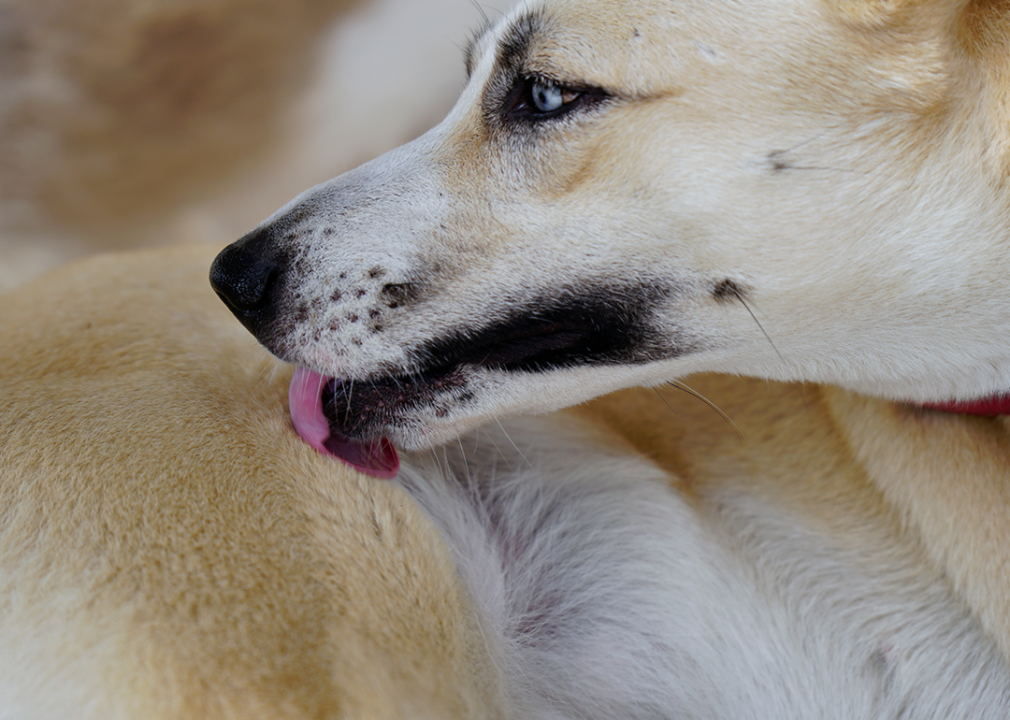
Dogs frequently lick themselves to groom themselves
Dogs lick to groom themselves, but excessive licking is often a sign of skin irritation or discomfort, which can have a variety of causes and can lead to bigger problems. Dogs instinctively lick inflamed areas or wounds to remove potential pathogens and promote healing. Although dog saliva has healing properties, the act of licking is generally not recommended as a treatment method, as the act is likely to infect wounds with bacteria.
If there’s no obvious cause for skin trouble, like redness or fleas, excessive licking could be due to allergies. According to the AAHA, about 1 in 10 dogs suffer from skin allergies, which is the most common allergic reaction in dogs.

New Africa // Shutterstock
Dogs are carnivores
Dogs are carnivores, but they do not eat meat exclusively – even giant pandas, which eat almost exclusively bamboo, are technically carnivores by this standard.
However, their eating habits stem from their ancestral roots, and it is true that wolves also eat large amounts of plant material. One of the main differences between a wolf’s and a dog’s digestive system is that dogs can produce amylase, which is used to break down grains in their digestive system. Additionally, according to the AAHA, meat and grain-based materials are equally digestible for dogs.

Nikalet // Shutterstock
One dog year is equivalent to seven human years
It’s a sad fact that dogs live much shorter lives than their owners, but it’s not as simple as seven human years to one dog year. The origins of this saying are unclear, but it likely originated at a time when the average human lifespan was around 70 years and the average dog lifespan was 10 years.
In reality, a dog’s estimated lifespan varies widely by breed and size, and is a bit more complicated than multiplying by seven. According to the AAHA, a dog’s first year of life is the developmental equivalent of 15 human years. The second year adds about nine human years. From there, size affects the pace of aging, with small dogs living much longer than larger dogs. Either way, quality time is more important than quantity of time. Maybe an extra trip to the dog park would help?
Story editor: Carren Jao. Copy editor: Paris Close.
This story originally appeared in and was produced by Ollie (Inc)
Distributed in partnership with Stacker Studio.
