

Maintaining physical and mental health is essential to the success of your organization
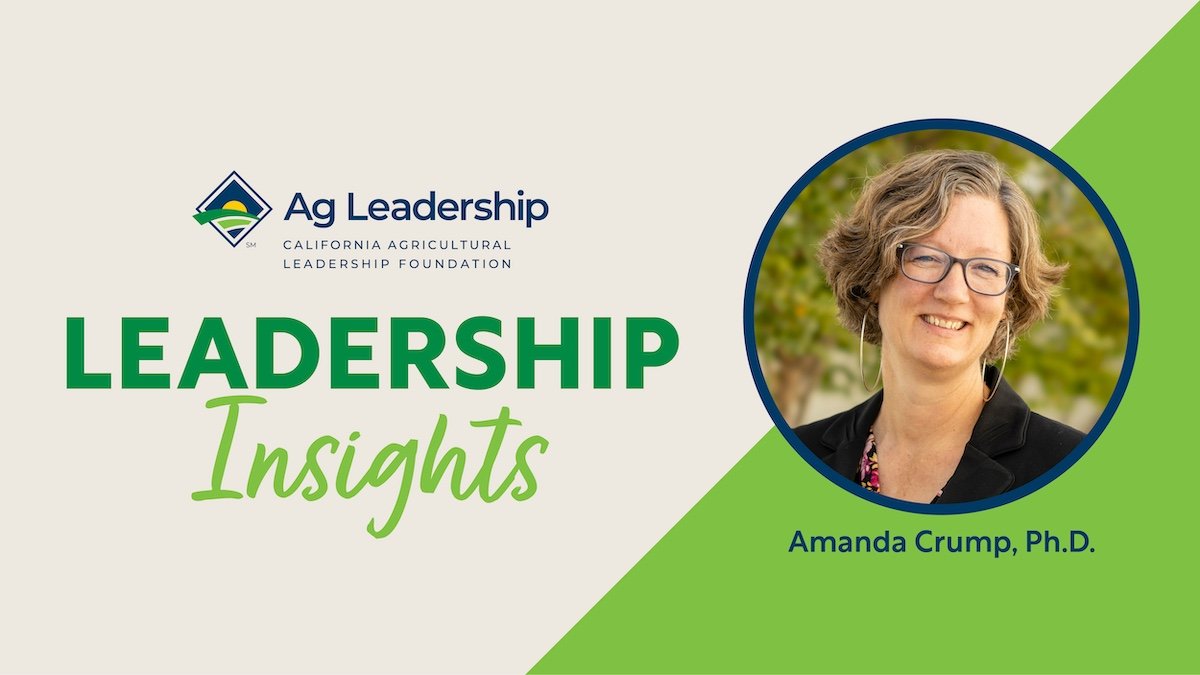
Dr. Amanda Crump is an associate professor of international agricultural development at the University of California, Davis, one of four partner universities of the California Agricultural Leadership Foundation (CALF). She is a core faculty member of CALF. (Image provided)
Monterey, California — leadership Insights is California Agricultural Leadership Foundation In partnership with Morning Ag Clips, we will be digging deep into key aspects of agricultural leadership, with academic and agricultural industry leaders providing valuable perspectives and strategies.
I’ve been thinking recently about the complex relationship between health and leadership. I’m dealing with new health challenges and learning how to continue working while taking better care of my own health. In an industry that is as challenging as the crops we grow, maintaining our physical and mental health is not just a personal pursuit but a strategic imperative for organizational success. Through my journey and experiences, I’ve realized that promoting health among ourselves and our teams is not just about our personal health but also cultivating the resilience of our organizations to withstand any storm.
What is resilience?
Many people say that resilience is the ability to bounce back from hardship. Resilience isn’t just about bouncing back from adversity, it’s about embracing change and moving forward with renewed vigor and adaptability. This concept resonates deeply with me, especially in the agricultural sector, where uncertainty is always present.
My research group studies farm resilience in the face of climate change. We’ve worked with rural communities that have battled annual wildfires and with women farmers rebuilding small urban gardens after hurricanes. We’ve come to understand that resilience doesn’t just include the ability to withstand hardship, it also includes the ability to learn and grow from it. Resilience is about building a sound foundation so we can weather the ups and downs of our industry with grace and determination. With a solid foundation, we can move forward.
Health impacts leadership
What does wellness look like in agriculture and how does it relate to leadership? The answer lies in recognizing that true resilience begins within ourselves. As leaders, we must understand that our own health sets the tone for the entire organization and make our physical and mental health a priority. In their research on leadership and wellness, Ross and Squires emphasize the importance of self-awareness and self-care in leadership development, highlighting how personal health is directly correlated to leadership effectiveness.
Additionally, Sharon McDowell-Larsen’s research highlights the profound impact health has on leadership. She identifies four components of health (physical, emotional, mental, and social well-being) that are pillars that support our ability to lead with clarity, empathy, and resilience. Prioritizing these aspects of our own health creates a ripple effect that trickles down to our team and beyond. I’ve certainly learned this over the past year. When I prioritized my health, my research team began to prioritize theirs, too. I noticed that more of my research team shared their health journeys with me and took time off work to seek counseling, go to the doctor, or attend workshops.
In agriculture, where land and market demands often feel overwhelming, cultivating wellness isn’t just a nice thing to do — it’s a strategic imperative. When leaders model healthy behaviors and prioritize the health of their teams, they lay the foundation for organizational resilience. This idea is also echoed in an insightful podcast from Utah State University’s AgWellness initiative, which highlights the importance of cultivating a culture of wellness within the agricultural community. To learn more, https://extension.usu.edu/agwellness/podcast/.
A supportive ecosystem
Promoting health is not just an individual effort. It’s about cultivating a supportive ecosystem in which everyone can thrive. The California Agriculture Leadership Program has a strong focus on health in our current classes. Each seminar includes an aspect of physical, emotional, mental or social health. Drawing inspiration from research and speakers, we learn with each seminar that organizational health is a collaborative effort. Aligning values and priorities can create a shared sense of purpose that allows for resilience in the face of adversity.
It is important to recognize that resilience is not a fixed trait, but a skill that can be developed and nurtured over time. Being resilient also means being agile. By cultivating a growth mindset and embracing change as an opportunity for growth, leaders can foster a culture of resilience that allows individuals and organizations to thrive in the face of adversity.
One key aspect of promoting resilience and wellness in agriculture is fostering work-life balance. Agriculture jobs often involve long hours, physical labor, and exposure to a variety of stressors. However, prioritizing time for rest, recreation, and personal enrichment is essential to maintaining overall health and preventing burnout. Research from Utah State University’s AgWellness Initiative highlights the importance of self-care practices like mindfulness, exercise, and time in nature, which can help individuals recharge and rejuvenate both physically and mentally.
Effective communication plays a key role in promoting health and resilience within agricultural organizations. Open and transparent communication channels allow employees to voice concerns, seek support, and collaborate effectively to overcome challenges. Leaders who foster a culture of trust and psychological safety create an environment where individuals are empowered to speak up, share ideas, and collaborate toward common goals. Through these interactions, diverse and new ideas can be leveraged to change the way business is done.
In addition to promoting individual well-being, leaders can support organizational health by investing in professional development opportunities, providing access to resources and support services, and fostering a sense of belonging and camaraderie among team members. Research shows the importance of building strong social connections and fostering a sense of community within organizations, which can contribute to increased resilience and collective well-being.
Promoting health and resilience
As agricultural leaders, we have a unique opportunity to promote health and resilience within our organizations and communities. By prioritizing our own health, cultivating a culture of wellness, and supporting the growth and development of our teams, we can foster a resilient ecosystem that thrives amid uncertainty and change. Together, let’s sow the seeds of resilience, nurture them with compassion and compassion, and pass on the benefits of a vibrant, thriving agricultural sector to the next generation.
As I envision my journey ahead, I am inspired by the words of resilience expert Dr. Martin Seligman: “Resilience comes from continually using all of your resources and strengths to combat negative events and adversity.” Dr. Seligman offers a 3P model of resilience: personalization, persuasion, and [im]Persistence. In the world of agriculture, resilience isn’t just a virtue, it’s a necessity. Commit to nurturing your own and your team’s wellness by making wellness personal, persuading others to try new approaches to move forward, and understanding that setbacks are not permanent.
In conclusion, the intertwining of health and leadership in agriculture is not just a matter of individual well-being, but a strategic imperative for organizational resilience. By prioritizing physical and mental health, cultivating a culture of health, promoting work-life balance, and investing in effective communication and professional development, we can foster a resilient ecosystem that allows individuals and organizations to thrive even in adversity. As we navigate agriculture’s ever-changing landscape, let us remember that true resilience is not about bouncing back, but moving forward with purpose, determination, and an unwavering commitment to health. Together, we can build a brighter future for agriculture, one rooted in resilience, innovation, and collective well-being.
Author’s note: I acknowledge that generative AI was used in the writing of this article. With the help of AI, I read multiple articles at a time and created summaries that convey what the articles are about.
About the Author
Dr. Amanda Crump is an associate professor of international agricultural development education at the University of California, Davis, one of four partner universities of the California Agricultural Leadership Foundation (CALF). She is a core faculty member at CALF.
— Dr. Amanda Crump
California Agricultural Leadership Foundation
