

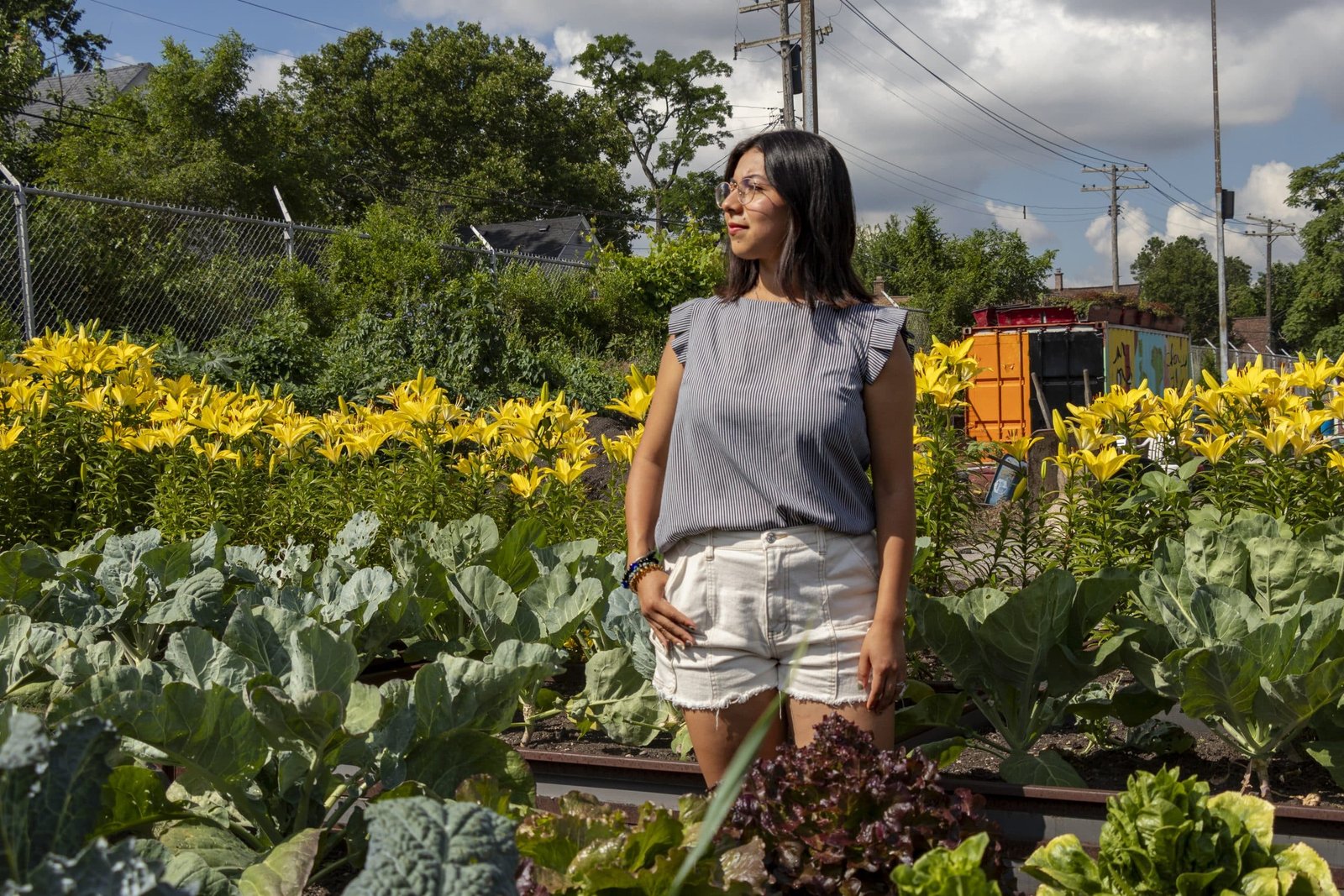

In southwest Detroit, there is a garden that grows shishito peppers, jalapenos, and habanero peppers. Another flower bed has chamomile, chocolate mint, and mojito mint. There are also three varieties of thyme, sage, and oregano. Wild berries, sunflowers, tomatoes, and Za’atarthree varieties of pumpkin, four varieties of cucumber and two varieties of watermelon. There will also be a sensory garden where children can pluck and taste cherry tomatoes.
This cornucopia of fresh vegetables from Cadillac Urban Gardens was the inspiration for a cookbook in development by Cristo Rey High School’s Environmental Justice Club, “Recipes from the Garden.” The idea for the book was the brainchild of Cadillac Urban Gardens co-director Dolores Perales, who wanted to promote healthy eating and engage high school students in urban agriculture.
Perales, a Cristo Rey High School graduate, learned about a grant opportunity from the Michigan Alliance for Climate Justice (MAJIC). In April, MAJIC awarded a grant to the nonprofit Cadillac Urban Garden to put together a recipe book. By May, the students put out a call on social media and encouraged family and friends to share their recipes through a Google form. They received more than 100 submissions, most of them from families of Cristo Rey High School students. Each recipe had to use ingredients from the garden and avoid dishes that were exclusively made with meat or dairy.
A variety of recipes were submitted, ranging from fried green tomatoes Chilaquiles and Tabouli. Participants got creative and also submitted recipes for healthy teas and fruit smoothies.
“One of the ways I connect with being Mexican is through food,” said Odalis Perales, a volunteer at the garden who provided recipes. Chilaquiles and salsa verde. “My mom’s recipe calls for epazote, and she actually grows it in her garden. You can only find dried epazote at the grocery store, but she says it tastes different from fresh.”
Alex Montesinos, a 17-year-old Cristo Rey High School junior and president of the Environmental Justice Club, was the liaison between the garden and the students.
“The main goal is to get more people to come to our all-organic farm,” Montesinos said.

Many of the recipes were submitted in Spanish, and Montesinos led a group of students in translating them. Recipe submitters were asked to cook the dishes, and students interested in photography were asked to photograph them in exchange for community service hours. The book also plans to create free cooking videos to complement the book.
“We wanted to diversify the recipe book as much as possible, whether it’s Spanish or Middle Eastern cuisine, so we reached out to the community,” Montesinos said.
The garden was established in 2012 by Southwest Detroit Environmental Vision with the help of Ideal Group, a Latino, family-owned business in Southwest Detroit. Once an abandoned parking lot, the area is now home to more than 330 raised beds. The vegetables are provided free of charge and provide a source of fresh food for the community.
The garden is also a source of innovation and creativity.
A few years ago, the garden’s sponsor, Ideal Group, issued a challenge to build a rainwater collection and storage system for growing vegetables. The Detroit Cristo Rey robotics team, the Kinematic Wolves, accepted the challenge and built a water collection system that remains to this day.
When Alex Montesinos was a child, his sisters were part of a robotics team that designed and built a water collection system, and his involvement with the cookbook has brought his connection to the garden full circle.

Alondra Carter Alvizo, president of the nonprofit Cadillac Urban Garden, explains how they asked neighbors for recipe ideas.
“We worked with different community members who might bring in their own seeds for foods that are culturally meaningful to them,” Carter-Alvizo says. “We planted a variety of crops, so they could include foods that are culturally meaningful to them in their recipes, like rhubarb, okra, and poblano peppers.”
“I am really [the goal] “Our mission is to feed our neighbors,” Carter-Arvizo said.
The Cadillac Urban Garden is free and open to the public from April through October, and the book will be available in August.
“The pandemic has exacerbated the food insecurity that was already prevalent in our community, so the gardens have become a food source,” Carter-Arvizo said. “Ultimately, I hope we all become more interested in what gardens can do to revitalize our communities.”
