

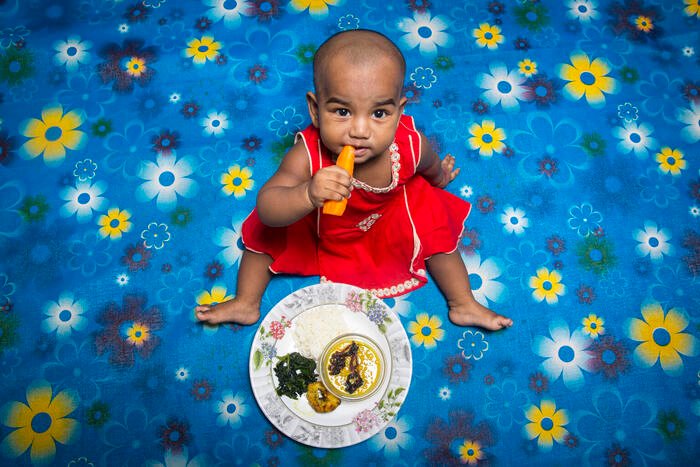
One in four children worldwide faces severe food poverty due to inequality, conflict and the climate crisis – UNICEF
Children experiencing this level of food poverty are up to 50 percent more likely to suffer from life-threatening malnutrition, a new analysis finds.
NEW YORK, 6 June 2024 – Around 181 million children under the age of five worldwide – one in four – live in severe child food poverty and are up to 50 percent more likely to experience wasting, a life-threatening form of malnutrition, according to a new UNICEF report released today.
first time, Child Food Poverty: Early Childhood Nutritional Deficiencies The report analyses the impact and causes of food insecurity among the world’s youngest people, across nearly 100 countries and income levels. It warns that millions of children under the age of five are lacking access to and consumption of a nutritious and diverse diet to maintain optimal growth and development during early childhood and beyond.
Children who consume at most two of eight defined food groups are considered to be in severe child food poverty. Four out of five children in this situation consume only breast milk or cow’s milk and/or starchy staples such as rice, maize or wheat. Fewer than 10% of these children consume fruits or vegetables, and less than 5% consume nutritious foods such as eggs, fish, poultry or meat.
“Children who suffer from severe food poverty are children living on the edge. It is the reality for millions of children right now, and it could have irreversible consequences for their survival, growth and brain development,” said UNICEF Executive Director Catherine Russell. “Children who consume just two food groups a day – rice and little milk, for example – are up to 50 percent more likely to become severely malnourished.”
The report warns that while countries are still recovering from the socio-economic impacts of the COVID-19 pandemic, growing inequalities, conflict and the climate crisis are pushing food prices and the cost of living to record highs.
Of the 181 million children who suffer from severe food poverty, 65 percent live in just 20 countries. Around 64 million of the affected children live in South Asia and 59 million in sub-Saharan Africa.
In Somalia, a country hit by conflict, drought and floods, 63 per cent of children live in severe food poverty, and in the most vulnerable communities, more than 80 per cent of caregivers report that their children have not eaten a meal for a full day.
In the Gaza Strip, months of hostilities and restrictions on humanitarian access have caused food and health systems to collapse, with dire consequences for children and their families. Five rounds of data collected between December 2023 and April 2024 consistently find that nine in 10 children in the Gaza Strip are severely food poor, surviving on two or fewer types of food per day. This is evidence of the horrific impact that conflict and restrictions are having on families’ ability to meet their children’s food needs, and the speed with which it puts children at risk of life-threatening malnutrition.
The report finds that while almost half (46 percent) of severe child food poverty cases are in poor households where income poverty is likely the main cause, 54 percent (97 million) of children live in relatively affluent households, where poor food environments and eating practices are the main cause of early childhood food poverty.
Several factors contribute to the child food poverty crisis, including a food system that fails to provide nutritious, safe and affordable options for children, families that cannot afford nutritious foods, and parents that fail to develop and maintain good child-feeding habits. In many settings, cheap, nutritious and unhealthy ultra-processed foods and sugary beverages are aggressively marketed to parents and families and become the new norm for feeding children. These unhealthy foods and beverages are consumed by an alarming proportion of young children experiencing food poverty, pushing more nutritious and healthier foods out of their daily diets.
At the same time, there have been notable achievements: Burkina Faso has halved its severe child food poverty rate from 67% (2010) to 32% (2021); Nepal has reduced severe child food poverty from 20% (2011) to 8% (2022); Peru has kept poverty below 5% since 2014 despite a long period of economic decline, and Rwanda has reduced poverty from 20% (2010) to 12% (2020).
To end child food poverty, UNICEF urgently calls on governments, development and humanitarian organizations, donor countries, civil society and the food and beverage industries to:
- Transform food systems so that nutritious, diverse and healthy foods are the most accessible, affordable and desirable choices caregivers can feed their young children.
- Leveraging health systems to provide essential nutrition services to prevent and treat early childhood malnutrition, including supporting community health and nutrition workers to advise parents and families on child feeding and care practices.
- Revitalize social protection systems and address income poverty through social transfers (cash, food and vouchers) to address the food and nutrition needs of vulnerable children and their families.
To accelerate efforts to prevent, detect and treat severe child food poverty and malnutrition, UNICEF last year launched the Child Nutrition Fund (CNF) with support from the UK Foreign, Commonwealth and Development Office (FCDO), the Bill & Melinda Gates Foundation and the Children’s Investment Fund Foundation (CIFF). The CNF is a UNICEF-led, multi-partner financing mechanism to incentivize domestic investments to end child malnutrition. UNICEF calls on governments, donors and financial partners to support the CNF and prioritize sustainable policies and practices to end severe child food poverty and malnutrition.
####
Classification of child food poverty
When feeding children:
0–2 food groups/day, severe child food poverty.
Children who consume three to four different food groups per day are in moderate food poverty.
If a child consumes five or more food groups per day, they are not in child food poverty.
Media Contact
Nadia Sammi Jacobs
UNICEF New York
Phone: +1 845 760 2615
Email: nsamie@unicef.org
