

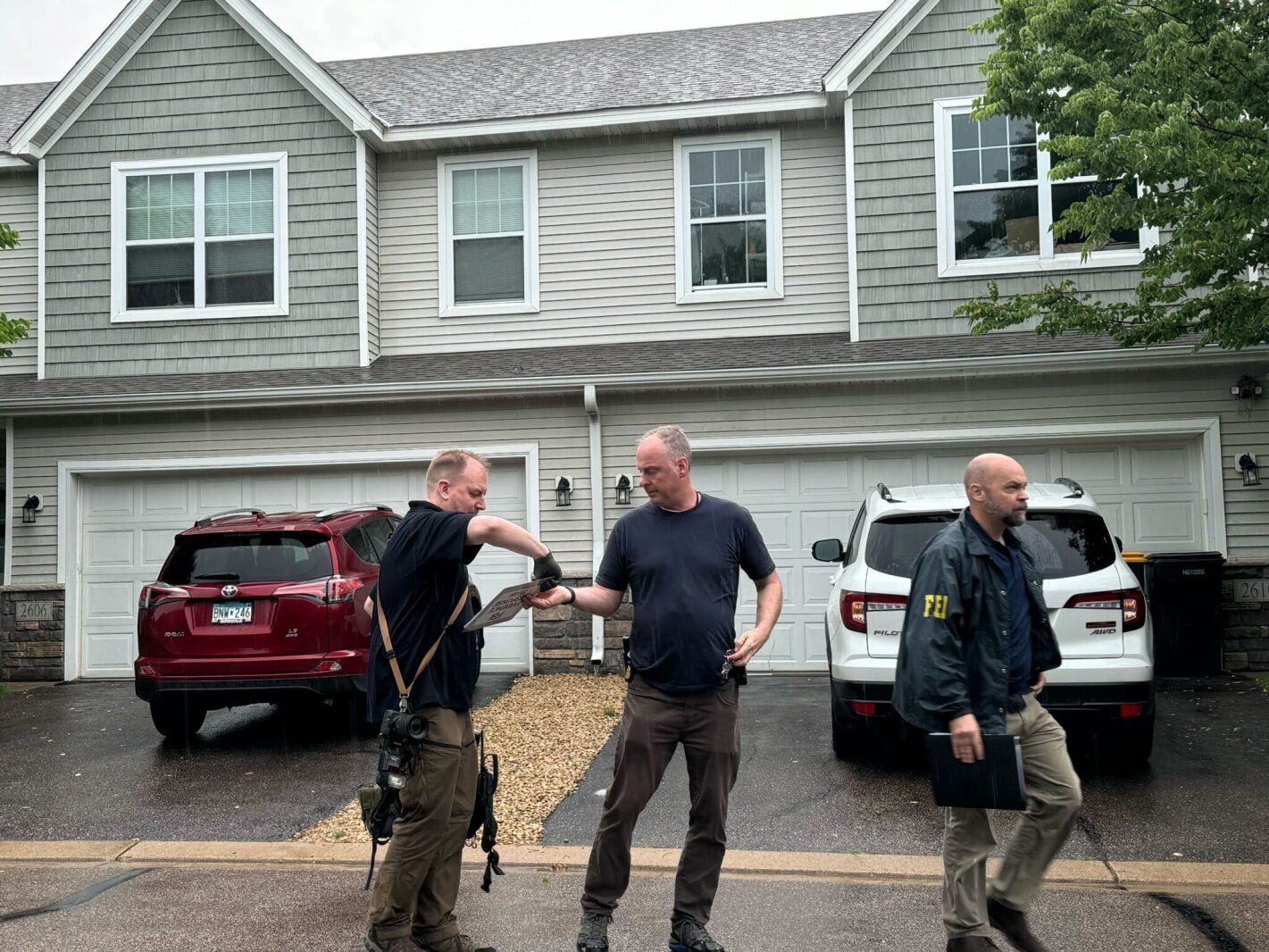
The Minnesota Department of Education completely failed to meet its obligations to properly oversee millions of dollars in federal funds provided to nonprofit organizations to feed children during the COVID-19 pandemic, according to a special investigation released Thursday by the state Legislative Auditor’s office.
The audit looked at how MDE managed USDA child nutrition programs and found that the agency’s inadequate oversight “created opportunities for fraud.”
Federal prosecutors have charged dozens of Minnesotans with defrauding federal programs out of at least $250 million in the nation’s largest pandemic fraud scheme. Federal prosecutors say they distributed only a handful of food but received millions in payouts that they used to buy Porsches and Teslas, vacations in the Maldives and homes from Prior Lake to Kenya.
Prosecutors have so far charged 70 people with involvement in the “Feeding Our Future” scandal, named after one of the two nonprofits at the center of the scheme. Eighteen have pleaded guilty, one has fled the country, and five were convicted last week of bribery, money laundering and wire fraud. Two were acquitted.
The nonprofits, Feeding Our Future and Partners in Nutrition, were supposed to oversee other vendors and nonprofits that claimed to be distributing prepared meals around the state, but prosecutors said the groups aided and abetted the fraud and kept some of the federal funds they were given. Just under five years after they were founded, they have grown from donating millions of dollars a year before the pandemic to distributing roughly $200 million each in 2021.
Auditors found that MDE failed to address warning signs even before the pandemic, did not exercise its authority to force Feeding Our Future to comply with program requirements, and was inadequately prepared to respond to problems that arose at Feeding Our Future.
MDE has received complaints about Feeding Our Future and its food distribution facilities dating back to 2018, with at least 30 complaints between mid-2018 and 2021. And while the department is required by law to promptly investigate complaints and misconduct, it did not investigate some of the complaints about Feeding Our Future at all. When MDE did follow up on the complaints, its investigations were inadequate, and “MDE improperly asked Feeding Our Future to investigate complaints about itself,” the report states.
According to the report, MDE procedures emphasize that complainants and targets resolve complaints themselves. The first step in the process is for targets to communicate the complaint and allow them to investigate and resolve their own conduct without MDE’s involvement. If that doesn’t work, MDE will formally report the complaint, but again, give targets an opportunity to respond. This has created a system that increases the potential for retaliation.
The Legislative Auditor found that MDE failed to prevent fraud in numerous ways, including:
- For failing to exercise its power to reject applications for the program years before the pandemic.
- It did not verify statements made by the nonprofit organization Feeding Our Future before approving applications, particularly “high-risk applicants.”
- The failure to follow up on a 2018 review of Feeding Our Future’s child nutrition work raised concerns.
- By conducting only limited off-site monitoring of food distribution facilities.
MDE stopped making payments to the nonprofit in 2021, but Feeding Our Future sued the state for racial discrimination. Ramsey County District Judge John Guzman ruled that the state couldn’t stop payments unless fraud was found, so MDE resumed payments.
Education Commissioner Willie L. Jett II, in a written response to the report, said MDE’s oversight “met applicable standards” and that the agency “made effective reports to law enforcement.”
“What happened with Feeding Our Future was a travesty — a systematic and brazen abuse of a nutrition program meant to provide healthy meals to low-income children,” he wrote. “The fraudsters who were indicted and convicted are responsible for this blatant fraud.”
Jett said the department has made reforms to strengthen oversight, including creating an inspector general’s office, adding a general counsel’s office, training staff on updated fraud reporting policies and contracting with firms to conduct financial investigations of certain sponsors.
The head of Minnesota’s nutrition program acknowledged that she faced pushback from her superiors when she raised concerns about suspiciously high reimbursement claims during the recent trial of seven defendants charged with program fraud.
Emily Honer, MDE’s director of nutrition program services, testified that she quickly became suspicious of the huge reimbursement claims and notified her superiors, the USDA and ultimately the FBI.
Honer testified that she was not aware of any MDE employees going to locations that claimed to provide huge amounts of meals every day. She said employees did not go to those locations because they were the responsibility of nonprofits that oversee vendors. And prosecutors said those nonprofits, Feeding Our Future and Partners in Nutrition, enabled and participated in the fraud.
Honer said Feeding Our Future’s “very vexatious litigation” meant MDE employees were frequently summoned to court and had to follow MDE’s procedures for resolving concerns with the nonprofit sponsors that oversee the facilities.
Except for months when MDE stopped making payments to some sponsors, MDE continued paying reimbursement claims until January 2022, when the FBI investigation was made public.
Republicans have blamed the Democratic-Farmer-Labor Party and Gov. Tim Walz for failing to stop the fraud. Walz said the state’s hands were tied by a court order to resume payments, but Ramsey County District Judge John Guzman disagreed in an unusual dissent.
Horner testified that while MDE has chosen to forgo direct on-site oversight, it can still conduct “desk audits.” But Horner said he has not conducted desk audits or asked his subordinates to do so, despite raising concerns in April 2021, first with the USDA Office of Inspector General and then with the FBI.
______________________________________________________
This article was written by one of our affiliated news agencies: Forum Communications Company uses content from agencies including Reuters, Kaiser Health News and Tribune News Service to provide a wide range of news coverage to our readers. For more information about the news services used by the FCC, click here..
