

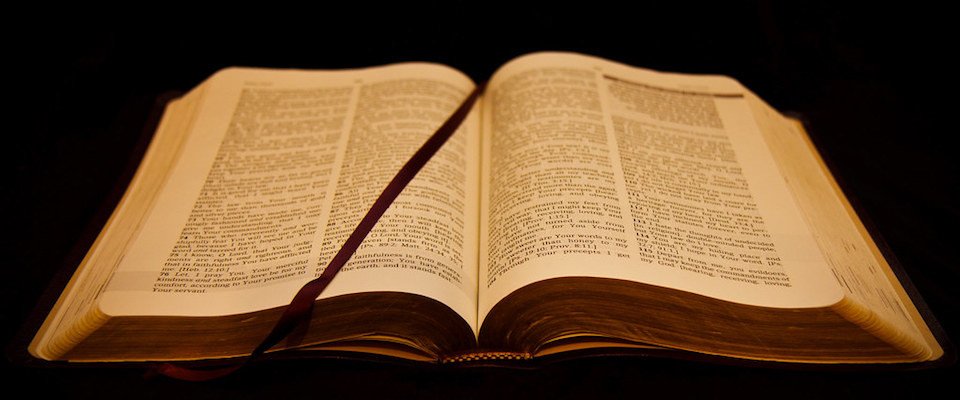
aaccording to Premier Christianity article A study published in 2018 found that the “Verse of the Day” feature, common in Bible apps, may actually “distort people’s view of God.” The apps “populate their verse of the day list with verses that are most tweeted or shared by the user community.” Because people are more likely to share verses that make them feel good than content-rich, difficult verses, this algorithmic approach creates a “tendency toward therapeutic texts” and creates a “therapeutic filter bubble.” Frequent Bible app users therefore risk practicing an “algorithmic spirituality,” placing their emotions and desires at the center of their faith life rather than facing the uncomfortable and tough challenge of aligning themselves with truth and reality.
A 2020 study on “New Religions for a Godless World” found that: Strange RitualCultural critic Tara Isabella Burton has described the contemporary religious landscape as intuitive, self-directed, and results-driven. This “remixed” spirituality (which she includes everyone from witch covens and soulcyclists to polycults and Silicon Valley transhumanists) is the religion of the Instagram feed in the same way that Protestantism was the religion of the printing press.
Instagram users see more of what they like, follow, and linger on, and less of what they skip. A mysterious, oracular algorithm takes these preferences into account and serves up new content that users can choose to share or respond to however they like. Even if the content is Christian, the medium teaches us to engage with it in ways our faith predecessors could not discern. As communications theorist and Catholic convert Marshall McLuhan famously said, “the medium is the message.”
People who are conditioned in this way are drawn to custom syncretism, and their own attitudes and “energy” Shaping the fabric of reality “Many people are quick to turn to the occult and psychic abilities. [extrasensory perception]”And all sorts of forms of hidden consciousness responding to this new electronic informational environment,” McLuhan said in an interview, decades before every American had prosthetic organs designed to interface with that virtual world.
A sermon ( Interlude Megachurch pastor Judah Smith says he felt inspired by God to use the Bible app’s verse of the day in the lyrics of Lana Del Rey’s latest album. Smith sees the app’s algorithm as a kind of Soltes Vergiliane (or “The Virgilian Lottery was an ancient Roman invention in which a person would open the works of Virgil at random and choose a page to receive as a personal oracle.
When I was an undergrad, a biblical professor warned me against treating the Bible this way. He jokingly said that in a pinch, you might open your Bible and find, “Then he went away and hanged himself,” and the second time, “Go and do likewise.” God reveals Himself to us (through the sacraments) on His terms, not ours. Expecting a random reading of the Bible to regularly yield insights providentially tailored to your situation is akin to engaging in fortune-telling.
Execute Bible Classification Doing it by algorithmic rather than random means may be an even greater sin. If one does it in the hope of receiving a message from God, public opinion and Vox DayThey mistake their own computer programs, which run based on user input, for the will of an inscrutable god.
Contemporary Christianity suffers from “protagonist syndrome.” Digitally catechized believers assume that God will make himself felt in their lives, and the churches that respond to them affirm this. When God doesn’t, they either lose faith or convince themselves that they heard God’s voice when in fact they didn’t. They expect their prayers to be rewarded with divine intuition that will help them deal with everyday problems.
No such promise exists in Scripture or Tradition. The Church would do well to remind its flock of the decades of silence Mother Teresa endured and to encourage them to be suspicious of their emotional reactions. The Desert Fathers spent their lives in prayer and knew that such efforts did not qualify them to see spiritual fireworks. In fact, they were trained to assume that visions and transcendent promptings were the devil’s deceptions until proven otherwise.
All we have the right to say is, “Lord, speak, for your servant is listening,” and whether he speaks or not, keep listening.
Grayson Quay is a writer and editor based in Alexandria, Virginia.
What to do first We depend on our subscribers and supporters. Join the conversation and contribute today.
Click here to make a donation.
click here subscribe What to do first.
Image courtesy of Rick NeethlingCreative Commons license. Image has been cropped.
