

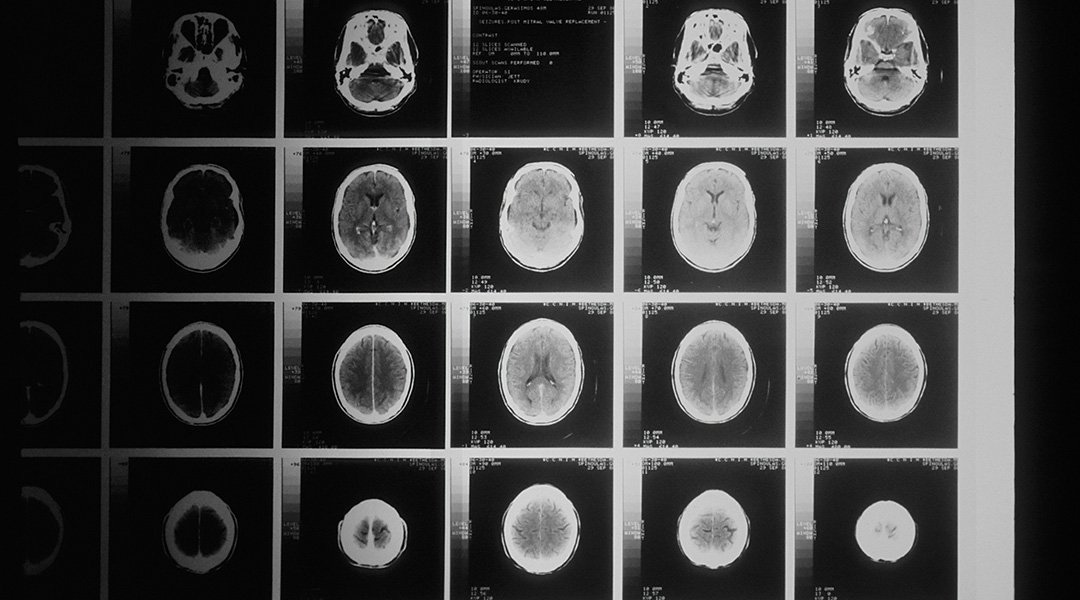
Using artificial intelligence (AI), researchers have developed a model that can analyse brain images to detect indicators of psychological disorders in adolescents, including depression, anxiety, ADHD, mood disorders and psychosis.
Mental health issues can be difficult to diagnose accurately, especially in adolescents whose brains are still developing. These issues can also co-exist, making detection based on psychological assessment alone even more complex and subjective, leaving room for misdiagnosis.
Professor An-ki Chiu, from the School of Health Technology and Informatics at the Hong Kong Polytechnic University, said the model they developed could be used as a clinical screening tool to identify high-risk individuals and enable early intervention.
Like ChatGPT, the model is based on an artificial neural network, a type of AI that mimics the human decision-making process. Qiu and her colleagues trained the model to identify the brain circuits that are most predictive of mental illness in two large groups of adolescent participants in the United States.
A more nuanced view of mental illness
The model adopts a view of psychopathology in which symptoms exist on a spectrum rather than falling into clear categories, a view that helps address some of the limitations of current categorical diagnostic systems, according to Adrienne Romer, an assistant professor in the Virginia Tech Department of Psychology, who was not involved in the study.
Romer, a clinical psychologist, studies how the brain contributes to overlapping symptoms across multiple categories of mental disorders.
“In reality, people’s symptoms often do not fit neatly into one clear category,” she commented. “In our current diagnostic system, the boundary between ‘health’ and ‘disability’ is somewhat arbitrary, and many symptoms overlap significantly between disability categories,” she added.
To train the model, Qiu and colleagues used a public cohort of 1,100 young people from diverse backgrounds and health conditions, aged between 8 and 21. Each participant’s data included questionnaire responses, interviews, and brain images obtained from a variety of neuroimaging techniques, including MRIs.
Neuroimaging is a useful diagnostic tool because certain changes in the brain are associated with psychiatric disorders. For example, loss of grey matter – the brain tissue involved in processing information, memory, emotions and movement – is often associated with early-onset psychosis.
Training Dataset
The model extracted imaging signatures from brain images of adolescents in the training cohort that were related to four key aspects of mental illness: externalizing, psychoticism, fear, and anxiety. It then assigned numerical scores representing how well these signatures predicted general psychopathology and these four psychopathology aspects. The accuracy of the model was measured by how well the predicted scores matched the actual scores.
The researchers found that the model’s predictive accuracy was highest when clinical and demographic information (age, sex, race, parental education, medical history, and traumatic experiences) were also taken into account. Traumatic experiences were the strongest predictor. Brain imaging markers slightly improved the overall predictive accuracy.
“Image markers can improve prediction accuracy by 25%. [using] “The model is designed after taking into account clinical characteristics,” Qiu said. After training the model, Qiu and team tested its performance on a larger cohort of 7,536 children between the ages of 9 and 11. When fed with only brain images, the model scored similarly to the training cohort, but when demographic and clinical characteristics were also taken into account, its predictive power dropped slightly.
Qiu attributed the lower prediction accuracy to differences between the two adolescent cohorts: Compared with the training cohort, the validation cohort was larger and included younger participants with milder symptoms of psychiatric disorders.
To reconcile these differences, she and her team applied a machine learning technique called transfer learning, in which a pre-trained model is reused on a second dataset to increase its generalizability. But Qiu said neural network models need to be validated in larger populations before they can be applied in clinical practice.
Practicality of the model
Romer noted that the study focused only on a specific point in time, and he is interested in whether the brain, clinical and demographic information deemed important by the model can also predict changes in psychopathology over the course of adolescent development.
“We know that major changes in the brain and mental health occur during adolescent development, which may be important in predicting the future onset of psychiatric symptoms,” she told us.
Romer acknowledges that Qiu’s research has important implications for brain-based approaches to treating psychiatric disorders, but it remains to be seen whether the findings will solve clinical diagnostic challenges.
“It’s not very practical to do expensive MRI scans at a population level to get a slight improvement in diagnostic accuracy,” Romer said.
But she thinks that as technology improves, this approach may become even more useful for improving diagnosis in the future.
“In my opinion, these findings show great promise for identifying new brain targets for intervention and prevention, potentially improving symptoms for many people whose symptoms fall outside traditional diagnostic boundaries,” Romer added.
Reference: Jing Xia et al. “Uncovering multimodal brain signatures: Uncovering transdiagnostic aspects of adolescent psychopathology,” Advanced Intelligent Systems (2024) DOI: 10.1002/aisy.202300577
Feature Image Credit: National Cancer Institute on Unsplash
