

November 15, 2023
2 min read

Highlights:
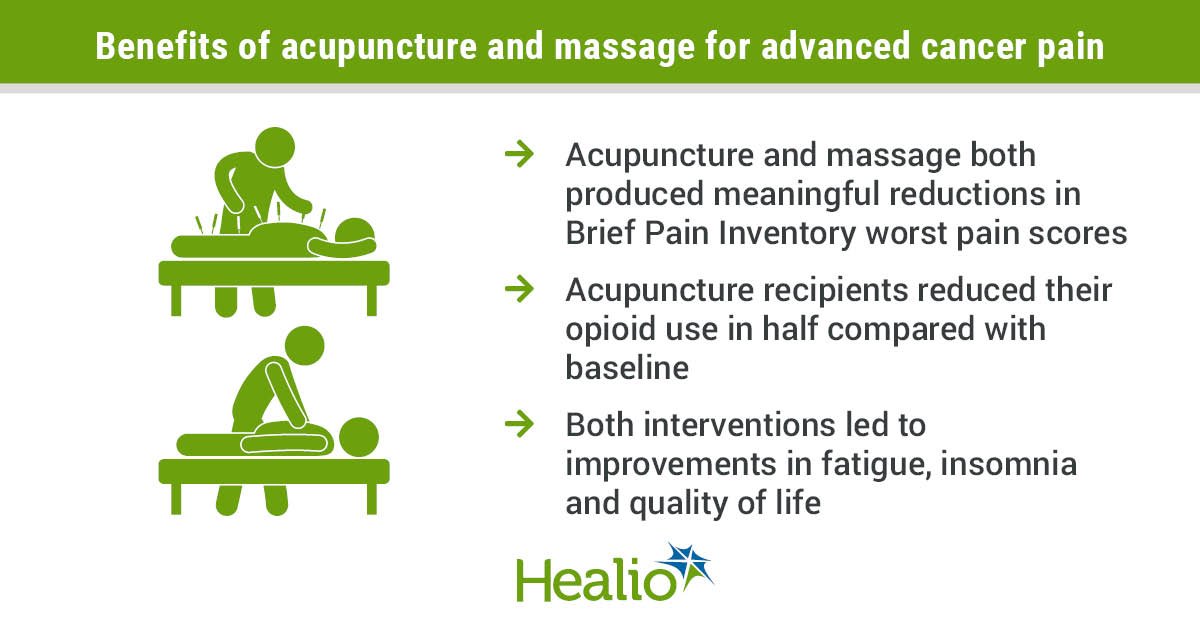
- The researchers observed that both acupuncture and massage significantly reduced the mean worst pain scores.
- Both treatments led to improvements in fatigue, insomnia, and quality of life.
Acupuncture and massage improved long-term musculoskeletal pain symptoms in patients with advanced cancer, according to the results of a randomized clinical trial.
The survey results are as follows: JAMA Network Open No significant differences were found between the two treatments, suggesting that both acupuncture and massage can reduce long-term cancer pain.

Rationale and methodology
“Pain is a major problem for patients with advanced cancer, and although recent guidelines recommend acupuncture and massage for cancer pain, their comparative effectiveness is unknown, so we conducted this study.” Andrew S. Epstein, MD An oncologist at Memorial Sloan Kettering Cancer Center told Healio:

Andrew S. Epstein
Therefore, the researchers sought to compare the effects of weekly acupuncture or massage over a 10-week period (with monthly additional treatments for up to 26 weeks) on musculoskeletal pain.
The Integrative Medicine for Pain in Advanced Cancer Trial (IMPACT) included 298 patients with advanced cancer (mean age 58.7 years; 67.1% women; 74.1% white) treated at Memorial Sloan Kettering Cancer Center or its regional affiliates between September 19, 2019 and February 23, 2022.
Patients reported experiencing moderate to severe pain, with a mean worst pain score of 6.9 at baseline, mean pain duration of 3.8 years, and clinician-estimated life expectancy of 6 months or more. Ninety-eight patients (32.9%) reported opioid use at baseline.
Investigation result
Overall, 92.7% of the 150 patients in the acupuncture group received at least one treatment, and 61.3% completed 10 or more treatments. Of the 148 patients in the massage group, 93.9% received at least one treatment, and 66.9% completed 10 or more treatments.
Results from a 26-week follow-up showed that patients who received acupuncture experienced a mean change in their worst pain scores of 2.53 points (95% CI, 2.92 to 2.15), while patients who received massage experienced a mean change in their pain scores of 3.01 points (95% CI, 3.38 to 2.63).
Of note, the researchers found no significant difference between groups in pain scores (0.48; 95% CI, 0.98 to 0.03).
The analysis also showed improvements in fatigue, insomnia, and quality of life with both treatments, with no significant differences between the groups, according to the researchers.
Minor adverse events included bruising (6.5% of patients receiving acupuncture) and temporary pain (15.1% of patients receiving massage).
The researchers observed that among those who reported opioid use at baseline (54.7%), use decreased by 27.5% (95% CI, 14.1-46.7) at 26 weeks in the acupuncture group and by 35.6% (95% CI, 19.7-55.4) in the massage group.
Limitations of the reported studies included their pragmatic comparative-effects design, which did not include a sham or treatment-as-usual control group, and the nature of the interventions meant that patients and clinicians could not be blinded.
Implications
Epstein told Healio that both acupuncture and massage are integrative therapies that may be effective in relieving pain in patients with advanced cancer.
“Patients with advanced cancer often experience pain in multiple locations due to their disease and oncology treatments, so expanding Medicare coverage beyond massage to other pain locations is important to promote equitable and effective pain management for cancer patients,” he said. “Further educational efforts should be directed toward training acupuncturists and massage therapists in safe and effective practices for patients with advanced cancer. Additionally, more research is needed to understand how to best integrate these nonpharmacological therapies into current pain management strategies to produce patient-centered, efficient, and effective care.”
For more information:
Andrew S. Epstein, MD Please contact epsteina@mskcc.org.
Sources/Disclosures
Collapse
Disclosure: Epstein reports royalties from UpToDate and honoraria from Great Debates and Updates in Gastrointestinal Malignancies. Please see the study for relevant financial disclosures of all other authors.
