

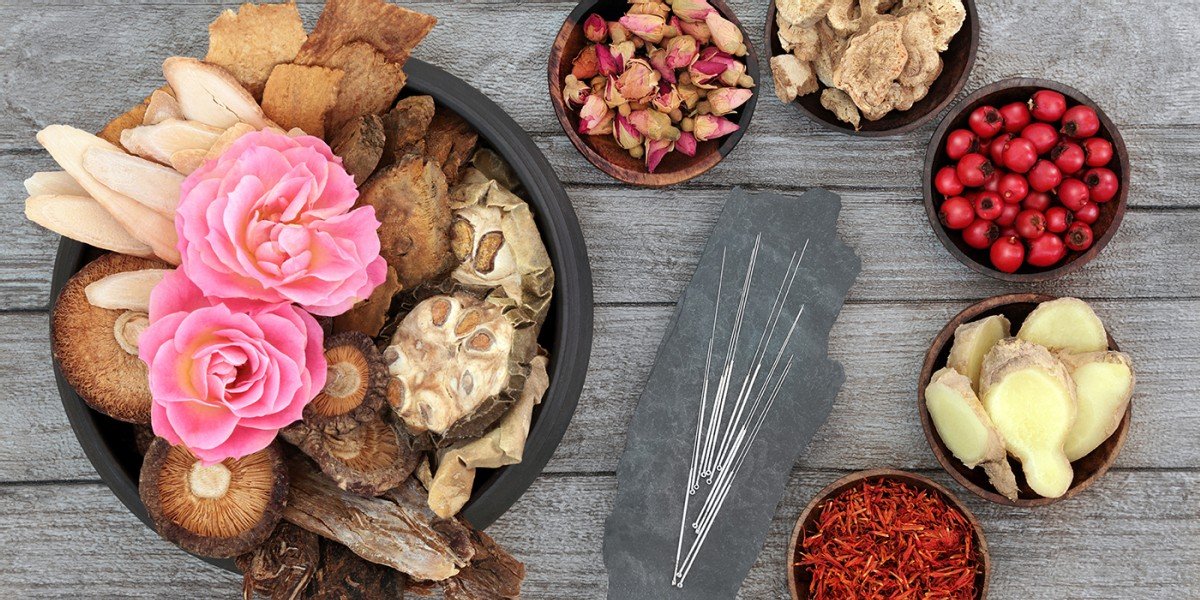
Oral contraceptives (OCPs) are the first-line treatment for patients with polycystic ovary syndrome (PCOS).1-2 However, these drugs can cause side effects such as nausea, headaches, and high blood pressure.3 Traditional Chinese Medicine (TCM) has proven effective in managing these side effects and improving the quality of life of affected patients.
This is a case of a patient who suffered severe headaches related to OCP use and describes how TCM therapy was employed to effectively manage these side effects.
Case: Ingestion
On December 16, 2022, a 20-year-old female patient (4’1” 67.6 kg) with a history of PCOS presented with a chief complaint of severe persistent occipital headache. Her patient was prescribed OCP (Talina) by her gynecologist about a year ago, but her prescription was discontinued 6 months ago due to continued severe 10/10 headaches.
Her gynecologist lowered the progesterone dose and adjusted her OCP, but that had no effect on the headache. The patient also consulted a neurologist and underwent an MRI scan (07/11/22). The results showed mild left ethmoid and maxillary sinus disease and a diagnosis of intractable headache. Over-the-counter painkillers such as Tylenol and Motrin did not relieve symptoms.
During examination on the day of admission, the patient complained of a sharp, constricting, stabbing headache with a pain level of 10/10, which worsened at night and was accompanied by photophobia. She denied her aura, nausea, vomiting, and fever. Additionally, she reported her high blood pressure after taking Talina, and her readings that day were 138/50.
She was very thirsty and always wanted cold drinks. She also had constipation, with bowel movements occurring only once a week and with difficulty. Her patient’s tongue was pale with a thin coat of alba, and her pulse was weak. Intermittent bleeding was reported before she started OCP, and now her menstrual cycles are irregular with light menstrual flow and brown menstrual blood mixed with blood clots.
diagnosis and treatment
The patient was diagnosed with a headache due to blood deficiency with an underlying blood stasis pattern. To treat this, we performed manual acupuncture on Liv 8, SP 6, 10, Liv 3, ST 25, 37, 36, and LI 4 using a combination of 0.25×30 mm and 0.25×40 mm needles. Did. Acupuncture was held for 30 minutes, and acupuncture was administered once a week for a total of 1 month.
In addition to acupuncture, Danguib Shwetan A prescription was given, which contained 30g. Huang Qi (Astragalus) and 6g Dangi (Radix angelicae sinensis). The herbs were vacuum-packed and patients were instructed to take them twice a day, once before breakfast and lunch, and twice before dinner. This regimen was also followed by him for one month.
result
During the patient’s second visit, which took place 1 week after the first treatment, she reported that her headache intensity had decreased from 10/10 to 5/10. Her blood pressure at presentation was 108/70.
At the patient’s third visit, another week later on 12/30, she reported that her headache intensity had further decreased by 3/10. Additionally, she reported that the frequency of her bowel movements increased from once per week to once per day, and her constipation improved significantly.
At the third visit, 3 weeks after the first visit, the patient reported that she had stopped taking formula for 1 week. Her blood pressure rose again and was back to 130/80. Her headache level was 3/10 of hers. The patient was educated to continue consuming the formula.
At the patient’s fourth visit, one month after the first visit, the headache intensity was reported to be only 1/10 and blood pressure 102/70.
discussion
This report provides evidence supporting the effectiveness of acupuncture and herbal medicine in the treatment of severe chronic headaches. The patient has a history of irregular bleeding, which can lead to blood deficiency over time. Because blood is considered a commander; airblood deficiency can cause further deficiency. air.
Chiin turn, is involved in the smooth flow of blood and therefore, air It may cause blood stasis. When a patient takes her OCP, menstruation stops and can cause further congestion and congestion. air Stasis occurs, causing severe headaches and high blood pressure.
The patient’s treatment plan for his chronic headaches included focusing on the liver and spleen meridians to tense and move the blood. Liv 8 is used to nourish and strengthen the blood, while Liv 3 and LI 4 are used in combination to move the blood. SP 6 and SP 10 are used to tense and move blood within the Spleen meridian. ST 25 and ST 37 are fronts.nothing and lower than that he is the sea Acupoints in the large intestine are used to aid in defecation, and this can also be affected by blood deficiency.
This example illustrates several important points. First, the pattern observed in this case, a blood deficiency headache pattern, is rare in a 20-year-old female patient. However, after a thorough examination of his medical history, symptoms, tongue, and pulse, he was diagnosed with blood deficiency accompanied by blood stasis, and a treatment policy was established, which ultimately proved to be effective.
Another noteworthy aspect of this incident is that Huang Qi, is a medicinal herb with various therapeutic effects.The original idea was to use Danguib Shwetan Regulates blood deficiency. but, Huang Qias the main herb used in tonic airIt is contraindicated in cases of hypertension.
Various studies have been conducted on its effectiveness, but Huang Qi About blood pressure. In modern pharmacological research, Huang Qi It has a dual regulatory effect on blood pressure.4-7 Its antihypertensive effect is due to vasodilation and increased nitric oxide (NO) release, which affects the renin-angiotensin-aldosterone system (RASS) and diuresis.Four
Regarding the antihypertensive effect, the main chemical component, astragaloside IV, has been recognized. Huang Qi, is effective in positive inotropy, improving both cardiac systolic and diastolic function without increasing myocardial oxygen consumption. This increases the cardiac contraction amplitude and cardiac output, leading to an increase in blood pressure.Four
Some studies support the bidirectional modulatory effects of Huang Qi Blood pressure is related to dosage. For example, some studies recommend the following doses: Huang Qi 30g or more has the effect of lowering blood pressure, while less than 30g has the effect of increasing blood pressure.Five However, further research is needed.
clinical key points
In this case, acupuncture and Chinese herbal medicine were effective treatment options for the patient’s headache and increased blood pressure associated with OCP side effects. Patients received acupuncture once a week for four weeks and took herbal formulas as directed. After 4 weeks of treatment, patients reported decreased headache severity and frequency and lowered blood pressure. This supports the efficacy of her TCM in treating headaches associated with migraine side effects of OCP.
References
- Pinkerton Joint Venture Polycystic Ovary Syndrome (PCOS). merck manual (Professional Version), 2023. Please read here.
- Bednarska S, Siejka A. Etiology and treatment of polycystic ovary syndrome: what’s new? Adv Clin Exp Med2017;26(2):359-67.
- Cooper DB, Patel P, Maddy H. oral contraceptives. Treasure Island, FL: StatPearls Publishing, 2022.
- Cha Y. Bidirectional regulatory effects of yellow qi on blood pressure. J Trad Chinese Med Sci2000(06):329.
- Li R, Zhang Y. Research advances in the treatment of primary hypertension. yellow flag. Kwang Min Jeong Yi2021;36(18):4.
- Xu Z, Qian L, Niu R Other efficacy yellow flag Injections in the treatment of hypertensive nephropathy: a systematic review and meta-analysis. Front Med, 2022;9:838256.
- Peng X, Tang F, Yang Y Bidirectional effects and mechanisms of other Chinese herbal medicines. J Ethnopharmacol,2022;298:115578.
