

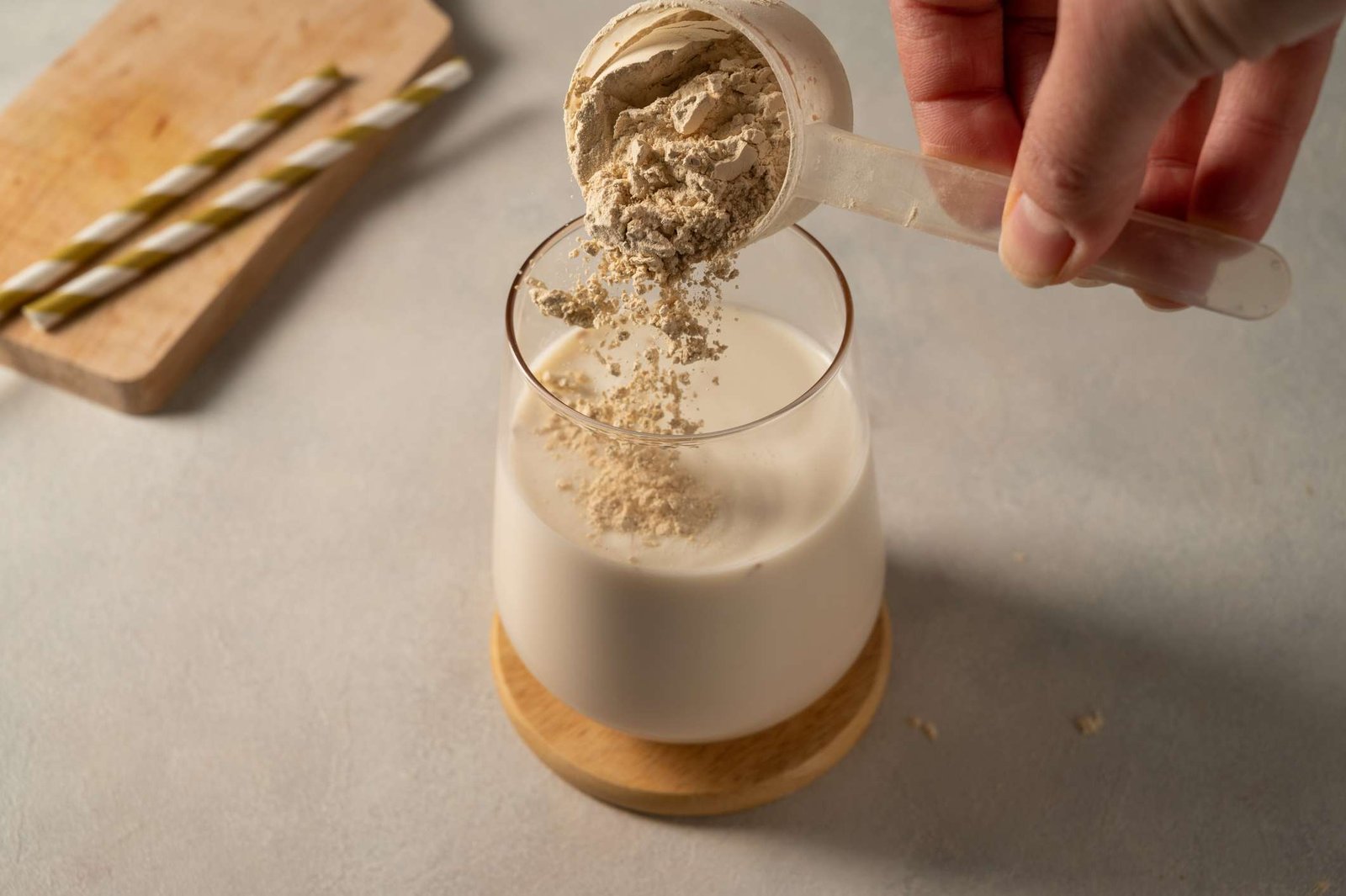
Proteins are made up of amino acids needed for vital processes such as immune function, neurotransmitter and hormone synthesis, and muscle growth.
Including more protein in your diet has positive health benefits including making you feel fuller, improving body composition, and preventing muscle loss during weight loss and as you age.
While the timing of your protein intake is less important than your overall protein intake, consuming protein at specific times may help you achieve certain health goals, such as building muscle mass or supporting post-exercise recovery.
Depending on your personal goals, the best times to consume protein are:
People who are trying to lose excess body fat can benefit from including more protein in their diet. A high-protein diet helps keep you feeling full after a meal by slowing digestion and stimulating the release of satiety hormones such as peptide YY (PYY) and cholecystokinin (CCK), which can lead to fewer calories being eaten and fat loss.
A high-protein diet is one that contains more protein than the current RDA (0.8 grams per kilogram (g/kg) of body weight, 0.36 grams per pound (g/lb)). Note that the RDA is the minimum amount of protein needed to meet the body’s amino acid requirements and prevent muscle loss, not the optimal amount for health. People trying to lose weight may need more protein than people trying to maintain weight, because restricting calories increases the risk of muscle loss and can have negative effects on metabolism, strength, and more.
Experts suggest that people trying to lose weight while maintaining muscle mass may need 2.3-3.1 g/kg (1-1.4 g/lb) of protein, which is significantly more than the RDA.
For general health and when trying to lose weight, it is best to add at least one protein-rich food to your meals and snacks to meet your daily protein needs. Research has shown that as long as you are consuming enough protein for your body’s needs, protein distribution does not play a role in promoting weight loss. This means that there is no “optimal” time to eat protein when trying to lose weight, and it is more important to distribute protein evenly throughout the day to support satiety and weight loss.
Protein makes up 80% of muscle mass and is a key dietary component when trying to build muscle.
As with weight loss, when trying to build muscle, it is most important to consume enough protein throughout the day, rather than focusing on a specific protein timing. If you are trying to increase your strength training to build lean body mass, it is important to consume extra protein to support muscle growth. Experts suggest that those looking to promote muscle growth with strength training may need to consume 1.6-2.2 g/kg (0.72-1 g/lb) of protein per day to optimize hypertrophy, or the increase in muscle mass..
This can be achieved by increasing your overall protein intake by adding protein sources to meals and snacks. A 2023 study of 40 healthy older men found that participants who followed a high-protein diet providing 1.6 g/kg protein per day, combined with three strength training sessions per week for eight weeks, experienced greater gains in muscle mass and strength compared to men who participated in the same strength training plan while continuing with a diet that provided the RDA of 0.8 g/kg protein per day.
Spreading your protein intake throughout the day with protein-rich meals and snacks is the most effective way to promote muscle growth.
That being said, consuming protein in conjunction with resistance training may help you reach your body composition goals more efficiently and improve your performance.
A 2019 study of 18 people found that participants who took a whey protein-based supplement three times per week for 12 weeks, immediately before and after strength training, experienced greater increases in muscle circumference and strength compared to those who took a placebo.
If you’re looking for an effective way to boost muscle growth, consuming about 20 grams of protein, such as from a protein shake, before and after strength training can help maximize muscle growth. However, it’s most important to meet your body’s daily protein needs by consuming protein-rich foods throughout the day and paying attention to the types of protein you consume.
A high-protein diet can prevent muscle loss not only during weight loss, but also muscle loss associated with other conditions, such as aging.
Eating more protein while losing weight can help maintain or build muscle mass and help keep your resting metabolic rate, or the calories you burn while at rest, healthy.
Losing muscle is common during weight loss, especially in people on a very low-calorie diet. Research shows that increasing your protein intake by adding protein-rich foods to your meals and snacks may help prevent this common side effect.
A high-protein diet has also been shown to be effective in preventing muscle loss in older adults. A 2023 review concluded that a diet with 1.0–1.6 g/kg (0.45–0.72 g/lb) of protein per day benefits older adults by stimulating muscle growth, maintaining muscle strength, and preventing muscle loss. A high-protein diet, when combined with strength training, appears to be especially effective in preventing muscle loss in older adults and those who are losing weight.
Seniors who have difficulty meeting their daily protein needs through diet alone can increase their protein intake by drinking protein shakes made with whey or pea protein between meals.
Consuming protein before, during, or after exercise can help minimize exercise-induced muscle breakdown, promote muscle protein synthesis, and enhance recovery.
A 2023 review found that consuming protein immediately before or during exercise reduces a marker of exercise-induced skeletal damage called creatine kinase and also helps maintain muscle strength in people performing resistance exercises.
Importantly, these results were not affected by the timing of protein ingestion, meaning consuming protein before, during or after exercise may be helpful in supporting exercise recovery.
Meal needs and timing may vary depending on schedules, sleep patterns, etc.
Generally speaking, eating protein late at night isn’t a bad thing — in fact, research suggests that consuming protein before bed can aid in muscle growth and post-workout recovery.
However, some research suggests that, at least in some people, eating close to bedtime may increase nighttime awakenings and negatively impact sleep.
If you are able to meet your protein needs by eating regular meals throughout the day, your protein needs have not increased significantly, and you find that eating before bedtime disrupts your sleep, we recommend avoiding eating close to bedtime to support optimal sleep.
High-protein diets are very safe, and there is currently no evidence to suggest that they are harmful to health. Research shows that diets that contain more than four times the RDA for protein are generally safe and are not associated with harmful side effects in healthy people.
A high-protein diet has been shown to benefit many aspects of health, including improving bone density, promoting fat loss, and reducing high blood sugar levels.
High-protein diets are generally safe for most people, but should be avoided by people with certain health conditions, such as kidney disease.
Additionally, consuming too much of certain protein-rich foods, such as red and processed meat, may increase your risk of developing certain health conditions, including colon cancer.
Although a high-protein diet is generally safe for healthy people, that doesn’t mean you have to follow an extremely high-protein diet. While some people, such as those who engage in intense strength training, those actively losing weight, or those looking to build muscle, may benefit from a diet very high in protein, research has shown that most active adults can meet their body’s protein needs by consuming 1.2-2.0 g/kg (0.54-0.9 g/lb) of protein per day. This equates to 81-135 g of protein per day for a person weighing 150 lbs.
This is easily achieved by focusing on protein-rich meals and snacks and spreading out your protein intake throughout the day.
Protein is needed for vital processes like muscle growth and immune function. While consuming protein at specific times can be beneficial for those with specific health goals, like building muscle mass or recovering from exercise, it is total protein intake that matters most for overall health and body composition.
Try increasing your protein intake by choosing protein-rich meals and snacks and combining protein with strength training to support muscle growth.
