

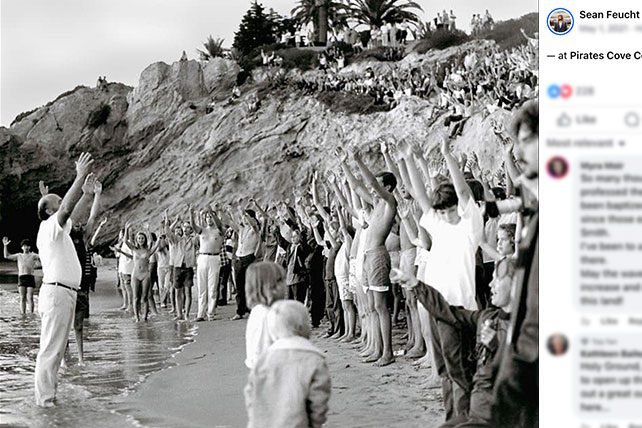
An important spiritual revival, the Jesus Movement emerged in the midst of the tumultuous counterculture of the late 1960s and early 1970s in the United States. This movement represented an unprecedented fusion of religious traditions and the rapid social changes of the time, and had a strong appeal to the youth of the time. Its members sought to truly and fundamentally put into practice the teachings of Jesus Christ, and often attracted attention for their unconventional approach to worship and community life. In this blog post, we delve into the nature of the Jesus Movement, exploring its origins, influences, controversies, and depiction in contemporary media, especially through the film The Jesus Revolution.
Historical background of the Jesus movement 1970s
The Jesus Movement, which began in the late 1960s, began at a time of intense social and cultural upheaval. Disillusioned with the social norms and established religious systems of the time, young people sought more authentic and direct experiences of spirituality.
The movement quickly spread throughout the United States, particularly in California. Known as “Jesus People” or “Street Christians,” its followers were distinguished by their simple communal living and zealous evangelism, using modern music and media to share their message.
Related: “Jesus Revolution” is now available on Netflix. “Let’s all pray together,” says Pastor Greg Laurie.
Political orientation: Conservative or liberal?
The political orientation of the Jesus Movement is complex, reflecting elements of both conservative and liberal ideology. Its core religious doctrines are often aligned with conservative values, emphasizing personal salvation and traditional moral principles. However, its social practices, including its emphasis on communal living and social justice, reflected the liberal counterculture movement of the time.
This fusion of beliefs made the Jesus movement a unique phenomenon that challenged traditional political and religious classifications.
Influence of the Jesus movement
The Jesus Movement had a major impact on American Christianity, introducing modern worship music and informal worship styles into mainstream church practice. It played an important role in the development of Christian rock music and the rise of megachurches and superdenominational congregations.
Related: What is Calvary Chapel and why should I care?
Additionally, the movement revitalized evangelical Christianity and contributed to the growth of Charismatic and Pentecostal denominations. An emphasis on personal, experiential faith continues to shape Christian communities around the world.
Controversy over Calvary Chapel
Founded by Chuck Smith in Costa Mesa, California, Calvary Chapel became a central hub for the Jesus movement. The church’s modern music and informal worship attracted many young people.
However, its rapid growth and unique practices led to controversy, especially regarding church governance and theological interpretation. These controversies highlighted the tension between the movement’s innovative approach and traditional evangelical doctrine.
Historical Jesus Movement vs. Jesus Revolution
Although the film “Jesus Revolution” attempts to capture the spirit and agenda of the Jesus movement, it is important to distinguish between the film’s depiction and historical reality. Films necessarily condense and dramatize events, focusing on specific narratives that may not fully encompass the diversity and complexity of the movement.
Related: Greg Laurie: Pray for the Millennium Jesus Movement
Movie “Jesus Revolution” review
For Christians, The Jesus Revolution is a nostalgic and moving depiction of a pivotal moment in modern Christian history. Although the film does a good job of conveying the enthusiasm and sincerity of the movement’s participants, it should be viewed with an understanding of the dramatic elements. It serves as a valuable conversation starter about the complexities of faith, revival, and church history.
