

Following the release of its generative artificial intelligence (AI) models Bard and Gemini, Google (NASDAQ: GOOGL) is keen to add another model to its product range to widen its lead over rivals.
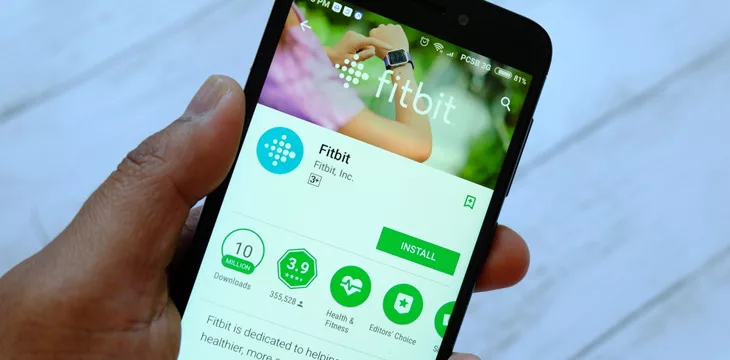
Google said in an announcement that it is preparing for the commercial release of a personal health-based large-scale language model (LLM) customized specifically for the Fitbit app.
Release details are currently unknown, but several sources point to various features for this model. Google clarified that LLM does not diagnose or provide treatment to users, but rather can collect and interpret data from the Fitbit app.
“Fitbit brings together your personal health and fitness data so you can track it in the Fitbit app,” Google’s statement reads. “Our team is currently building personal AI capabilities that will provide even more customized and personalized insights that can be explored based on an individual’s needs and preferences.”
Although the clarification limits LLM’s functionality, insiders familiar with its development say the product will be able to offer tailored suggestions about sleep patterns and exercise habits.
Other features include natural language input to get information about specific health questions such as active zone time (AZM) during exercise and sleep quality. Additionally, LLMs can now use charts and point features to present data, and experts foresee the use of histograms and heatmaps to convey information.
Google says its personal health-based LLM is trained on health signals from a series of studies confirmed by a vast list of certified coaches and wellness experts. The tech giant has revealed that LLM will form the basis of its future AI health products, but uncertainty continues to plague the product.
Google hasn’t said whether this model will run on-device or over an internet connection. At the same time, on-device models offer advanced protection to users, and Internet-based systems offer improved interoperability across multiple devices and integration with other emerging technologies.
Various latest health-related information
While Google is teasing users with its new Health LLM, it has announced several updates to improve its health offering, including improved search functionality. The tech giant noted that users can use his Google Lens to search for photos of health problems on their bodies, ranging from benign rashes on their hands to complex problems.
Over the past 12 months, the company has been updating visual results for health searches from high-quality sources to “make it easier to understand symptoms.”
Meanwhile, YouTube’s AI dubbing feature, Aloud, is making moves to support dubbing of emergency videos from English to other languages. In the coming weeks, the video streaming service has confirmed that it will expand dubbing to videos about cancer and chronic obstructive pulmonary disease.
For artificial intelligence (AI) to function properly within the law and succeed in the face of growing challenges, it must integrate enterprise blockchain systems that ensure the quality and ownership of data input. This makes it possible to ensure data security while also guaranteeing immutability. of data. To learn more about why enterprise blockchain is the backbone of AI, check out CoinGeek’s coverage of this emerging technology.
See: Blockchain and AI — these technologies need to come together

New to blockchain? Check out CoinGeek’s Blockchain for Beginners section. This is the ultimate resource guide to learn more about blockchain technology.
