


Is a good deed really a good deed if it’s not posted on social media? Is an act of generosity worthwhile if it’s not caught on camera or talked about? These tongue-in-cheek questions point to something I’ve observed in my own life: a strong desire to display our goodness to others, a behavior for which there’s even a modern term: virtue signaling.
According to Jesus, this is an ancient struggle, a primal temptation: We long to be known and seen, and if we’re not careful, this longing can lead to a kind of performativity that corrodes the soul.
In Matthew 6, the centerpiece of the Sermon on the Mount, Jesus turns ostentatious spirituality on its head: “See that you do not practice your righteousness in public, to make a show of it…. But when you give to the poor, do not let your left hand know what your right hand is doing” (vv. 1, 3). Jesus reveals a key feature of his narrow way: hiding.
This is an important word for someone like me who instinctively craves attention. Can you relate? Social media has created (or revealed) a desire for attention in us all. As some have aptly put it, the current generation of young people, and those coming up, are the “notification generation.”
Every time we get a notification (that coveted red or blue circle with a number inside), it triggers a dopamine hit in our brain. It’s a cycle that’s hard to break. Receiving notifications, even if the comment is negative, is addictive because being seen is better than remaining invisible.
To be known and seen is one of our deepest desires, but if left unchecked (pun intended), we fall into a never-ending cycle of performance mentality, trying to get from others what only God can give.
What Jesus warns us about is not just good spirituality, but good psychology. To be a disciple of Jesus requires not just doing religious things, but being a complete human being. Often what gets in the way is a lack of self-knowledge, a lack of knowing what’s inside of you. How do we overcome this?
To fight the relentless desire to be seen by others, we are called to hide by Jesus. Here again, the paradox of the Kingdom of God is evident. Jesus’ narrow way says that if you want to be strong, you must be weak; if you want to be first, you must be last; if you want to be great, you must be first. Here it is the same pattern: to be truly seen, you must hide.
This hiding is tricky, because Jesus primarily means not hiding from the world, but hiding from yourself. To understand this better, it might be helpful to contrast good self-awareness with bad self-awareness.
Good self-awareness helps you see the areas of your life that are holding you back. It helps you recognize the forces that are preventing you from living a free, fulfilling, and loving life. Good self-awareness focuses on your reactions and triggers. It reflects on what you have done and what you have not done. Good self-awareness creates humility and guides you through the process of growth.
When Jesus says, “Do not let your left hand know what your right hand is doing” (Matthew 6:3), He is inviting you into a “sacred unconscious.”
This leads to the temptation of bad self-perception. Self-perception is harmful when we are focused on our own righteousness, preoccupied with our own goodness, and living a self-satisfied life. Bad self-perception leads to obsession with our actions and exaggeration of our spiritual growth. There have been many times when I have become obsessed with my own progress.
When I work out, I look in the mirror more than I should. I look in the mirror to confirm my doubts because after 25 push-ups my chest will look like a professional bodybuilder’s (and I’m bitterly disappointed every time). I have a habit of recording my progress, which makes me feel despair or proud depending on the day. Through all of this, I’ve realized that the most mature people don’t drown in fruitfulness or wallow in failure.
Living a life of accomplishment can be exhausting. Jesus offers a better way. Are you tired of always having to be “on”? Are you tired of always working for approval? Do you ever feel like God is disappointed if you don’t have it all together?
Jesus doesn’t lead us into a meticulous spirituality where we agonize over every decision. Rather, he calls us to examine the foundation on which our good deeds grow. Why? To make sure we don’t fall into self-righteousness, where our goodness can overshadow God’s grace, or idolatry, where we unwittingly worship the praise of others instead of God.
When we perform in front of others, we forfeit the reward we receive from the Father. Instead of receiving praise from God, we become satisfied with the praise of others. Of course, Jesus is not saying that all recognition and rewards are incompatible with life in the kingdom of God. He is making it clear that it is foolish to live for them. Applause from others, likes on social media, they all fade away quickly. Only the Father’s positive words can fill our hearts.
What does this hidden quality look like in real life? Jesus epitomized it perfectly, so let’s use His life as a guide.
It’s an astonishing fact: Jesus spent 30 of his 33 years on earth (about 90% of his life) in relative obscurity. As a leader who regularly speaks before large audiences, I find this very challenging. Ron Rolheiser explains how to follow Jesus’ example: “An ordinary life is enough, but only if you first experience martyrdom in obscurity and enter into the hidden life of Christ.”
The value of seclusion does not mean that one must join a monastic order, but rather that one is free from the superficial praises of the world.
In the Gospels, Jesus is constantly surrounded by people praising his teachings and miracles, but he refuses to take advantage of them. In modern terms, Jesus doesn’t post selfies (#LeperBeClean). On one occasion, when people are amazed by Jesus’ miracles, Jesus responds: “Now when Jesus was in Jerusalem during the Passover, many saw the signs that he did and believed in his name. But he would not commit himself to them” (John 2:23–24).
Even when people try to make Jesus a celebrity, He shys away. He won’t be invited onto the stage. The resurrected Jesus prefers hiding. If I were him, I would show up at the homes of those who crucified me, scare them to death, and show them my power over all things. But Jesus just tells me to find my friends and tell them the good news, not to take down the world.
Living this way is difficult, especially for those of us who use social media, which leads us to believe the Serpent’s primitive lies. You Can Be Like God (Genesis 3:5) Social media creates the illusion that we can know everything, be everywhere, and use words for power. It is a seductive lie that we can be omniscient, omnipotent, omnipotent.
The amazing thing about God’s kingdom is that although God is omnipotent, omniscient, and omnipresent, His presence and activity are concentrated in places far away from the masses.
In the fifteenth year of the reign of Emperor Tiberius, while Pontius Pilate was governor of Judea, Herod was tetrarch of Galilee, his brother Philip tetrarch of Ituraea and Trachonites, and Lysanias tetrarch of Abilene, and Annas and Caiaphas were high priests, the word of God came to John the son of Zacharias in the wilderness (Luke 3:1–2).
Luke lists all the political and religious leaders in power and then, in a surprising way, emphasizes that the word of God passed by them to John in the wilderness. God’s presence and center of activity is not in the corridors of great power. The Gospels tell us of a God who appears in unexpected places. His greatest center of activity is hidden from the eyes of the most powerful people in society. God’s influence is all-pervasive, but its center is hidden.
One of Jesus’ greatest lessons on the importance of hiding is when he speaks about the Holy Spirit. It’s easy to miss if you’re not looking for it, but let’s take a closer look.
As Jesus concluded his time with his disciples before his crucifixion, he made these stirring statements about the Holy Spirit: “When he, the Spirit of truth, comes, he will guide you into all truth. He will not speak on his own initiative; but what he will hear, he will speak; and he will tell you things that are to come” (John 16:13). Eugene Peterson paraphrases Jesus’ words, saying that the Spirit “does not draw attention to himself” (MSG). This is why some call Jesus the “hidden Spirit.”
The Holy Spirit honors Jesus. He is more inclined to give the spotlight to others than to hog it himself, and He delights in putting His Son at the center. Jesus says, “He will glorify me, for he will receive from me what he is going to make known to you” (verse 14).
Within the Trinity there is no vying for position. The three persons of the Trinity are fundamentally other-centered. Look at how their interaction is recorded in the Bible: The Father affirms the Son: “This is my beloved Son, in whom I am well pleased; listen to him!” (Matthew 17:5). The Son always points back to the Father. Jesus says: The Father is greater than all. I only do what I see the Father do. (John 5:19; 14:28) And the Holy Spirit always points to the Son.
Here’s the bottom line: If the Holy Spirit rests in Trinitarian love and dwells in you, He wants to rest in you, too. He wants to remind you that you are loved and accepted by God. But aligning our lives with that theological truth requires concrete, counter-instinctive practice. We have to remind ourselves what it means to live a Christlike, anti-performance life and get off the never-ending treadmill of posture.
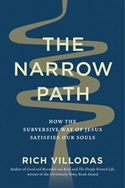
excerpt Narrow Road By Rich Villodas. Copyright © 2024 Richard A. Villodas. All rights reserved. No part of this excerpt may be reproduced or reprinted without written permission from the publisher.
Rich Villodas is a bestselling author. Deeply Formed Life (Christianity Today Book Award Winner) Good, beautiful and kindHe is the senior pastor of New Life Fellowship, a large multi-ethnic church in Elmhurst, Queens, New York, on Long Island, with members from more than 75 countries.
