

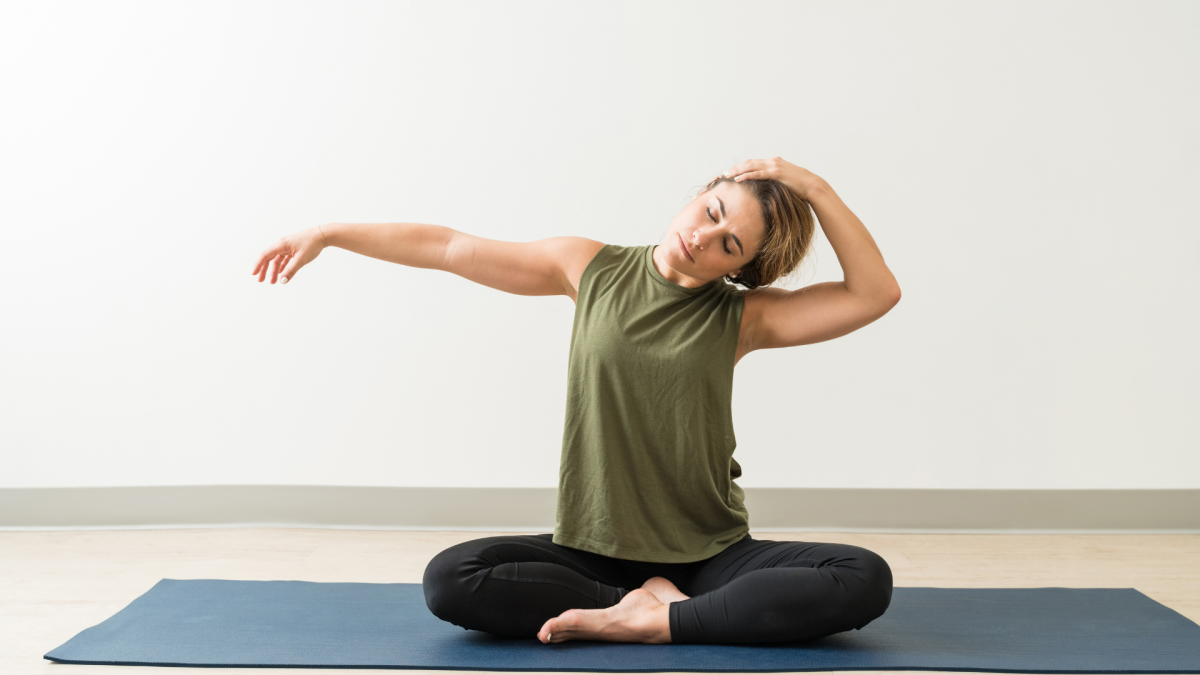
If you find yourself with a stiff neck and rounded shoulders from being hunched over your desk all day, your posture could use a little attention. Certified Pilates instructor and Etalon CEO Kristina Rudzinskaya shares four easy stretches to help you roll back those rounded shoulders and relieve neck tension. They only take four minutes and can be done literally anywhere.
Chest tightness, which can affect breathing and restrict spinal movement, are just a few of the consequences of neck and shoulder cramps, but did you know that a cramped neck and shoulders can also accelerate ageing? “Slouching while looking at a laptop can shift the position of your neck muscles, particularly your platysma, a wide, thin, superficial muscle that covers the neck and lower face and is responsible for moving your mouth and frowning,” explains Christina. “This can result in drooping corners of the mouth, wrinkles and sagging skin.”
Christina’s Neck and Shoulder Care
The great thing about this routine is that you can do it anywhere: from your chair at work, while sitting on the couch, or even on the bathroom (if you’re so inclined). If you’ve got a stiff back, try Christina’s five-move stretching routine, which is perfect for releasing tension in your upper body. Or, if you’re looking for a full-on Pilates workout, this eight-move routine is perfect for strengthening your entire body and core. Here’s how she stretches:
1. Chin to chest

“This is a simple tension-relieving exercise that’s especially helpful for people who spend long hours at a desk, as it increases flexibility and relieves tension in the neck,” says Christina. “To do it, sit or stand tall and slowly lower your chin towards your chest.”
2. Shrugging

““Shrugs improve shoulder mobility and relieve stress, making them particularly effective for people who suffer from stiff shoulders from long periods of sitting or working at a computer,” says Christina.
3. Tuck your chin in

“This position involves pulling your head straight back to create a double chin,” says Christina. “This counterbalances the effects of constantly pushing your head forward. When doing this position, try not to tilt your head back. Keep your chin tucked, but parallel to the floor.”
4. Shoulder roll
“Rolling your shoulders up and back as you tilt your head back keeps your muscles working and repositions your body in a healthy way,” says Christina.
