

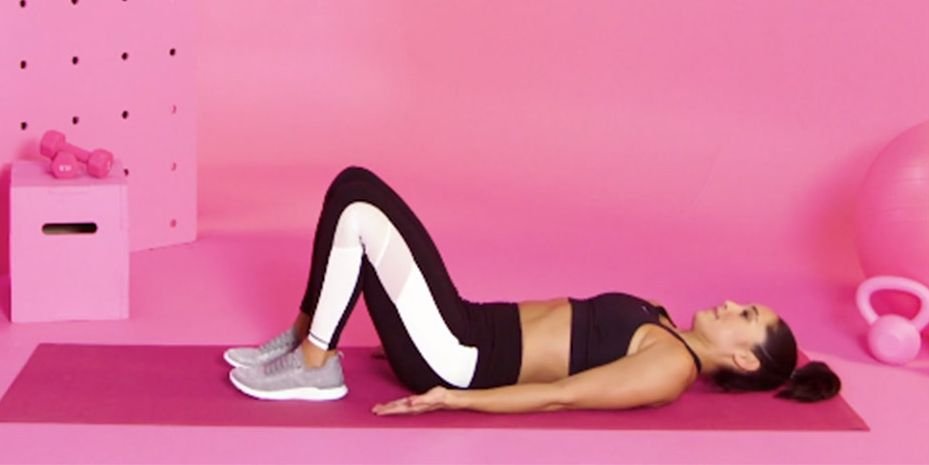
Your pelvis is the unsung hero of your body. This bowl-shaped bone in your lower abdomen is the main support for your spine and connects to your glutes, quads, core and pelvic floor, so it’s important not to ignore it. It’s what triggers your pelvic tilt!
In Pilates, pelvic tilt is a common, foundational movement that involves positioning your pelvis in relation to your spine, says Diara Cummings, certified Pilates instructor and founder of Snatched Fitness NYC. “Pelvic tilt exercises often involve a rocking or swinging motion of the pelvis while stabilizing your legs and spine,” she says. But it’s also a small, subtle movement, which is why proper form is key to reaping all of the (big!) benefits.
Meet the experts: Diarra Cummings is a Pilates instructor, certified pre- and post-natal Pilates instructor, and founder of Snatched Fitness NYC. Jackie Sherwood, ACE-CPT is a Pilates instructor and former member of the Joffrey Ballet Company. Lexi Burtman DPT is a pelvic floor physical therapist at Solstice Physiotherapy, a mat Pilates instructor, and co-founder of Elevated Pelvic Products. Emily Claman CPT is a pre- and post-natal fitness expert and the founder and CEO of Push.
Benefits of Pelvic Tilt
This isn’t the kind of exercise that will make you sore, but it will help keep your joints healthy and keep you mobile, Cummings says.
Pelvic tilt keeps your pelvis in a neutral position, relieving stress and pain in your lower back and hips. This is important because many people tilt their pelvis too far forward (anterior) or backward (posterior), which can lead to poor posture and discomfort, says Emily Claman, PhD, prenatal and postnatal fitness expert and founder and CEO of Push.
These exercises also activate your lower abdominal and deep core muscles. “The deep core muscles are made up of your transverse abdominis, multifidus, diaphragm and pelvic floor muscles, but because you can’t see them, it can be hard to activate and relax them,” she says.
Speaking of pelvic floor muscles, one study has shown that strengthening them may improve sexual function and lead to stronger, more pleasurable orgasms. Journal of the American College of Obstetrics and Gynecology“Pelvic tilt contracts and relaxes the pelvic floor muscles,” says Bartman, who says this helps strengthen them while also increasing blood flow to the area.
How to tilt your pelvis
Remember: Pelvic tilt is a subtle, nearly invisible movement that teaches control and activates the deep core muscles. Try incorporating this move first thing in the morning to loosen up your lower back, or as a warm-up or cool-down during your workout routine.
time: 10 min | Device: Mat, yoga block (optional), stability ball (optional), pilates ball (optional) | good: Pelvic floor, core
Instructions: Repeat for two sets of 10 repetitions, three to five days per week.

Method:
- Lie on your back with your knees bent, feet hip-width apart, and the soles of your feet flat on the floor.
- Place your arms relaxed at your sides, keeping your lower spine in its natural curve (there should be a slight gap between your hips and the floor).
- Inhale, then exhale slowly shift your weight toward the back center of your pelvis, allowing your tailbone to curve upward. Feel your lower abdomen contract and sink inward as your lower back flattens (the gap between your lower back and the floor should close).
- Keep your hips on the mat and hold for 5 seconds.
- As you inhale, release the tilt completely and return your pelvis to the starting position. This is one repetition.
Pro Tip: Cummings recommends placing a yoga block or Pilates ball between your inner thighs to activate those muscles, stabilize your lower body, and maintain good posture.
Common Pelvic Tilt Mistakes to Avoid
Squeeze your hip flexors: Instead of tensing your hip flexors and tilting your pelvis with your quads, press your feet down to engage your hamstrings and inner thighs, says Cummings. Once you’ve moved into a tilting position, focus on relaxing and releasing the tension in your hip flexors, says Jackie Sherwood, ACE-CPT, pilates instructor and former Joffrey Ballet Company member.
Compress the lower back: “Pelvic tilt should never compress your spine,” says Sherwood. Instead, imagine the space between each vertebra, take a deep breath, and practice increasing the sense of expansion throughout the movement, she says.
Maintain tension in the upper body: “Because pelvic tilt is all about smooth control, any tension in the neck or shoulders that is common among people who suffer from lower back tension will work against any potential benefits. Think about sinking your rib cage and the back of your head into the mat,” suggests Sherwood. Cummings also suggests focusing on keeping your chest wide and open, and anchoring your shoulder blades to the ground.
Glutes over Abs: Pelvic tilts are not hip bridges, and in fact, they’re not a glute-focused exercise at all, says Sherwood. If you find yourself clenching your glutes during a pelvic tilt, pause, reset, and think about moving only the “bones,” she says. “As you move the back center of your pelvis toward the mat, the targeted muscles will naturally correct themselves.”
Push your abdominal muscles outwards: Yes, you should feel your core engaging, but your abs and stomach should not be tense. Outward“Pull your hips up,” Cummings said. “Before you tilt your pelvis, push your abdominal wall inward to create a hollow,” she says.
Pro Tip: You might already be doing some pelvic tilt exercises (especially if you do yoga or Pilates), and many core exercises, like bicycle crunches, forearm planks, and bear planks, require a slight pelvic tilt, says Sherwood.
Pelvic tilt variations for all levels
Play each video and join Cummings in correcting your form.
Change your upper body support.

- Instead of lying on your back, use a Pilates ball (or your forearms) to support yourself, which will help you better identify your pelvis and tilt.
- Follow the same step-by-step instructions above, moving your pelvis back and forth as you normally would.
- Observe the movement of your pelvis and practice controlling and becoming more aware of subtle movements.
For more of a challenge, sit on a stability ball.

- Sit upright on a stability ball with your feet flat on the floor and hip-width apart.
- Tilt your pelvis, rolling your pubic bone up and your tailbone forward.
- The ball will move slightly underneath you, but having it in this position adds difficulty and helps stabilize your core.
Please get on all fours.

- Get on all fours in tabletop position (on all fours).
- Inhale and point your tailbone toward the ceiling.
- Hold for five seconds, then exhale and lower your tailbone toward the ground.
Who can do pelvic tilt exercises?
The great thing about this simple move is that almost anyone can benefit from it, and pelvic tilt is especially beneficial during and after pregnancy (more on this later).
However, there are a few people you should avoid. [or] “Anyone with chronic back pain, severe osteoporosis, recent surgery, or a diagnosis of a posterior spinal herniation should avoid pelvic tilts until they’ve consulted a doctor,” says Sherwood. If you experience pain while performing this movement, consult with your doctor or physical therapist.
How to Tilt Your Pelvis During Pregnancy
Disclaimer: If you’re pregnant and want to try any new exercises, be sure to consult with your healthcare professional. That being said, pelvic tilts can be a great part of your prenatal exercise routine, since the weight of your baby puts stress on your spine and often causes tension in your lower back, according to Sherwood and Cummings. If lying on your back is uncomfortable during pregnancy, try doing pelvic tilts on a stability ball or crawling on all fours.
This subtle movement helps keep your pelvis mobile throughout pregnancy, says Bartman. “During pregnancy, you need to tilt your pelvis back (down) to keep your weight from shifting too far forward and your back from arching too much, because not being able to tilt and move your pelvis is a major cause of back pain caused by your growing belly,” says Bartman. Maintaining mobility during pregnancy also increases blood flow to your pelvic floor muscles, which work harder to support your growing uterus and baby, Bartman says.
During birth, your baby needs to drop further down in your pelvis, and keeping your pelvis mobile can help him get there faster, says Bartman. And when it comes to actual birth (if you’re having a vaginal birth), tilting your pelvis helps your pelvic floor relax more, activating your deep tissues and increasing blood flow to help make birth easier, says Bartman.
During postpartum recovery, pelvic tilts can help reconnect with your deep pelvic stabilisers and align your transverse abdominis (the deepest layer of abdominal muscles). “Pelvic tilts are also calming exercises, helping you to feel more centred amid the hustle and bustle of motherhood,” says Sherwood.
That said, listen to your body and reduce your pelvic tilt range of motion if necessary, says Bartman—but only to the extent that it doesn’t cause discomfort.
Andi Breitwich is a Chicago-based writer and graduate student at Northwestern Medill. She’s a huge social media consumer and passionate about women’s rights, holistic health, and non-judgmental reproductive health. A former collegiate pole vaulter, she loves all things fitness and is currently obsessed with Peloton Tread workouts and hot yoga.
Tareen Appleton: Women’s HealthAt , she covers fitness and nutrition, and is particularly interested in the intersection of fitness with culture, food, and community. Passionate about women’s health, Tareen aims to empower women through engaging, research-backed information on healthy living. She studied Nutrition and Exercise Science at George Washington University, where she focused on proposing updates for . Tareen began her writing career in medical journalism, working closely with oncology and general surgery experts to translate new research into easy-to-understand advice. She is also a NASM-certified personal trainer and certified nutrition consultant. When she’s not writing, she enjoys exploring new fitness classes and wellness services around New York City and collaborating on culinary pop-ups. Prior to her role at , Tareen worked at Women’s HealthShe was the fitness and commercial editor. Men’s Health And contributed General Surgery News, Food Research Instituteand Nessie.
