

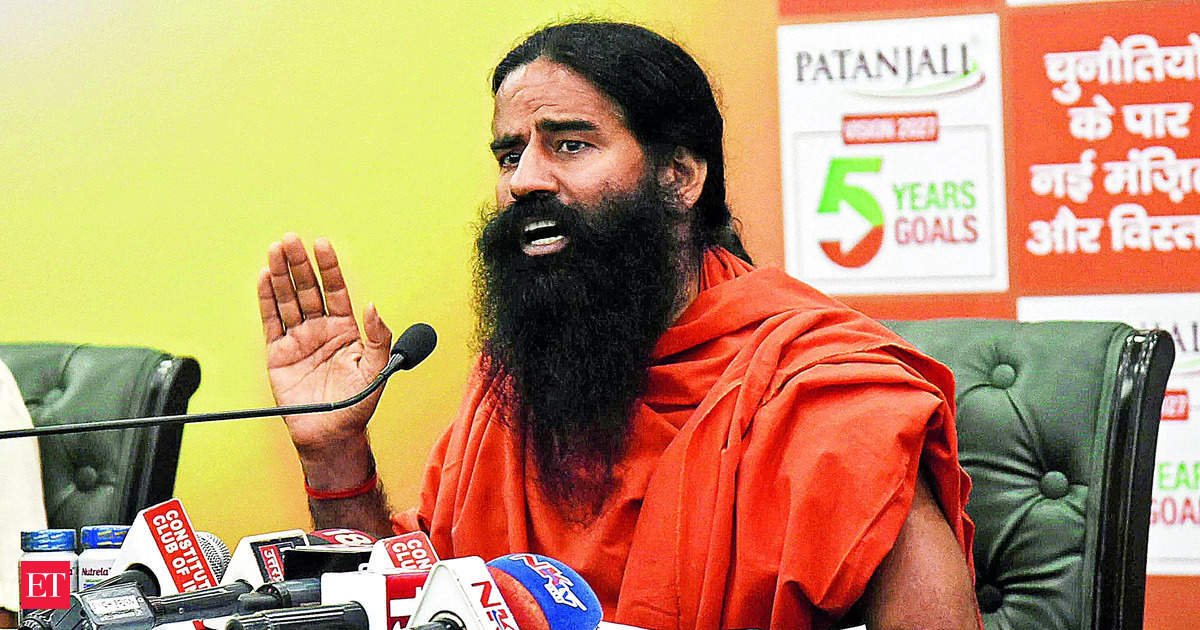
The yoga guru alleged that people were spreading rumours about the brand as Patanjali is not just a product but has become an ideology for millions of consumers.
He also alleged that people were criticising the company’s research and development set-up, even though it is bigger and better than that of Hindustan Unilever Ltd, India’s largest consumer goods maker, and the government’s Ayurveda facilities.
“People try to tarnish Patanjali’s reputation when it comes to Ayurveda and natural foods,” Ramdev said, “But we are focused on our goal of increasing value for investors and strengthening distribution and sales, research, innovation and e-commerce. Premiumisation is also our core focus area now.”
The Ayurvedic products maker, whose phenomenal growth and popularity prompted global and local companies like HUL, L’Oreal, Colgate-Pamolive and Dabur to strengthen their Ayurvedic product portfolios about a decade ago, is now facing several challenges including stiff competition from global and local companies, regulatory compliance issues and criticism over product quality claims.
The company has also tried to shake off the image of being an organisation led by Baba from Haridwar and his aides by bringing in experts to manage key positions.For the full fiscal 2023-24, Patanjali reported total revenue from operations of Rs 31,721.35 crore, with food and FMCG business contributing Rs 9,643.32 crore. Food and FMCG division revenue as a share of total revenue from operations rose to 30.06 per cent in FY24 from 19.49 per cent in FY23.“Despite all obstacles and hardships, we have reached where we are. We have not reached here through any favours… we are here because of the Indian consumer,” Ramdev said.
Commenting on publicly listed Patanjali Foods’ Monday announcement to acquire group company Patanjali Ayurved’s household and personal care business for Rs 1,100 crore, he said, “We have to grow the company and help our investors, stakeholders and retailers grow. The acquisition will create a lot of synergies, cost savings and efficiencies.”
The transaction includes all assets and liabilities associated with the home care and personal care business, as well as employees, distribution network, contracts, licenses, permits, consents and approvals essential to the operations of the business, which will be acquired by the publicly traded company.
Patanjali Ayurved holds a 32.4% stake in Patanjali Foods as on March 31, 2024. Patanjali Ayurved’s home and personal care business currently operates in four major segments: dental care, skin care, household care and hair care.
Additionally, a 20-year license agreement with a 3% commission based on sales revenue was agreed between the two companies, among other terms.
Patanjali Foods’ portfolio includes edible oils, biscuits, cookies, breakfast cereals and noodles through the acquired Ruchi Soya franchise. Non-food businesses include toothpaste, shampoos and soaps.
The company’s chief executive, Sanjeev Asthana, denied that quality scrutiny and increasing competition had caused Patanjali’s market share and brand image to decline over the past two years, saying the company has a two-thirds share of the herbal toothpaste market, is India’s fourth-largest biscuit maker with sales of 16 billion rupees last year and has a commanding share of herbal skin and home care. “We have 10 leadership-level brands in the business,” he said.
Asthana said the company’s overall consumer packaged goods business is growing at 15-20 percent and revenue has doubled to 310 billion rupees in the last three-and-a-half years. “Be it market share or distribution, our growth rate has been phenomenal.”
In 2019, Patanjali Ayurved acquired Ruchi Soya through insolvency proceedings for Rs 4,350 crore and later renamed it Patanjali Foods, with a product portfolio that includes biscuits, honey, flour and Nutrela soya chunks. Last year, Florida-based investment management firm GQG Partners picked up a 5.96% stake in Patanjali Foods for about Rs 2,400 crore.
Asked about the Supreme Court order a few months ago directing Patanjali to remove all misleading advertisements, Ramdev said, “The issue before the Supreme Court was not about quality, it was not about fraud. The issue has been resolved.”
In November last year, following a suit filed by the Indian Medical Association, the Supreme Court had ordered the company to stop all misleading advertisements and warned that it could impose a penalty of Rs 1 crore for each false or misleading claim.
