

For Jacqueline Foster, food is more than just good food: it’s medicine, her livelihood and central to her work as an Ayurvedic healer and chef. Originating in ancient India, Ayurveda is a holistic system of medicine that emphasizes the interconnectedness of mind, body and soul. Foster explains, “It’s a practice that’s more than 5,000 years old in India and I have a lot to learn. I’m a lifelong learner. I’ve carved out my own little niche.”
“Food is an essential part of my life,” says Foster. In fact, her career began at age 14 as a food prep worker at a pizza restaurant in Greece. She went to culinary school, cooked in restaurants, owned a food truck and became a skilled cheesemaker. It was that career as a cheesemaker that led her to the Vineyard, where she first worked at Mermaid Farm and then Grey Barn about 14 years ago.
Foster recalls that about 10 years ago, she “stumbled upon an Ayurvedic workshop at Yoga Barn and was blown away,” little did she know that her life would change again. It was a lightbulb moment: “This was everything I’d been looking for: a framework for connecting more deeply with food and using it as medicine, and how food and the environment impact health.”
“My goal is to combine my 25 years of experience making delicious food with my medical practice to teach people how to eat healthier,” Foster continued. In line with this, she will be hosting three talks at the West Tisbury Library to share how you can use your kitchen to do just that.
Foster will begin a series called “Boost Your Immunity: Ayurveda for Cold and Flu Season” on Sunday, March 3 at 2:30 p.m. This is perfect for anyone who is tired of getting colds all the time, who gets sick often, or who just wants to boost their immunity to avoid infections. You might take vitamin C or zinc when you’re sick. “Those are great, helpful tools, but Ayurveda teaches that you can boost your immunity through gut health, which helps you have more resilience and resistance to all kinds of illnesses, especially the viral and bacterial infections that are prevalent in the fall and spring,” Foster says.
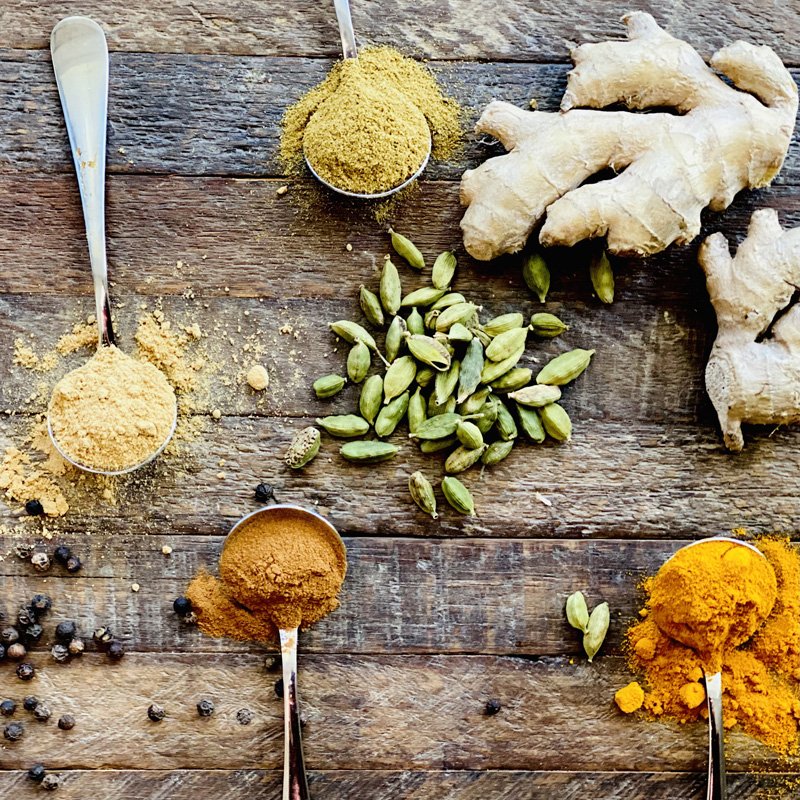
Ayurveda is based on the concept of digestive fire, which is unique and fundamental to Ayurvedic health. “It extends beyond the digestive tract to the ability of cells to metabolize waste and get rid of it. This is very important and slows down in winter. We need to take measures to warm the body from the inside.” For example, ginger is the best friend of the season. “Basically, from October to the end of March or April, you should be cooking with ginger or drinking ginger tea unless you already have a lot of heat in your body,” reports Foster. However, if you already have a lot of inflammation, such as inflammatory arthritis, cystic ulcers, or dermatitis, ginger is not a good choice. “Instead, we should think about the rhythm of doing things,” she explains. In addition to food, lifestyle is also important: when and how much to eat, when to sleep, and when to wake up. “That impacts your immunity. It’s very interesting information and makes sense to hear. Someone figured this out 5,000 years ago, and it works when you put it into practice. The great thing about Ayurveda is that it’s preventative, but there are protocols for that, too.”
Foster will present “Sleep Sanctuary: Ayurveda for Deep Rest” on Sunday, April 28 at 2:30 pm. The science holds that quality sleep is fundamental to good health. Lack of quality sleep impacts not only lifespan, but also healthspan and cognitive decline. Foster will discuss simple Ayurvedic lifestyle and dietary habits to promote restorative rest.
The final session will be “Ayurvedic Spice Rack: Your Kitchen Medicine Chest,” which will take place at 1:30 p.m. on Saturday, May 18. “One of my earliest memories of cooking is my mom having me make imitation foods,” Foster recalls. “I would go to the spice rack and mix all kinds of spices together because I loved the smells and the colors.”
The medicinal properties of spices are key in Ayurveda. You’ll be given a spice jar label cheat sheet and template that shows all the medicinal properties of common and highly impactful spices, including cumin, coriander, fennel seeds, cardamom, turmeric, and mustard seeds. “You’ll also learn how to use spices sparingly, how to store spices properly, and how to bloom spices in your cooking.” Blooming is necessary to activate spices. “We talk about tadka, a common Indian cooking practice, which involves heating healthy fats over medium-low heat and allowing spices to ‘bloom’ for 10 to 30 seconds to release their aroma, awakening spices that have been dry and dormant in the jar for a long time.”
Foster’s goal for the workshop is to leave participants familiar with each topic and some of the tools, and to pique their interest in Ayurveda, which has many positive effects on individuals and groups in many ways. “When we as individuals are in tune with nature, we feel better, and when we feel better, we behave better,” she says.
Jacqueline Foster’s talk will take place at the West Tisbury Library. For more information, Click here for details, To contact Mr. Foster, email hi@foodthatresonates.com.
