

The rabbis of the Mishnah and Talmud 1,800 years ago were deeply interested in the nature of prayer.
In one of their discussions (Mishnah Berakhot 5:1), they discussed how the tradition of the pious elders has a special preparation practice before engaging in communal prayer. These pious people spend an hour in silence, focusing their hearts and minds on reverence and love for God. Only after this preparation do the pious people begin to pray with the proper focus and intention for the hour-long ritual of prayer. They then take another time in silence to discern their experience.

Last week, for my professional development, I participated in a wonderful rabbi and choir meditation retreat in the hills north of Los Angeles. The program is run by the Jewish Spiritual Institute.
This most recent retreat was the third four-week retreat in the 18-month program with the same group of participants and teachers. We knew each other and had been studying and practicing together for the past year. Mornings were spent in silent meditation and communal prayer, and afternoons were devoted to group text study.
Every morning I get up at 5:30 a.m. to join in the optional early morning meditation. After the meditation we pray together for an hour. By the way, singing together with a large, talented and trained choir is one of the great joys of communal living.
The purpose of Jewish prayer is to bring the practitioner closer to their own idea of holiness or divinity, and the spiritual purpose is to join one’s voice to the chorus of the community. I have had many experiences of connecting with aspects of the divine during high moments of worship, when we offer our own personal prayer at the end of the prayer ritual.
On the fifth and last day of the retreat, I noticed something different. Towards the end of the meditation time, I noticed the presence of God accompanying me in silence. I was amazed. The presence of God had joined me even before I had said a single prayer.
As I began to pray, I noticed that the sense of the divine presence remained with me while I sang the song about how God wants our hearts to be, and something new opened up within me. It was as if I was encountering the liturgical words from another perspective, from inside the words, from the perspective of one who felt the words come alive and wrote the words themselves.
When we are reunited with a loved one after some time away, our hearts often burst with joy at seeing them. We may feel an overwhelming sense of gratitude that love has been returned, and deep, heartfelt expressions of thanks may spill from our lips as we revel in the joy of reunion. As I continued to pray, I felt this embrace and gratitude, and I realized that many of our liturgies may have been written from this deep intimacy.
As I lost myself in the beautiful voices all around me, a second realization came to me: we were singing the beautiful melody from Psalm 100, “Serve God with Joy!” Another member of my group, a choirgirl from New Jersey, had sung this same ecstatic melody with me 22 years earlier during a Sabbath service at the Jewish Meditation Center in Berkeley, California.
At the time, she had just graduated from college and I was the editor of a local newspaper. Our singing together dramatically energized and opened our hearts. That Sabbath service 22 years ago transformed both of us in the development of our spiritual lives. She went on to study and train to be a chorister. I left journalism to study and train to be a rabbi and educator. This professional development program reunited our friendship after 20 years apart.
And 22 years later, we had a second transformative experience that opened our hearts, filled us with serenity, and satisfied our weary souls after months of intense community service. The choirmaster and I had come full circle, back to where we started, now ready to face the world and serve God with joy.
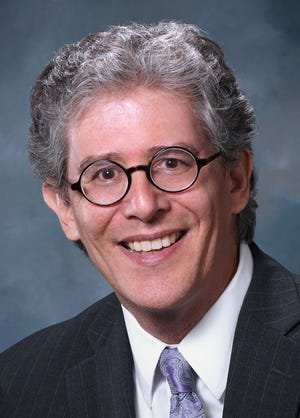
Michael Roth is rabbi at Temple Beth Shalom in Hudson and senior Jewish educator at Kent State University’s Hillel School, where he also teaches in the Jewish Studies department at Kent State University.
