

“We go way beyond the question of ‘why is it important?’ Because it matters to God, it matters to us as God’s people. And we have a calling to live it.”
Justice is an important concept throughout the Bible. As followers of Christ, we believe the pursuit of justice is a vital aspect of our walk of faith. As members of the Christian Reformed Church, we embrace this as part of our fivefold calling, which says, “Hear the cry of the oppressed, the forsaken, and the underprivileged, and we strive to do justice and love mercy, as we walk humbly with our God” (crcna.org/welcome/our-vision-our-mission-our-calling). But why is justice important? And what does it look like if we pursue this calling in our lives? Several justice-seekers from various CRC agencies and ministries met recently to discuss this issue.
Andrew Oppong, Social Justice Content Manager at Thrive: If you look at Micah 6:8, it says, “What does the Lord require of you? To do justice, to love mercy, and to walk humbly with your God.” This is such a beautiful verse. We love this verse in the CRC. But what’s going on in the verse before it? Israel is wondering, “With what shall I appear before the Lord? Shall I appear before the Lord with a burnt offering? Shall I appear before the Lord with ten thousand rivers of olive oil?” (Micah 6:6-7). This is good, but it’s incomplete. In the work we do at Thrive, we try to remind people of the fundamental connection between biblical justice and discipleship. How we live our lives, how we worship, how we form our faith, how we do it all, these are not separate. They are all intimately connected.
Cindy Stover, Justice Mobilization Program Manager at CRCNA: If this original order of creation is within Reformed theology’s understanding of how God intended the world — a place where there is justice, where there is peace, where all people and all creation flourish — then it really means relationality. Theologian Nicholas Wolterstorff talks about the relational nature of justice and fairness as meaning we are “in right relationship” with each other and with all creation. Doing God’s justice in the world is therefore an inherently social act.
Adrienne Jacobs, Senior Indigenous Justice and Reconciliation Lead at CRCNA: I have been asked how Indigenous spirituality differs from Christianity, and I always answer that it embodies Indigenous spirituality and understanding of the spiritual world. Indigenous spirituality includes questions like: What is my relationship to the land? What is my relationship to other people? To me, Christianity and justice sometimes don’t look at it that way. I think of the long history of residential schools in Canada, where church leaders, including some of the most trained leaders, priests and nuns, have done things to Indigenous children that are totally contrary to their propositional beliefs. If you are a justice-minded Christian, that has to be reflected in your actions.
Jody Coeman, Church and Community Coordinator for World Renew: We need the church to help us live out our righteousness so that when people experience our “setting things right” and wonder, “Who are they like?” we can point them to Jesus and answer, “We are like our Father.” The church needs to help us live out the righteousness the world is longing for.
Rachel Vlogi, Regional Ministry Developer (Western Canada), Diaconal Ministries Canada: Our denomination’s mission for deacons includes a call to and engagement with ministries of charity and justice: “Deacons offer holistic responses that respect the dignity of all people, work to transform exploitative structures and systems, and seek opportunities for advocacy, equipping the church for ministries of reconciliation and peacebuilding.” We go far beyond the question, “Why does it matter?” Because it matters to God, it matters to us as God’s people. And we are called to live it.
How does the deacon team provide a holistic response? As we walk that path, working with people and building relationships with them, we see how injustice operates in society, whether it be the elderly living on a fixed income, the disabled, or those suffering from chronic illness. How does the housing crisis affect the refugee families the church serves? The church is directly involved in justice. Perhaps it’s just a matter of discerning justice and not being overwhelmed. We need to discern how to respond and collaborate.
Chris Orme, Church Relations Officer at World Renew: My starting point for answering the question of why justice matters is usually to go back to Luke chapter 4, where Jesus enters the synagogue in Nazareth, opens the scroll of the prophet Isaiah, and says, “The Spirit of the Lord is upon me, because he has anointed me to preach good news to the poor, to set free the captives, and to restore sight to the blind, to set at liberty the oppressed, to proclaim the year of the Lord’s favor.” Justice matters because it is the blueprint for Jesus’ ministry. It is the key to understanding what we are called to.
Jacobs: Living your Christian faith in that hospitable way is an inviting life. It’s in you. Jesus said, “By this all men will know that you are my disciples, if you have love for one another” (John 13:35). So it’s contagious. There’s something powerful about getting to know people, engaging with them, and working through difficult things.
Quote: Diaconal Ministries Canada works with a financial life coach. The deacon team in British Columbia deployed a coach in certain charitable situations. She worked with people who the church was supporting, but who now may not need the church’s financial support. When churches work in good faith and have access to the right resources, people are empowered and able to take more agency in their situations. You don’t want to be paralyzed by fear of doing the wrong thing, but there are barriers that can be addressed.
Koeman: I just started working with four churches to shift the focus of their food ministries from “food charity” to “food justice.” What they do won’t change dramatically, but they will work through a process of understanding and shifting focus. We need more justice, not less charity.
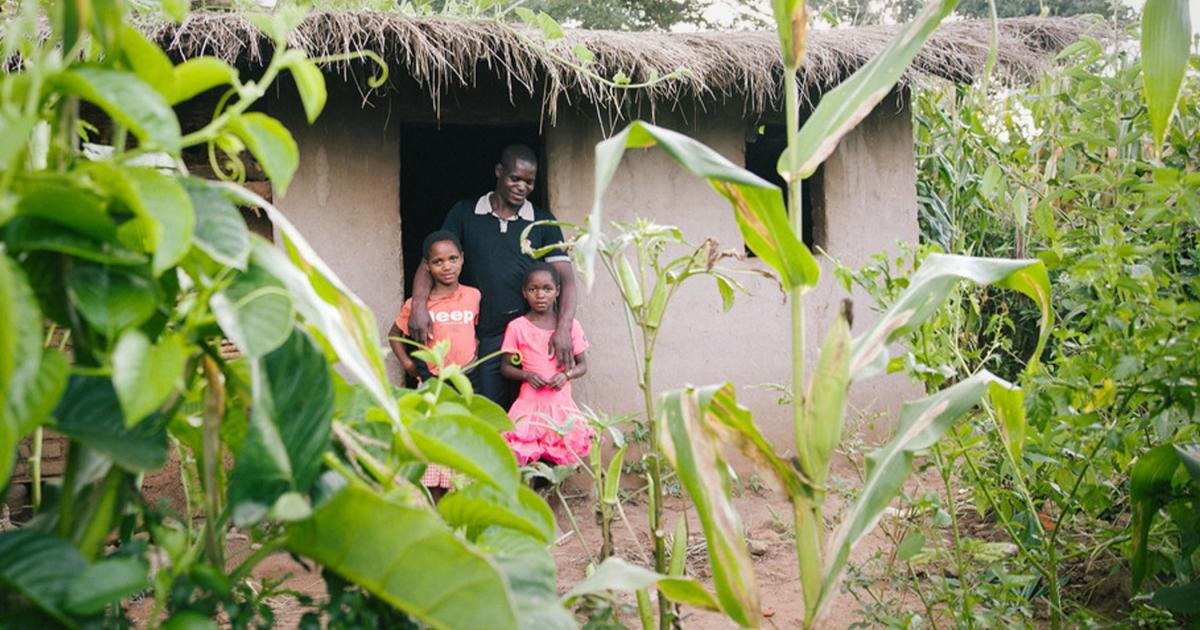
Or me: If I am part of an urban food insecure church and I advocate for food access locally, I will advocate for it globally. World Renew is working with a church in Malawi to build food security through garden irrigation. The pastor told us, “When people have enough to eat, the church functions better. People care for and love each other better, and they have a greater ability to see beyond the church to who else needs support.” Justice is important because it is God’s heart. There is no shortage of ways and things we can get involved, but the more people we have working together in our communities, the better.
Opong: I always encourage people that we are all woven into the great tapestry of God’s faithfulness. Wherever you are, you have something to contribute. We must always be inviting and know that everyone has something to give. We all have a different role to play in the work of justice.
To read more about this conversation, visit worldrenew.ca/stories
Pursuing Biblical Justice: A Starting Point
The Youth Justice Project is sponsored by NewGround (Diaconal Ministries Canada). Reach the next generation of justice seekers in your church and encourage them to get involved in your community: diaconalministries.com/newground/new-ground-youth-justice-project.
