

Black garlic is garlic (Spring onion This grape variety is ripened in a hot and humid environment.
Fresh garlic is exposed to temperatures of 140 to 194 degrees Fahrenheit (60 to 90 degrees Celsius) and 70 to 90 percent humidity for several weeks. The result is a deep brownish-black clove that is higher in antioxidants than regular garlic, has a chewy texture and a sweeter flavor.
Research has shown that consuming black garlic has a number of health benefits, including improving risk factors for heart disease, such as cholesterol and blood pressure.
Health by Design
Black garlic is an excellent source of protective plant compounds and contains higher levels of certain antioxidants than regular garlic, substances that prevent cell damage by neutralizing reactive compounds called free radicals.
Garlic is concentrated with several types of antioxidants, and the aging process used to make black garlic increases the levels of some of these substances. For example, studies have shown that black garlic contains up to 10 times more phenolic compounds, such as hydroxycinnamic acids, and up to eight times more flavonoid compounds than regular garlic.
Black garlic is also a concentrated source of sulfur-containing phytochemicals such as gamma-glutamyl-S-methyl-L-cysteine sulfoxide (GSMCS) and S-allylmercapto-L-cysteine (SAMC), which have powerful cytoprotective properties.
Not only does black garlic contain higher amounts of certain protective substances than regular garlic, but studies have shown that the heat process used to make black garlic makes the sulfur compounds in black garlic more bioavailable, making them more easily absorbed by the body.
The sulfur compounds found in garlic, including black garlic, are thought to be responsible for most of garlic’s health benefits. These substances have powerful anti-inflammatory and antioxidant properties, and have been shown to potentially protect against certain health conditions. Studies have shown that people who consume garlic regularly have lower rates of certain diseases, including gastrointestinal cancer.
Multiple studies have shown that a diet high in garlic may reduce the incidence of heart disease risk factors such as high blood pressure, high cholesterol, and atherosclerosis (thickening or hardening of the arteries caused by plaque buildup).
Black garlic may offer even more benefits to heart health because it is so high in antioxidants and anti-inflammatory substances. Studies have shown that this particular type of garlic may effectively lower blood pressure and blood lipid levels, reducing arteriosclerosis.
A small study in 62 people found that taking four cloves of black garlic daily for 12 weeks significantly increased levels of apolipoprotein A (Apo)A1, a protein that helps high-density lipoprotein (HDL) cholesterol remove low-density lipoprotein (LDL) cholesterol (the “bad” cholesterol) from the bloodstream. It also significantly reduced cell adhesion molecules (proteins that allow cells to adhere to each other and their surroundings). These proteins play an important role in the development and progression of atherosclerosis.
Research also suggests that extracts from black garlic may increase levels of heart-protective HDL cholesterol and lower blood pressure.
Black garlic may also improve cardiac function in people with heart disease: One study found that taking 20 grams (g) of black garlic daily for six months improved cardiac function (including the amount of oxygen-rich blood pumped by the heart) in people with heart failure compared to a control group.
Black garlic treatment increased blood levels of the antioxidant enzymes glutathione peroxidase (GSH-Px) and superoxide dismutase (SOD), suggesting that black garlic may boost the body’s antioxidant defenses and improve cardiac health and function.
Garlic, including black garlic, is low in calories and is usually consumed in small amounts, so it is not a good source of vitamins or minerals.
Here is the nutritional content of 3 garlic cloves:
- calorie: 13.4
- protein: < 1 gram (g)
- fat: Less than 1 g
- carbohydrates: 2.98 g
- fiber: Less than 1 g
- Vitamin C: 2.81 milligrams (mg) or 3% of the recommended daily value (DV)
In typical servings, garlic, including black garlic, contains small amounts of certain nutrients such as vitamin C and potassium, but not enough to contribute significantly to your daily nutritional intake. For example, three cloves of garlic contain 3% of your daily need for vitamin C, a powerful antioxidant that plays important roles in the immune system, skin, and more.
When consumed in normal amounts, garlic, including black garlic, is safe for most people and does not pose any significant health risks. However, black garlic is not safe for people with garlic allergies. Consuming large amounts of black garlic may also cause symptoms such as bad breath, body odor, nausea, vomiting, and gas.
Black garlic supplements, such as black garlic extract, are also considered safe. However, garlic has blood-thinning properties, and high doses of garlic supplements may not be safe for people taking blood-thinning medications or who have blood clotting disorders. For this reason, if you are at high risk of bleeding, it is recommended that you check with your healthcare provider before taking garlic supplements.
Also, if you are pregnant or breastfeeding, consult your healthcare provider before consuming large amounts of black garlic or taking black garlic supplements.
Finally, if black garlic is not aged enough, Botulinum (Botulinum)spore. Botulinum The spores produce dangerous toxins that can be harmful to your health if ingested. Because of this health risk, experts don’t recommend making black garlic using household appliances like slow cookers or rice cookers.
The aging process used to produce black garlic involves a chemical reaction called the Maillard reaction, which results in darker garlic that is sweeter and less spicy than regular garlic.
In addition to its unique flavor, black garlic has a chewy, sticky texture that sets it apart from regular garlic.
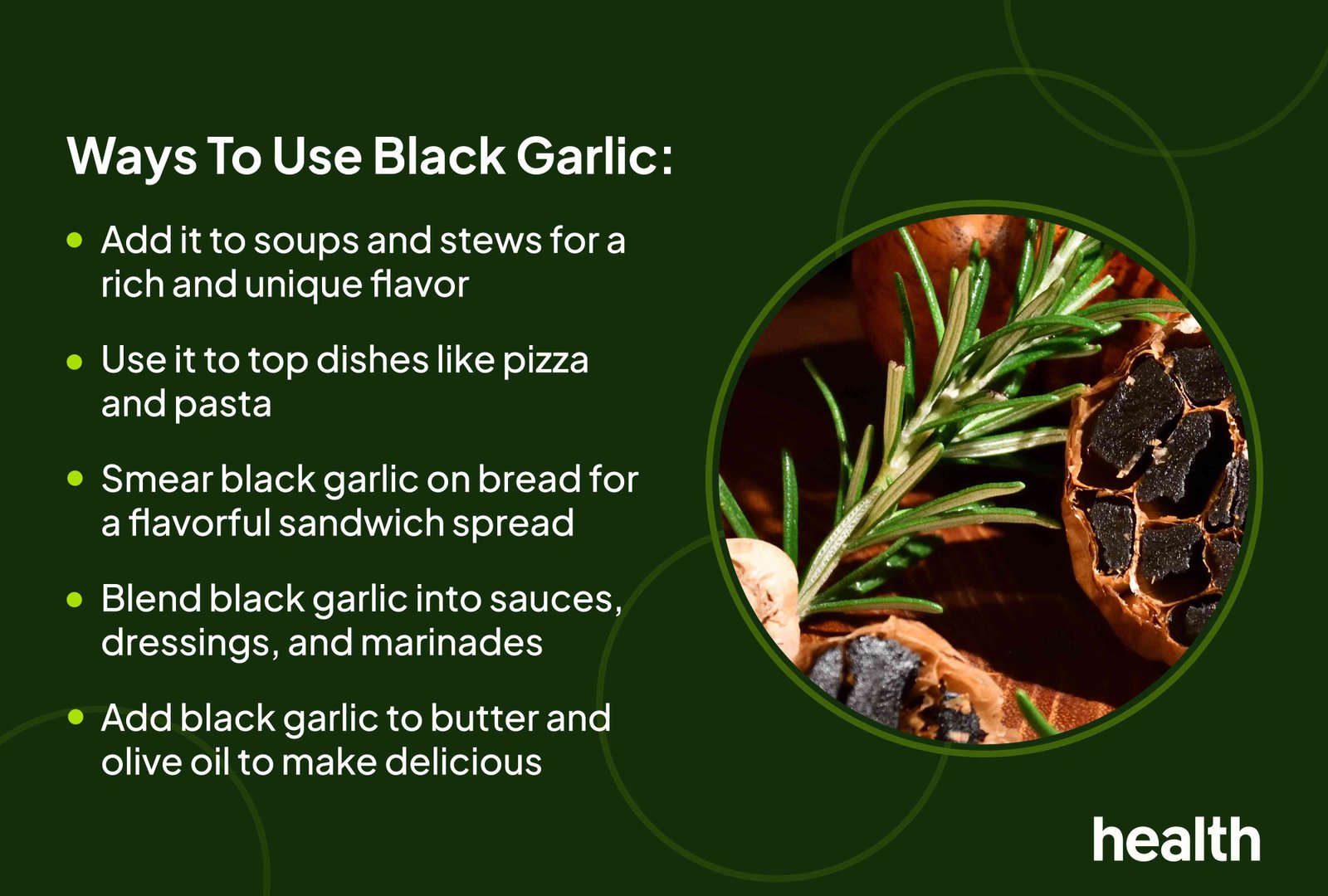
There are several ways to use black garlic.
- Add it to soups and stews for a rich and unique flavor.
- Use as a topping for pizza, pasta, and other dishes.
- Spread black garlic on bread for a flavorful sandwich spread
- Incorporate Black Garlic into Sauces, Dressings, and Marinades
- Black garlic can be added to butter and olive oil to create a delicious spread or dip.
Black garlic is available in a variety of forms, including whole cloves, cloves, puree, powder, etc. Black garlic products are sold at specialty grocery stores and can also be purchased online.
Black garlic is made by aging fresh garlic in a hot and humid environment for several weeks. It has a sweet, chewy taste and is rich in healthy plant compounds.
Some studies have shown that consuming black garlic may promote heart health by boosting the body’s antioxidant defenses and protecting against heart disease risk factors, such as atherosclerosis and high blood pressure.
Black garlic has a unique flavor and is a versatile ingredient to have in your kitchen because it can add depth and interest to your favorite dishes, like pasta, soups, and sandwiches.
