

The Texas A&M Agriculture, Food and Nutrition Evidence Center presented its first set of studies funded by the National Academies of Sciences, Engineering and Medicine (NASEM) at NUTRITION 2024, the American Society for Nutrition’s annual flagship conference, which brings together top nutrition scientists for research meetings, presentations and talks.
Established in 2021, the Evidence Centre’s mission is to produce transparent, reproducible evidence reviews and syntheses that evaluate the effectiveness of agri-food policies, practices and guidance related to agricultural, environmental, human and economic health.
Experts from the Evidence Center were selected to give five oral presentations based on NASEM-funded research and two poster presentations based on other projects, including one by Maureen Spill, PhD, who was appointed the Evidence Center’s first associate director in May.
“It’s significant that the Evidence Centre is making its professional debut at NUTRITION 2024,” says Spill. “The conference brings together the best nutritionists to drive scientific advances that lead to better policy and improved population health. The Evidence Centre team is proud to be at the forefront of that innovation.”
The series of studies presented is part of a study by the National Academies of Sciences, Engineering, and Medicine investigating the latest scientific evidence on the relationship between seafood consumption and child growth and development. The review focuses on seafood consumption in both mothers and children and its impact on different aspects of development. The aim is to provide an up-to-date understanding of the role of seafood consumption in the context of the overall diet.
Conclusions presented by the Evidence Centre
The Evidence Centre completed two complementary de novo systematic reviews to evaluate the relationship between seafood consumption and neurocognitive development in children and adolescents. The first review evaluated the relationship between maternal seafood consumption during pregnancy and breastfeeding and children’s neurocognitive development. Results showed that seafood consumption during pregnancy may be favourably associated with children’s behavioural, attentional and general developmental outcomes.
The second systematic review evaluated the relationship between seafood consumption and neurocognitive development during childhood and adolescence. Seafood consumption, primarily fatty seafood consumption, was associated with favorable cognitive development and behavioral outcomes throughout childhood and adolescence. These results support previous studies conducted by the USDA and will inform future dietary guidelines regarding seafood consumption during pregnancy.
Identifying the benefits and risks of seafood in the diet
While seafood consumption has nutritional benefits, it also carries risks of exposure to environmental contaminants. The scoping review assessed the amount of evidence investigating the relationship between exposure to toxicants in seafood during pregnancy, lactation, and childhood and childhood outcomes. They identified exposure-outcome combinations with sufficient evidence across multiple studies that could provide a basis for a systematic review and highlighted gaps in the existing research literature.
Based on the results of the scoping review, a systematic review was conducted to examine the association between maternal lead exposure from seafood intake and child neurodevelopment. Overall, there was no evidence to indicate that maternal lead exposure from seafood adversely affected child neurodevelopment, and seafood intake was associated with better neurodevelopmental scores overall. However, due to the limited number of studies, further research in diverse populations is needed to improve understanding of this association.
Mercury is a common contaminant in seafood that can have adverse effects on child development. A comprehensive review of existing systematic reviews examined prenatal and postnatal mercury exposure and child outcomes. Over 20 relevant systematic reviews were included, covering all child outcomes identified by the NASEM committee, except for academic achievement and stunting. Several reviews addressed autism spectrum disorders, developmental domains, and growth, and most were rated as moderate to high quality.
The highest quality evidence standards
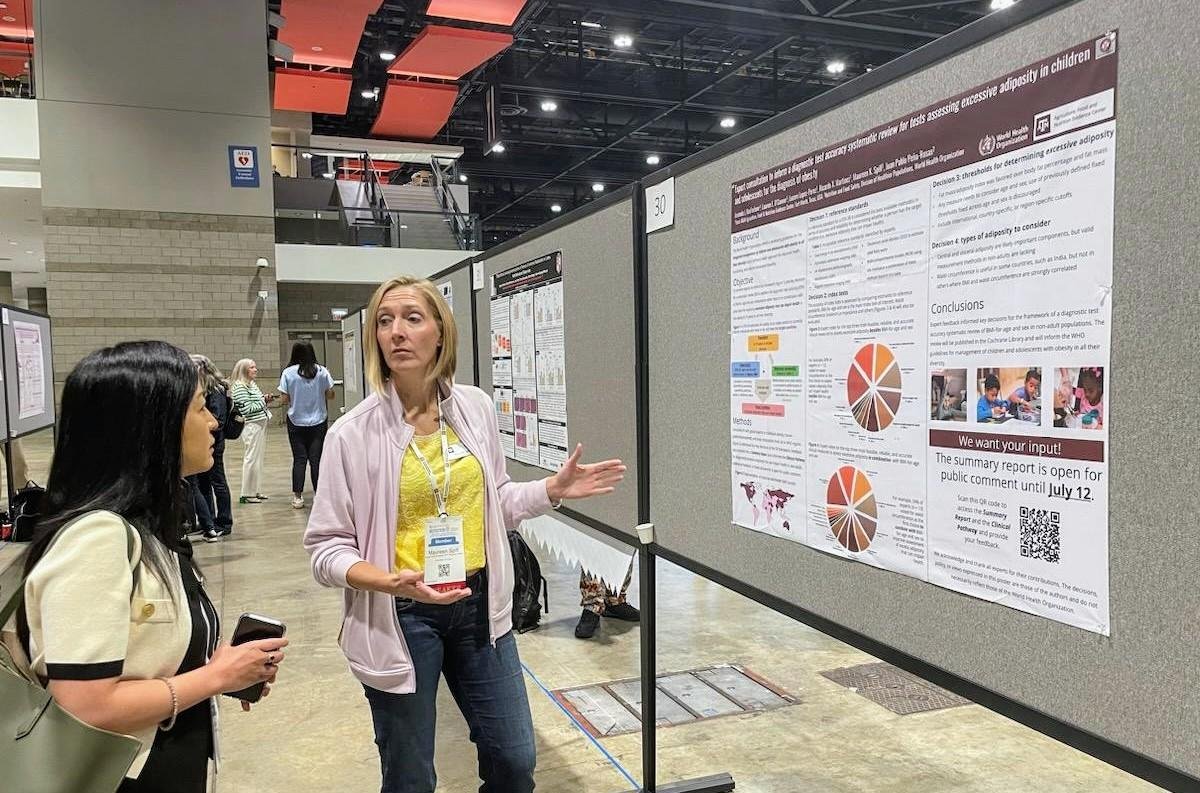
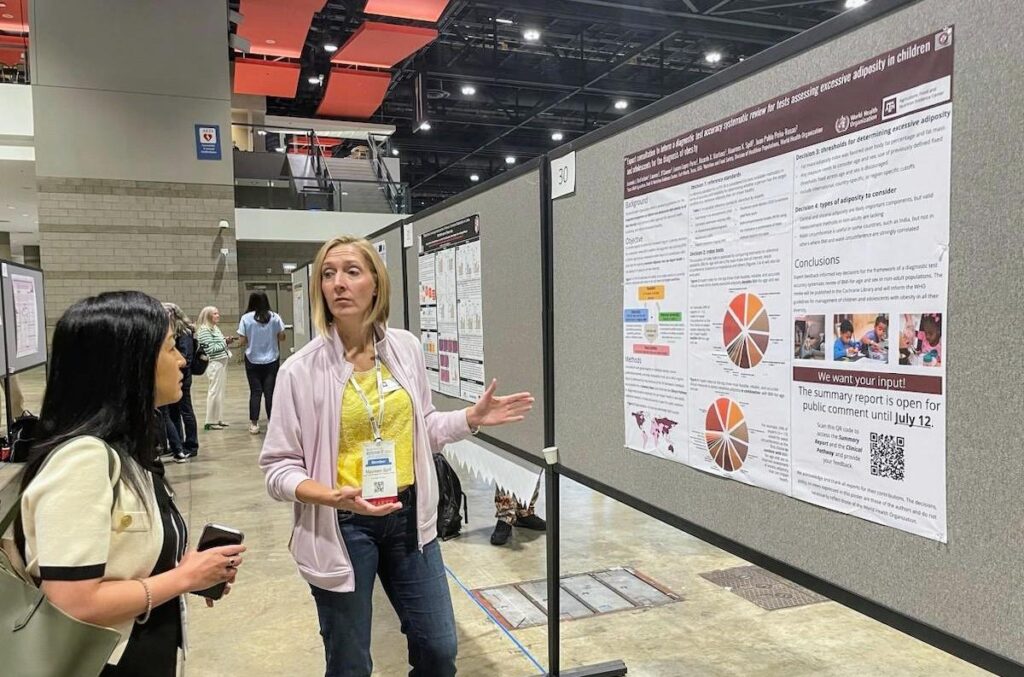
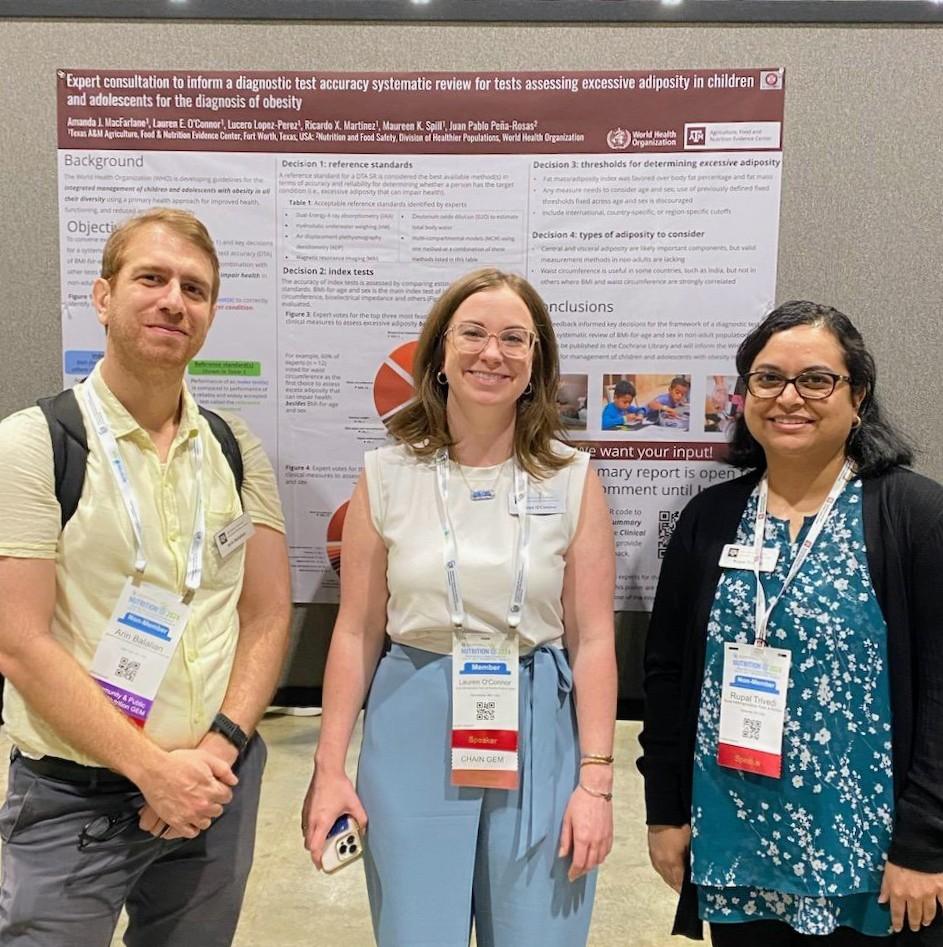
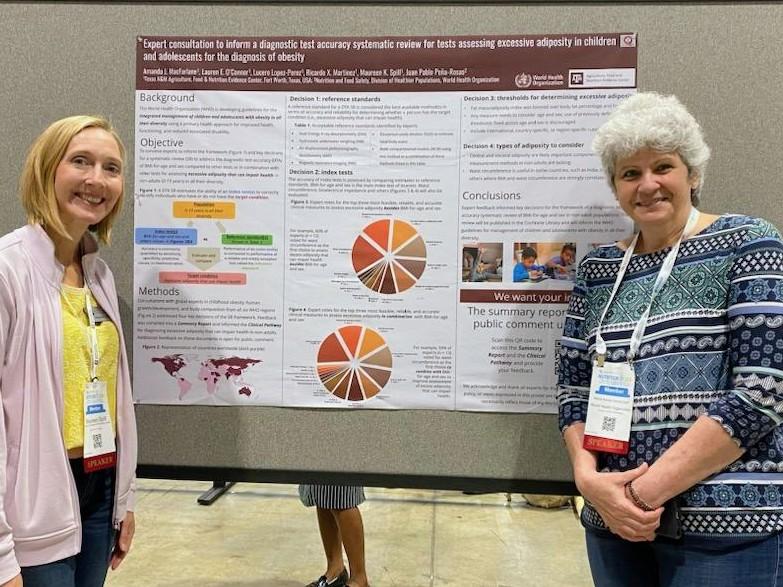
In addition to the NASEM-funded research, Evidence Center team members presented posters on systematic reviews examining the association between free school meals and school and student outcomes. Poster presentations included a summary of an expert consultation on the accuracy of tests to assess excess fat in children and adolescents to diagnose obesity, to support the World Health Organization’s development of guidelines for the clinical management of obese children.
Dr Amanda McFarlane, director of the Evidence Centre, said the team adheres to the highest standards in the way they do their work. The Evidence Centre promotes scientific rigour and transparency, which are the foundation for translating scientific evidence into reproducible, evidence-based solutions to improve public health.
“This opportunity to showcase our work alongside some of the top researchers in the nutrition science community is exciting,” said MacFarlane. “The team’s findings will inform scientists, researchers and policymakers in the development of evidence-based dietary recommendations and identify topics that need further investigation, ultimately leading to improved human health.”

