

In addition to eating carrots, taking a supplement containing beta-carotene, also a carotenoid, increased carotenoid levels even further.
According to the study authors, nine in 10 Americans do not eat the recommended amount of fruits and vegetables.
“Our findings suggest that small, manageable changes in diet can increase carotenoid stores in the skin in young adults,” says Suresh Mathews, PhD, professor and chair of the Department of Nutrition and Dietetics at Samford University in Birmingham, Alabama.
What are carotenoids and why are they important?
“They have two important roles in health,” says Dr. Dave Bridges, an associate professor of nutritional sciences at the University of Michigan School of Public Health, who was not involved in the study.
“One is that it provides the materials that become vitamin A, and the other is that it acts as an antioxidant,” he says.
Higher carotenoid concentrations in the skin may also improve skin health, including better immune function and a lower incidence of non-melanoma skin cancer, Dr. Matthews says.
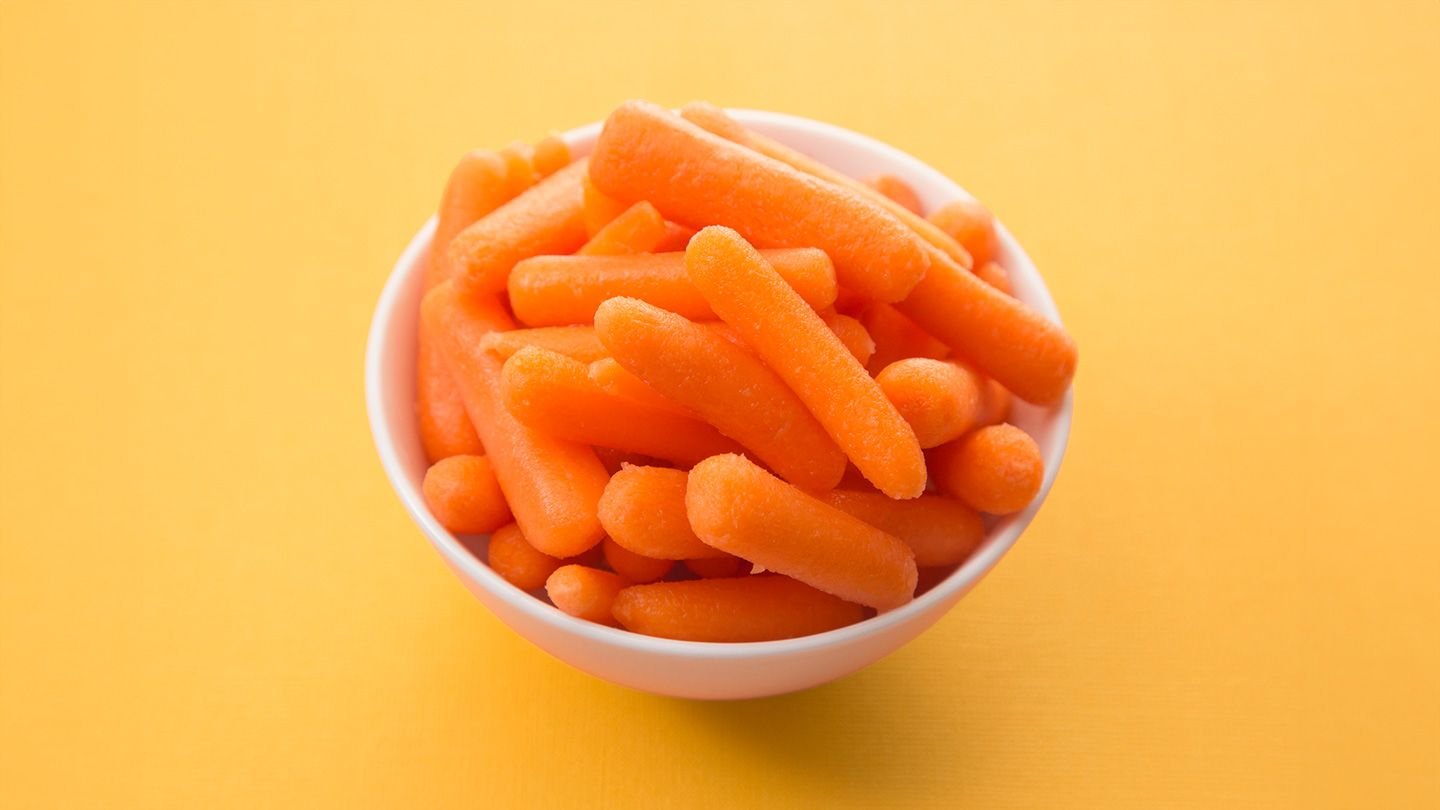
Participants ate 1/2 cup of carrots three times a week.
In this study, researchers aimed to understand whether eating baby carrots three times a week had a measurable effect on carotenoid levels and how that compared to the effects of a beta-carotene supplement, which is also designed to boost antioxidant levels.
The researchers randomly assigned 60 adolescents to consume 100 grams (about half a cup) of baby carrots, a multivitamin supplement containing beta-carotene, or the combination of baby carrots and the supplement, or 100 grams of sliced Granny Smith apples (a control group) for four weeks.
Before and after the dietary intervention, the scientists measured the participants’ carotenoid levels using a device called VeggieMeter, a validated tool that uses light waves to measure carotenoids in a person’s skin.
Compared to pre-intervention levels, skin carotenoid scores increased significantly: 10.8 percent in the group that consumed baby carrots alone and 21.6 percent in the group that consumed carrots and the supplement.
No changes in skin carotenoid concentrations were observed in the control group or in the group that only took the supplement.
Ginseng and supplements may have synergistic effects
Matthews said the study uncovered potential differences in how carotenoids are absorbed by the body depending on whether they come from food or supplements.
These findings suggest that a multivitamin containing beta-carotene combined with carrots in the diet may have a synergistic effect, helping people absorb more carotenoids overall, “which we call bioavailability,” Dr. Bridges said.
“While this isn’t always the case, generally speaking, your body absorbs nutrients and vitamins better when you eat nutritious foods than when you take supplements,” he says.
How much vitamin A and carotenoids should a person take?
Vitamin A deficiency is very rare in the U.S., Bridges said. Taking too much vitamin A poses several risks, ranging from severe headaches and vision loss to coma and death.
“It hasn’t really been established whether people who have adequate vitamin A intake would get any additional health benefit from taking additional carotenoids,” Bridges points out.
But people who eat few fruits and vegetables might benefit from taking the supplements and eating carrots as per the study’s instructions, he says.
The authors acknowledge that one of the limitations of this study is that it was conducted among young adults. “Additional research is needed to study the effects on other population groups and understand the long-term effects,” Matthews said.
Are baby carrots healthier than regular carrots?
Fun fact: Baby carrots and regular carrots are essentially the same thing. Baby carrots are whole carrot chunks that are peeled, cut into 2-inch pieces, and packaged.
These snack foods didn’t exist until the 1990s, but once they appeared on store shelves, carrot consumption in the United States more than doubled.
