

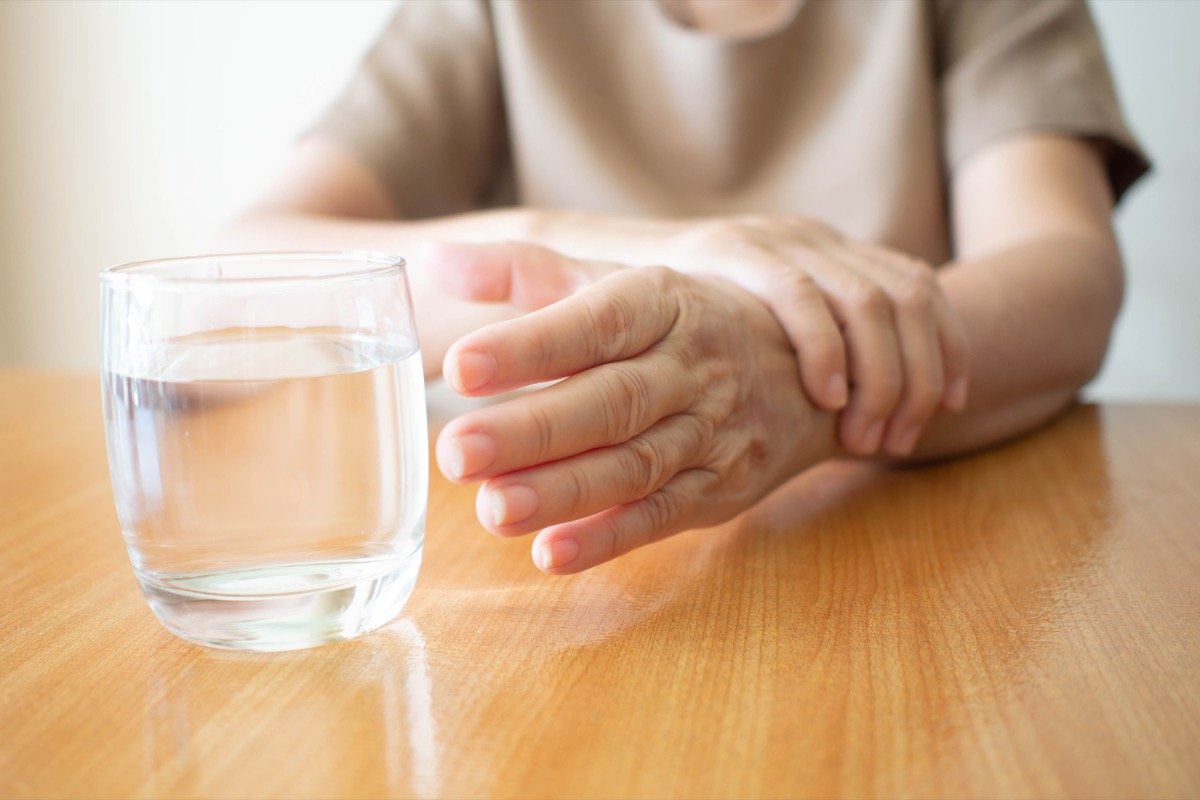
Over the past few decades, doctors and researchers have learned a lot about Parkinson’s disease, but the exact cause of the disease is still unknown. Scientists have long believed that a person’s genetic predisposition, along with a number of environmental risk factors, plays a key role in the development of this neurodegenerative disease. But now, new research is uncovering another potential contributing factor to Parkinson’s disease: vitamin deficiencies.
Related: 21 Surprising Signs of Vitamin Deficiency.
The study, published in May 2024, npj Parkinson’s disease The journal aims to “identify the gut microbial signature” of people with Parkinson’s disease. In the study, researchers performed a meta-analysis using fecal samples from 94 Parkinson’s disease patients and 73 healthy controls in Japan. They then compared their findings with previous data from the United States, Germany, China, and Taiwan.
Research has found that Parkinson’s disease patients have significant deficiencies in bacterial genes that may contribute to an underlying deficiency of two important B vitamins, riboflavin (B2) and biotin (B7).
“Pathway analysis showed that riboflavin and biotin biosynthetic genes were significantly decreased in Parkinson’s disease after adjusting for confounding factors,” the researchers wrote.
According to the Cleveland Clinic, vitamin B2, or riboflavin, is a B-complex vitamin found in meats, fortified grains, and nuts.
“Riboflavin is an essential micronutrient that aids in cell development and function,” says the registered dietitian. Kayla KoppRegistered dietitian Jonathan Meyer tells the Cleveland Clinic: “The healthy bacteria in your gut flora make small amounts of riboflavin, but your body needs much more to function, which is why it’s so important to get enough of this B vitamin in your daily diet.”
The new study researchers also noted that riboflavin is known to improve “oxidative stress, mitochondrial dysfunction, neuroinflammation, and glutamate excitotoxicity,” all of which are linked to the development of Parkinson’s disease.
Related: Folate Deficiency: 5 Signs That You’re Lacking Vitamin B9.
Vitamin B7, or biotin, is another B vitamin that you can get by eating meat, eggs, fish, seeds, nuts, and some vegetables. This vitamin supports the nervous system, liver, eyes, hair, and skin, according to WebMD.
The researchers also noted in their study that biotin “produces anti-inflammatory substances and reduces inflammation, leading to relief of allergies, immunological conditions, and inflammatory bowel disease.”
Given the health effects of these vitamin deficiencies, the researchers concluded that people with Parkinson’s disease may benefit from taking B vitamin supplements.
“Riboflavin and/or biotin supplementation is likely to be beneficial in a subset of Parkinson’s disease patients in whom gut microbiota dysbiosis plays an important role,” the researchers wrote.
Some experts have warned that people should take the study at face value and not immediately follow the researchers’ recommendations.
“We believe these data are premature to justify therapeutic intervention.” Tim Sampson“This study shows that the gut microbiome can: [Parkinson’s]”
