

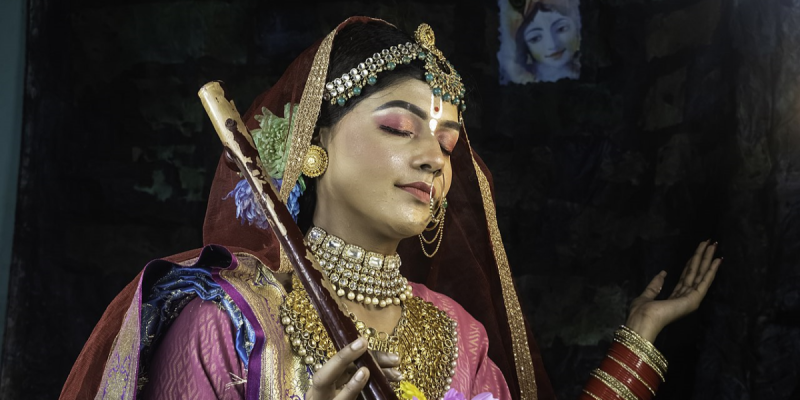
Literary canons have long marginalized women’s writing, especially in non-white countries, despite the fact that in India, for example, records of women’s literary talent date back to as early as the 6th century BCE. The first poetry by women in India is credited to Buddhism. The religion’s belief in equality and freedom provided a suitable environment for women to express their views and write poetry.
Wild Women: Redefining Sacred Indian Poetry
Arundhati Subramaniam’s latest book, The Wild Woman: Seeker, Protagonist, and Goddess in Indian Sacred Poetryis a fascinating anthology that delves deeply into the voices of women poets from across the Indian subcontinent.
Subramaniam is a poet and spiritual traveller, and her books include one on the modern woman’s sacred journey. Women wearing their own clothesA bestselling biography of a modern mystic, Sadhguru: More than life; Bhakti Poetry, Sacred Journey, Pilgrims in IndiaShe has also been reprinted many times. Book of Buddha.
Arundhati Subramaniam (Ed.)
The Wild Woman: Seeker, Protagonist, and Goddess in Indian Sacred Poetry
Penguin (2024)
Subramaniam builds on her earlier work to bring together a broad swath of female spirituality, rebellion and sensuality spanning centuries. This anthology is more than just a collection of poems; it powerfully reclaims the female voices that have long been ignored and sanctified by patriarchal narratives.
The book is divided into three parts: the first deals with mystics, seekers and believers, the second focuses on women as protagonists, and the third on the Goddess, with detailed descriptions of sources and an extensive list of translators. This structure adds depth to this anthology, showcasing the rich voices and perspectives of sacred poetry by Indian women.
Celebrating femininity and spirituality
The book’s first and longest section focuses on 56 women poets, ranging from the Vedic mystic and goddess Vak to the mid-20th century Indira Devi. Though from different eras and geographical origins, these poets share a common theme: a fascination with the female body as both form and text inscribed with sacred meaning.
Janabai, a bold voice in Marathi devotional literature, proclaims, “I eat God/I drink God/I sleep in God,” symbolizing the merging of mind and body. Meera’s ecstatic declaration, “I’m in love/Who cares what happens next?” further illustrates this uninhibited emotion. Combining spiritual and sexual desire.
Subramaniam’s collection of poems challenges the traditional and often domestic portrayal of women in sacred poetry: these poets are not obedient followers but bold explorers who question and defy societal norms.
of Disdain for social approval and absolute trust in God’s partner Many of these poems reflect the unique gender dynamics in spiritual literature, Subramaniam provocatively asks. Faith may override all other variables in women’s spiritual experiencessuggests Sharing sisterhood It’s something that has continued for centuries.
Notably, Subramaniam includes lesser known poets along with well-known poets like Lal Ded, Akka Mahadevi and Janabai. The anthology highlights the voices of Rami from Bengali, Tral from Gujarat and courtesan poets like Amrapali and Peero.
Amrapali, well known for her beauty, is here an older woman reflecting on her body, while Peero movingly recounts her escape from Lahore’s red light district to find solace in spirituality.
The inclusion of a character like Karaikal Ammaiyar, who worshipped Lord Shiva in an upside-down form walking upside down, emphasises the “paradoxes and inversions of the spiritual journey” that Subramaniam seeks to highlight.
In the second half of the book, the focus shifts to female protagonists created by male spiritualists. Gita Govinda It is depicted as A proud, intelligent, solitary individual who exists outside of socially accepted sexual orientation.
Vidyapati, a 14th century Mithili poet and devotee of Shiva, composed passionate love songs about Krishna and Radha. He broke with tradition by writing in Maithili rather than the court language of Sanskrit. His poems are unique in that they centre around Radha’s point of view and vividly portray her in a range of emotional states including desire, confusion, bewilderment and anguish.
Brah Shah’s poetic persona wears women’s clothing, braids her hair, and dances while expressing a spiritual longing and identity crisis that transcends gender.
Celebrating the Divine Feminine
In the third and final section, Subramaniam explores the notion of wildness in the goddess in general. Devi Mahatmiyam Form The earliest core of the divine feminineCarly Fear, Tantra, Destruction and Compassion.
Contrasting depictions of the Goddess – Ramprasad Sen’s Fanatical QuestionsAdi Shankaracharya’s serene song, “Am I Eating You or You Eating Me?” Soundarya Lahari – highlights the multifaceted nature of the divine feminine. Subramaniam’s study is extensive and insightful, revealing the many ways in which women’s devotional poetry redefines the sacred itself.
Subramaniam has personal and academic engagement with these poets and their work. She speaks of the “magical, chaotic diversity” of the Indian subcontinent and marvels at the myriad spiritual paths taken by women. From mystics and devotees to courtesans and housewives, these women form a sisterhood bound by a willingness to ask uncomfortable questions and reject easy answers.
While early Indian women’s poetry addressed issues of personal freedom, later poetry celebrated femininity and sexuality. Subramaniam’s book also documents this evolution, highlighting how Indian women poets not only sought personal liberation but also embraced and celebrated femininity and sensuality.
Wild Woman This is more than just a book, it is a call to rediscover and reclaim the “wild sensuality” and “piercing questioning” of these women poets. Subramaniam’s anthology invites readers to engage with the boldness, longing and wisdom of these voices and challenge traditional understandings of the divine feminine.
Subramaniam’s meticulous research and passionate defense of these poets make the book an important contribution to both literary and spiritual studies. A must-read for anyone interested in the intersections of gender, spirituality, and poetry, this anthology offers a joyous yet perilous journey through territory usually characterized by resonant silence.
Ashutosh Kumar Thakur is a Bangalore-based management professional, curator and literary critic. He can be contacted at ashutoshbthakur@gmail.com.
