

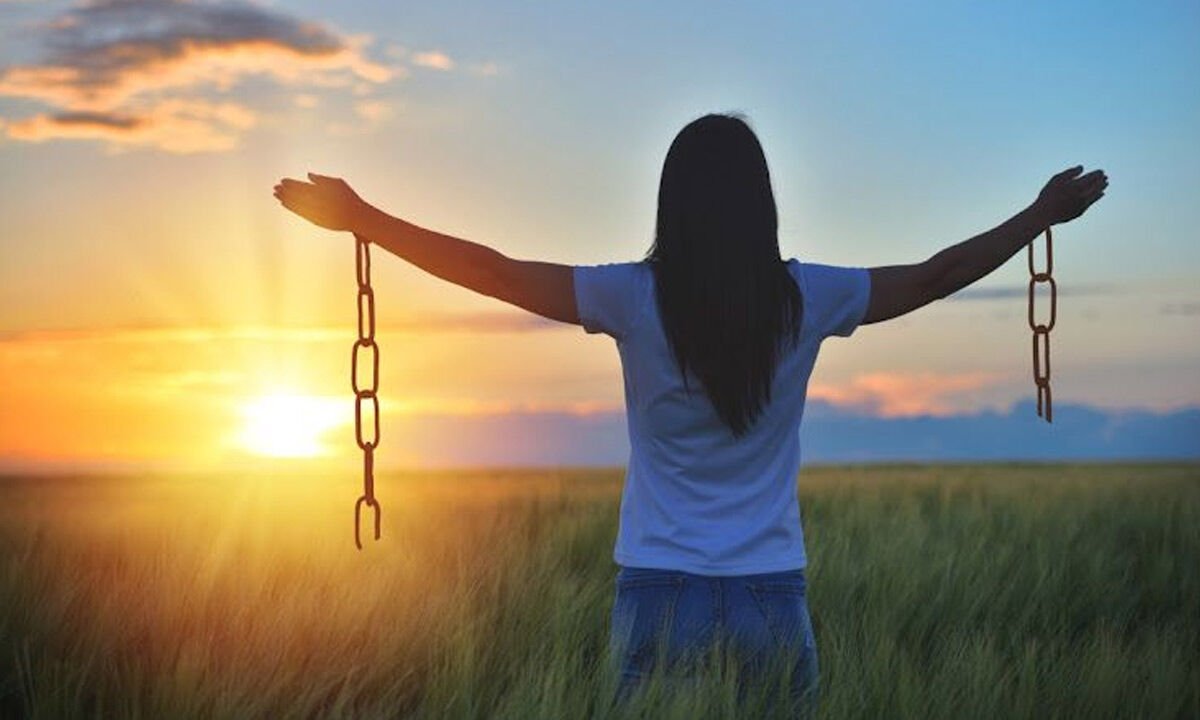
There are two important freedoms in human life in a society: political freedom and spiritual freedom. In most democracies, such as India, the UK, and the US, both freedoms exist. In some theocracies, only political freedom exists to some extent, but spiritual freedom does not. In other places, such as China, where both freedoms once existed, neither exists anymore. There seems to be no country where spiritual freedom exists and political freedom does not. However, both freedoms are important for living a healthy and happy life, both at the individual and societal levels.
We are seldom aware of the great truth that India is the only country where one can enjoy the greatest luxury of absolute spiritual freedom. Some call it a spiritual democracy. Even the Western countries are not at par with us in this respect, for their enlightened societies allow this freedom to others but not their theology. In India, we worship God in his various forms with equal respect and love, make fun of him, write satirical poems about him, get angry and condemn him, and love him by treating him like our son, father, mother or lover. Everyone has the right to have an Ishta Devata, i.e. a favourite God. This has been made possible by two levels of understanding of God – that of the common man and that of the philosopher. Life is easy as most of us fall into the former category. The philosopher is always clear-headed and happy.
The history of mankind shows great fluctuations in the spiritual freedom of people. People were eager to destroy the freedom of others. What do we need to do? We need both knowledge and action. By the word knowledge I refer to the revelation above about the great blessings we have. We will know this only when we know what the unfortunate people in most parts of the world do not have. By the word action I mean the responsibility to protect the system that guarantees this freedom. We have the right and the responsibility to choose a government that guarantees our political freedom, but unfortunately there is no philosophical or theological system that guarantees our spiritual freedom, because there is no enforcement there. Unlike the political system, there is no institution that enforces or guarantees our rights. Our Hindu Brahman or the various forms in which he manifests did not care about blasphemy laws. They were very free. Only the political system can rescue us to guarantee even this spiritual freedom. Thus the political system becomes an institution that can give us both political democracy and spiritual democracy.
Only this understanding can preserve our spiritual democracy. In this field we encounter a clash of thought processes that took place in the minds of people thousands of years ago. This thought process concerns an entity called God that depends on belief or rational investigation. Those who simply believe what a person says and those who investigate it. Thus, there were two types of civilizations with different concepts of reality or God. Those who simply believed had the upper hand in history.
Spiritual democracy is the hallmark of any great civilisation. The responsibility to safeguard it rests on those who enjoy it. What is needed is a recognition that while we enjoy this luxury, we face the danger of losing it. The rulers can only promote or create a favourable environment. If we conceive of the nation as a whole as a person, then the polity is like the body and spiritual freedom is like the mind or soul. The same is true of the individual. There can be no mind or soul without the body. We must remember, as Kalidasa says, that the body is the main means to attain dharma at a higher level. It is our responsibility to safeguard it.
(The author is a former
DGP, Andhra Pradesh
