

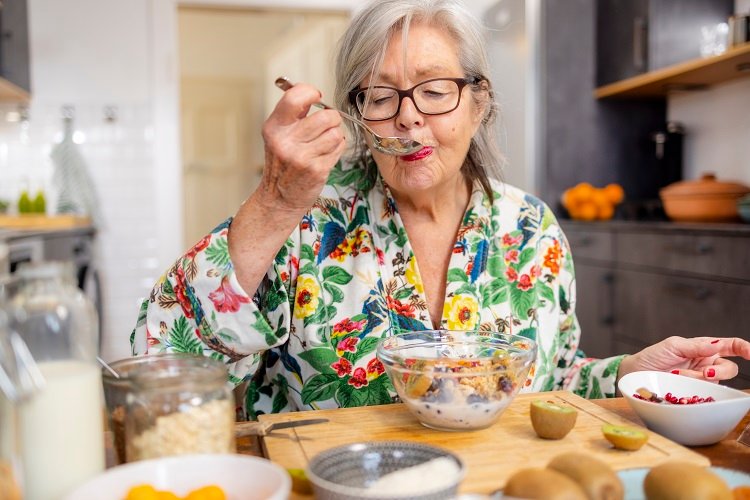
Many age groups have their own nutritional needs: Babies and children, for example, require the right foods to effectively nourish them for healthy development.
Older adults (those 65 and older) are also an age group with special needs. They need proper nutrition to stay healthy during this critical period of their lives. For example, according to the World Bank, the number of people aged 65 and older is expected to grow from 7% of the world’s population in 2000 to 10% by 2022.
And with the world’s population getting older every year, nutrition for older people is more important than ever, especially in wealthy countries such as Portugal, Japan and Italy.
Why is nutrition important for older adults?
“We are now living through a century of declining global birth rates and rapid ageing of the population,” Nestle CEO Mark Schneider said recently on the social media platform LinkedIn.
“That’s why nutritional solutions that support healthy ageing offer significant ‘tailwinds’ and further growth opportunities in the coming decades. This is a megatrend we can capitalize on!”
In other words, the proportion of the population that can be considered “elderly” is increasing, and therefore the proportion of the food industry focused on catering to the needs of this demographic will inevitably increase as well.
Food for the elderly
There are very few new food launches targeted at the over-55s. For example, according to Mintel, only 0.0005% of new food & drink and health & hygiene product launches in 2021 were explicitly targeted at this age group. This is because even people in this age group are often reluctant to buy products specifically aimed at older people as they are reminded of their age.
But there are some good ways to target this demographic. For example, older people tend to be more brand loyal than younger people, according to Dr. Craig Rose, founder and CEO of Seaweed and Co. Marketing to issues that relate to them, like menopause, is also key.
Expert dietitian Vittoria Romano, chair of the British Dietetic Association’s (BDA) Older People Specialist Group, suggests that due to the ageing population “there is now greater focus than ever on the nutritional needs of older people, regardless of whether they have disease or not. NHS policy is also putting a spotlight on population health management of frailty, including the importance of nutrition as people age, although the evidence base in this area of care is still developing.”
For example, the charity Food4Years aims to promote research into the nutritional needs of older people and the development of products aimed at providing proper nutrition to older people.
What nutrients do seniors need most?
To stay healthy, older people need a diet that contains different amounts of nutrients than younger people, Romano said.
“Certainly the evidence suggests that older people have slightly different needs compared to younger people. [We recommend] Eat nutritious foods and choose foods that are high in protein, calcium, folate and vitamin B12.”

But you don’t need to increase every nutrient: “Needs for carbohydrates, sugars, fiber, fat and salt are likely to remain the same as in younger adults.”
One important nutrient for older adults is vitamin D. Vitamin D supports bones, muscles and teeth, prevents bones from softening and reduces the chance of fractures. According to the UK National Health Service (NHS), vitamin D is found in foods such as oily fish, red meat and egg yolks.
Trends towards healthy longevity
The ageing society is also driving the trend towards health longevity, that is, the trend towards consuming functional foods that help us live longer. The trend is not just to extend lifespan, but to “live longer and healthier”. Although this is a new trend, there are already some products following this trend, such as Uda’s “Scientific Longevity Coffee”, which contains ingredients such as ashwagandha, quercetin, L-theanine and curcumin.
Bone-building calcium is another key nutrient recommended by the Expert Group on Ageing. According to the NHS, calcium can be found in milk, cheese, bread and fish that are eaten with the bones (such as sardines).
Protein, which helps maintain muscle strength, and vitamin B12, which helps maintain energy levels, are also very important for older adults.
Do seniors struggle to get proper nutrition?
Some older people struggle to get proper nutrition: according to Food4Years, one in ten people over 65 in the UK are malnourished.
“There are a variety of reasons why older adults have difficulty getting proper nutrition,” Romano said.
“This includes food poverty. [and] Poverty, being able to go to the store to buy groceries, [and] Access to cooking facilities and ability to cook.”
Another reason older people struggle to get the right nutrients is the misleading nature of public health messages, which are primarily designed for younger people and may not necessarily be relevant to people over 65, Romano suggested.
“Another challenge is that current public health messaging to the public is primarily focused on obesity prevention, encouraging weight loss and adherence to the Eat Well Guide, which is not suitable for older adults. We found that older adults are more likely to follow public health messaging, which may unfortunately increase their risk of malnutrition.”
How should the industry address the nutritional needs of older adults?
As Nestle’s Schneider points out, the industry is certainly serving the nutritional needs of older adults, but while the senior market is growing, in Romano’s view the industry is not serving it adequately.
“I know the food industry and researchers are looking at products for seniors, but it’s not necessarily mainstream,” Romano said.
Romano suggested that if the industry wants to meet these needs, it should consider a holistic view of nutrition for seniors.
Following the advice outlined above, and further advice on BDA’s resources for older people, “can help people live longer and have a better quality of life in later life,” Romano suggested.
