

A momentary escape from the daily hustle and bustle of hectic modern life is not only coveted but is considered almost necessary for wellbeing. Spas and wellness retreats have become popular places for peaceful, fleeting stays in recent times. However, it has been observed that the design semantics of spas include some common characteristics: a balanced color palette (not too light or too dark), a strong connection with outdoor areas and landscapes, natural materials, and often rustic visuals. Luxury baths and spas often follow an ancient language. Moving away from traditional models, New York-based studio Rockwell Group reimagines the dark and futuristic atmosphere of Bathhouse Flatiron in Manhattan, New York.
The 3,252-square-metre luxury spa and banya was conceived with the aim of redefining the spa experience, breaking away from mundane concepts and design elements. The Bathhouse is a carefully curated blend of contemporary restorative techniques, inviting surroundings and immersive experiences, all wrapped up in a sleek, modern look. The luxury spa brand’s second location in New York and its first in Manhattan, the project features an array of amenities, from thermal pools and saunas to a marble hammam, all housed within a three-storey architectural chassis that evokes futuristic relics of the past.
-
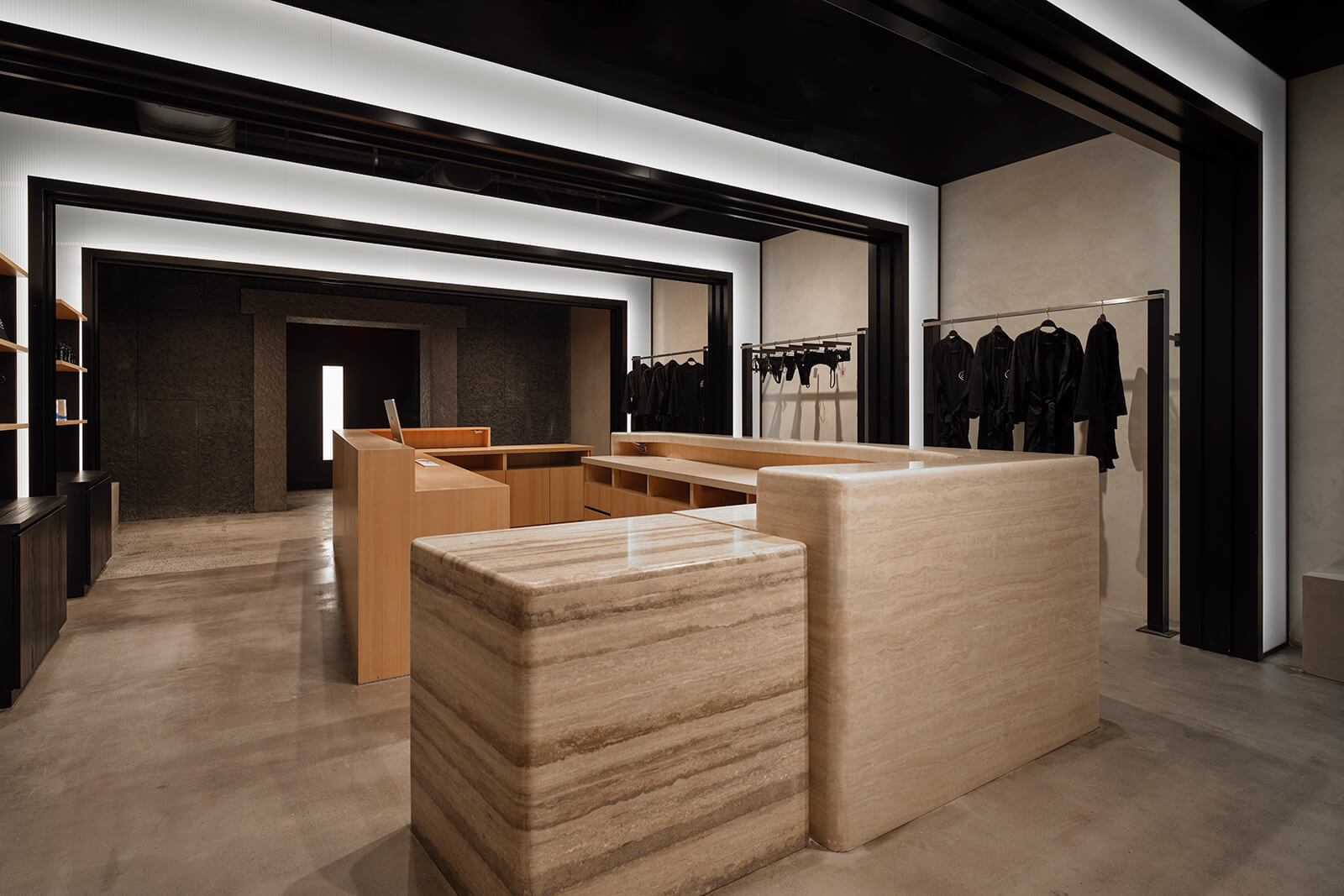
Bathhouse reception Image courtesy of Emily Andrews -
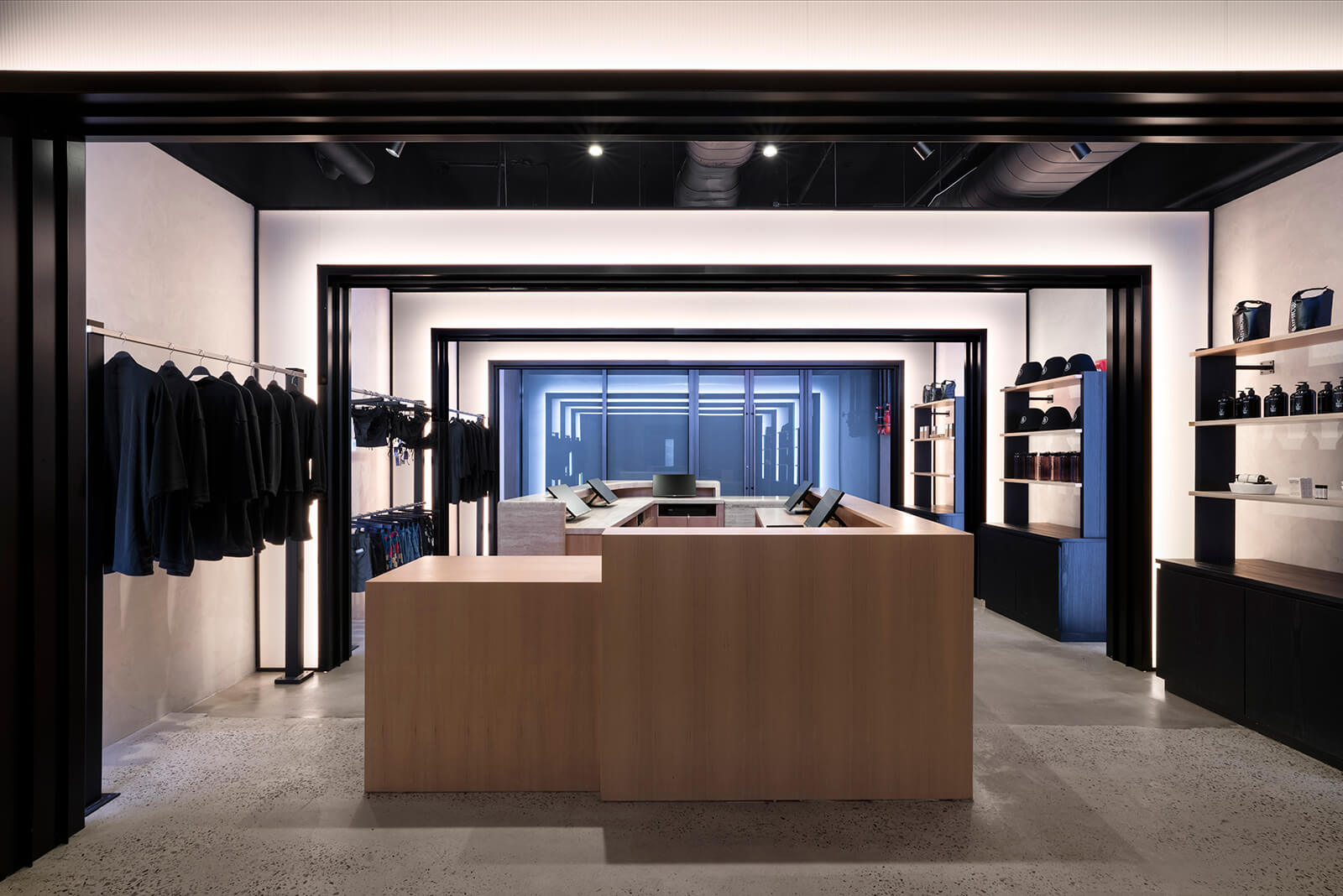
The reception area features a portal-like frame Images/Photos: Adrian Gout -
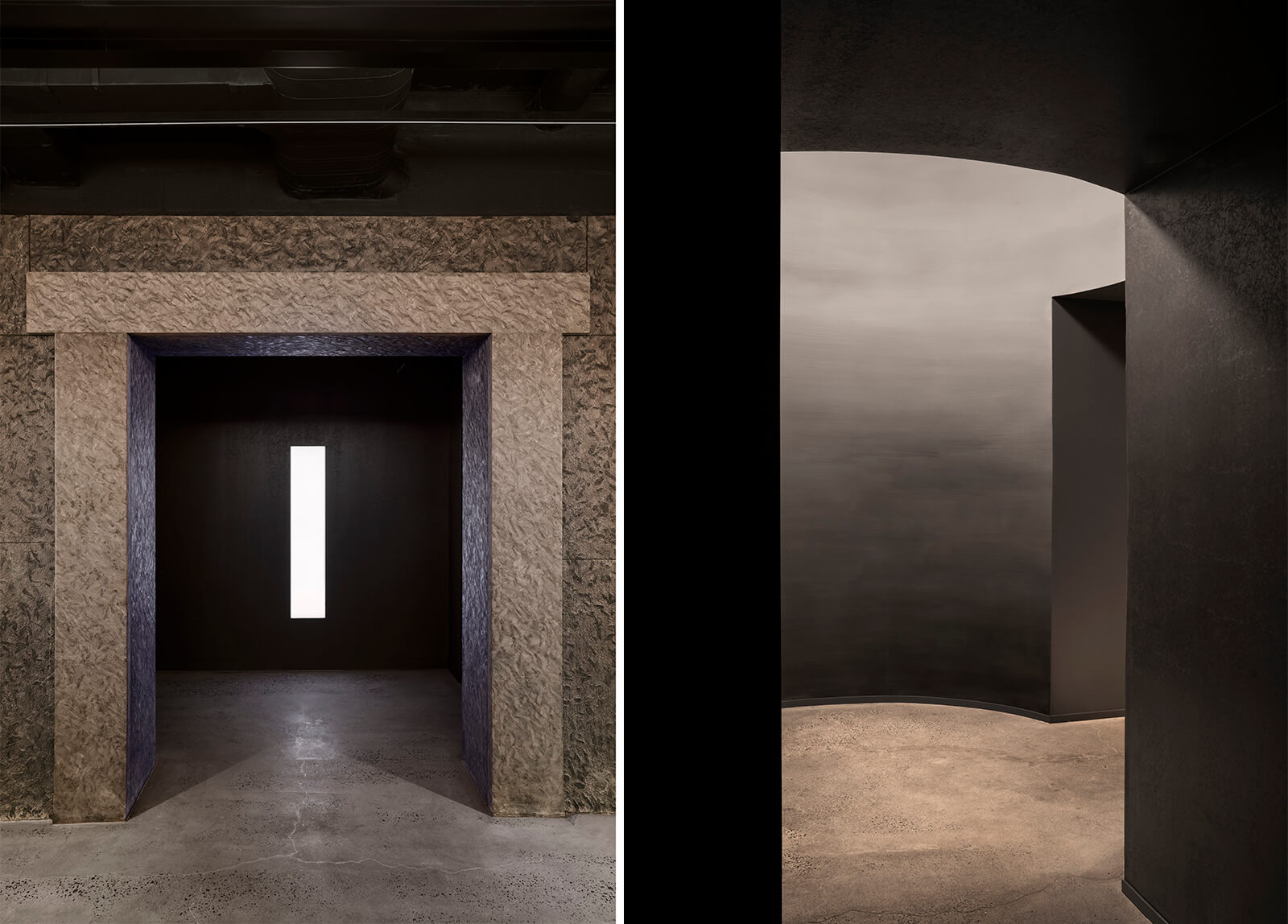
Black stone wall with a lighthouse and black stairs leading to the entrance Image courtesy of Emily Andrews
Founded by David Rockwell and helmed by David and partners Sean Sullivan and Greg Keffer, this multidisciplinary architecture and design firm has built a body of work on heightened experiences created through the synergy of theatre, performance and architecture. While absorbing the fundamentals of their practice, Bathhouse Flatiron is designed around the idea of the “hero’s journey.” The architects and interior designers were inspired by “a common trope in mythology in which a hero embarks on an epic journey or quest, encounters difficulties that become a defining climax, and returns home transformed by an adventure of personal growth.” From reception to treatment rooms, every element reinforces this narrative, including the entrance-like hallway, the anticipatory lighting design and the furniture that resembles a monolith. Visitors embark on a journey of recovery through an interior design that features a muted material palette and dramatic light and shadow, including travertine, fluted glass, stone, concrete, tile and patinated metal.
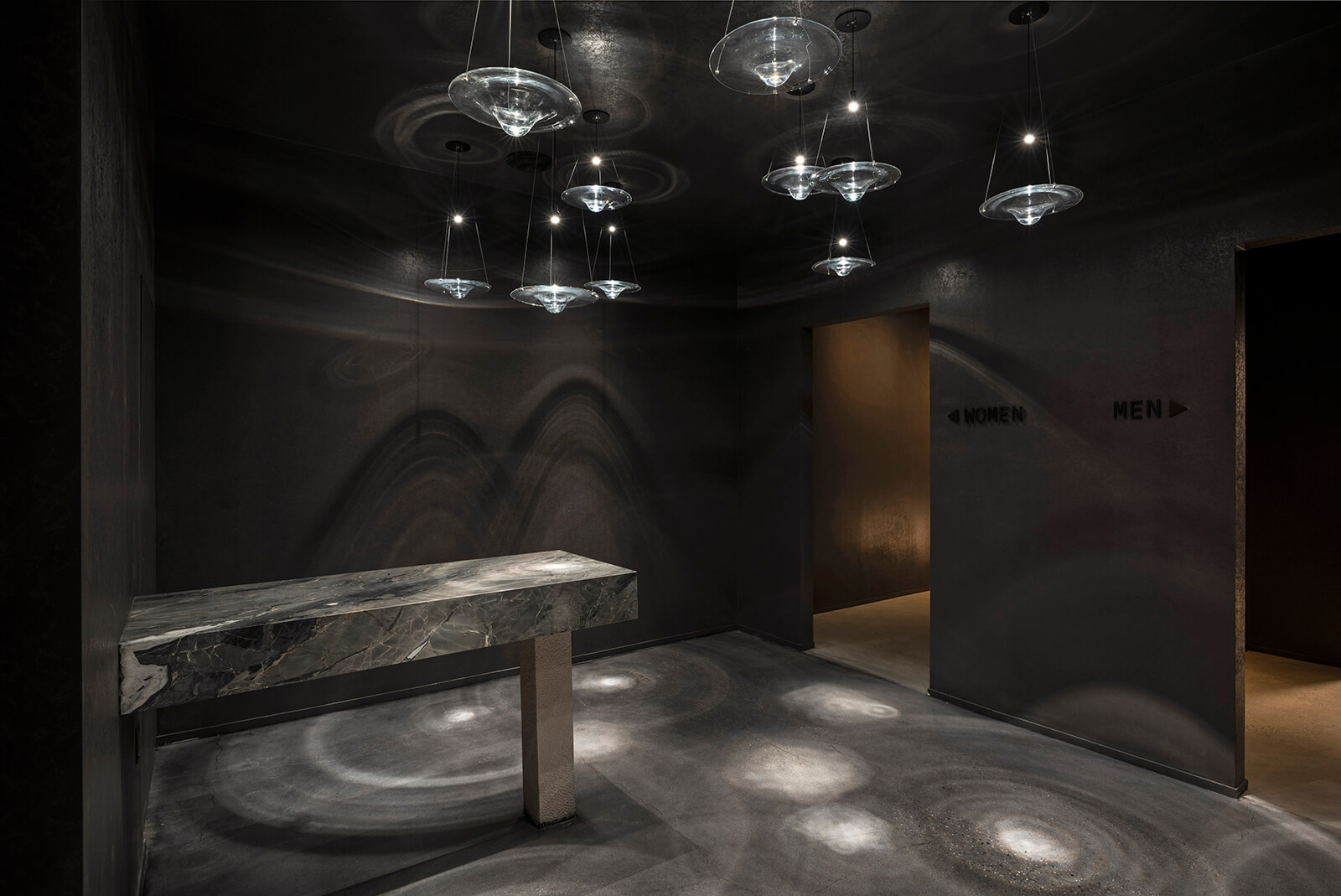
The guest experience begins upon entering the bathhouse from the lobby on the first floor. Within the futuristic frame, an illuminated fluted glass portal is repeated, with two travertine reception desks standing as massive boulders. At the opposite end, a black stone wall features a vertical beacon of light – the “light at the end of the tunnel.” Guests then pass through this boundary, descending a compact black staircase into a foyer featuring a Dean Berger mural, before proceeding to the locker rooms on the lower ground floor.
-
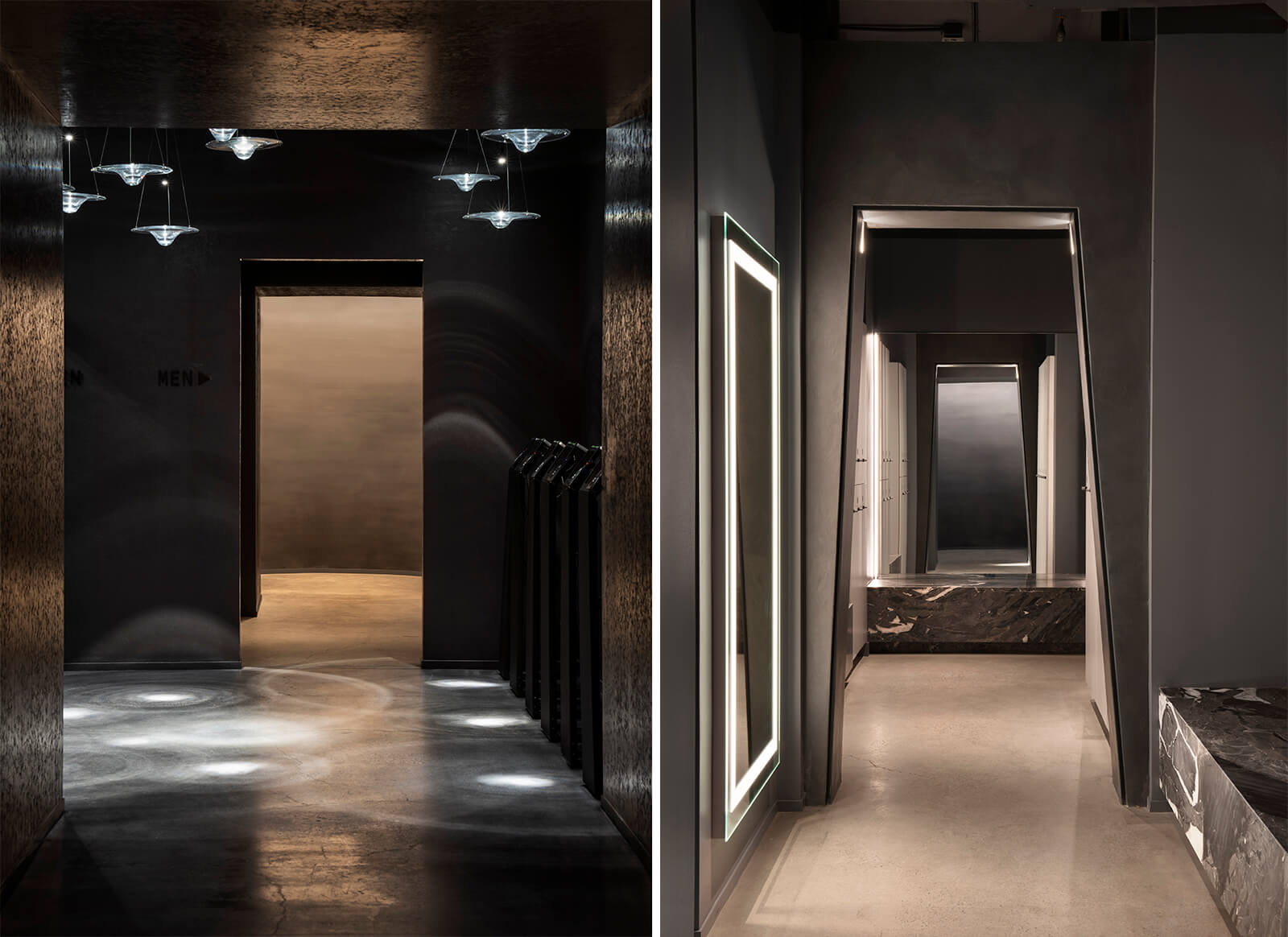
The project’s distinctive features are its dimly lit hallways. Image courtesy of Emily Andrews -
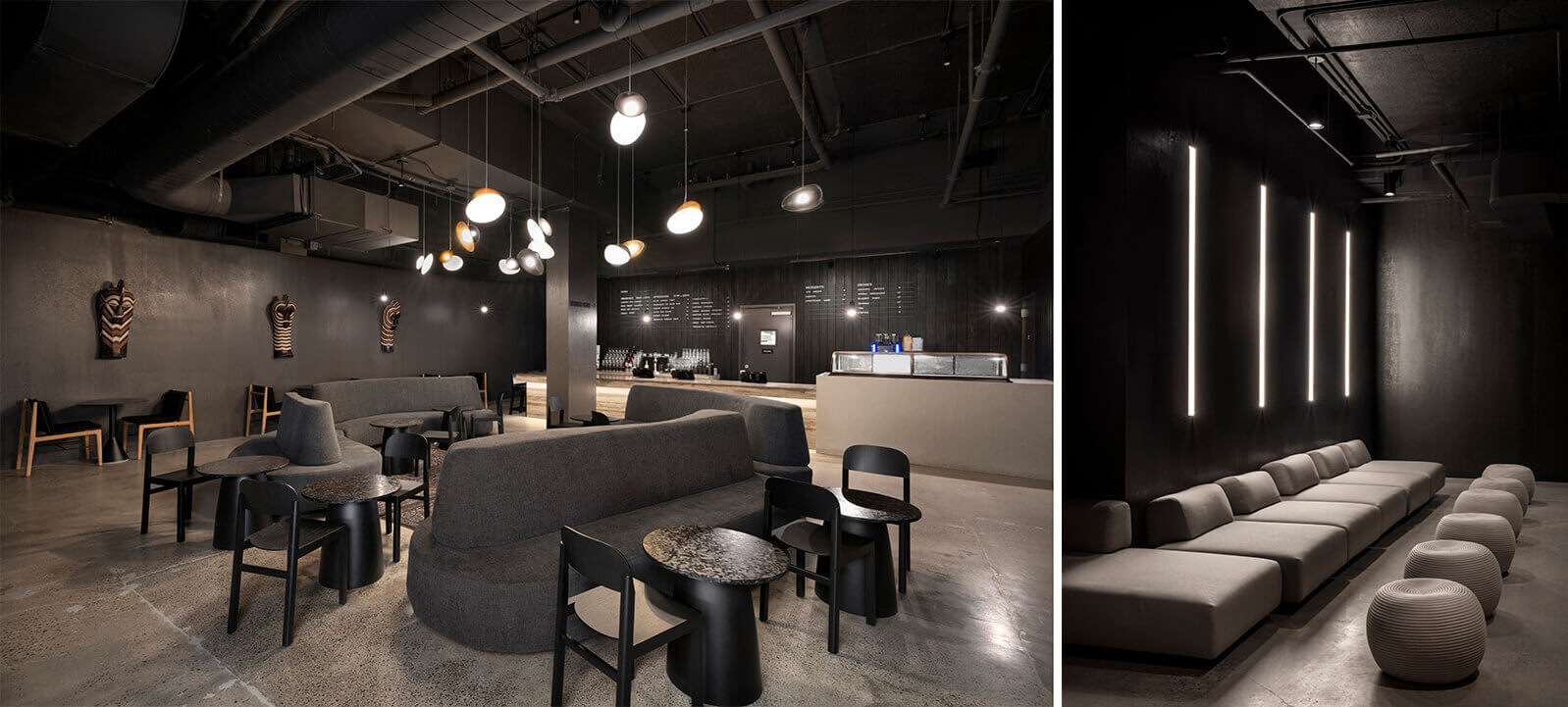
Lounge and cafe in the bathhouse Image courtesy of Emily Andrews
The designers achieved visual rhythm and massing of the changing areas through the portals, with stone benches complementing the desired atmosphere of the space. As guests exit the locker rooms, they emerge into the lounge and café design, a dimly lit space to relax or chat with friends. The restaurant design is completed with low lounge furniture design, including custom-made banquettes, and seating along the travertine and limestone bar. Green ceramic pendants and decorative pendants in the form of pebbles balance the heavy design language with subtle dynamism and lightness.
-
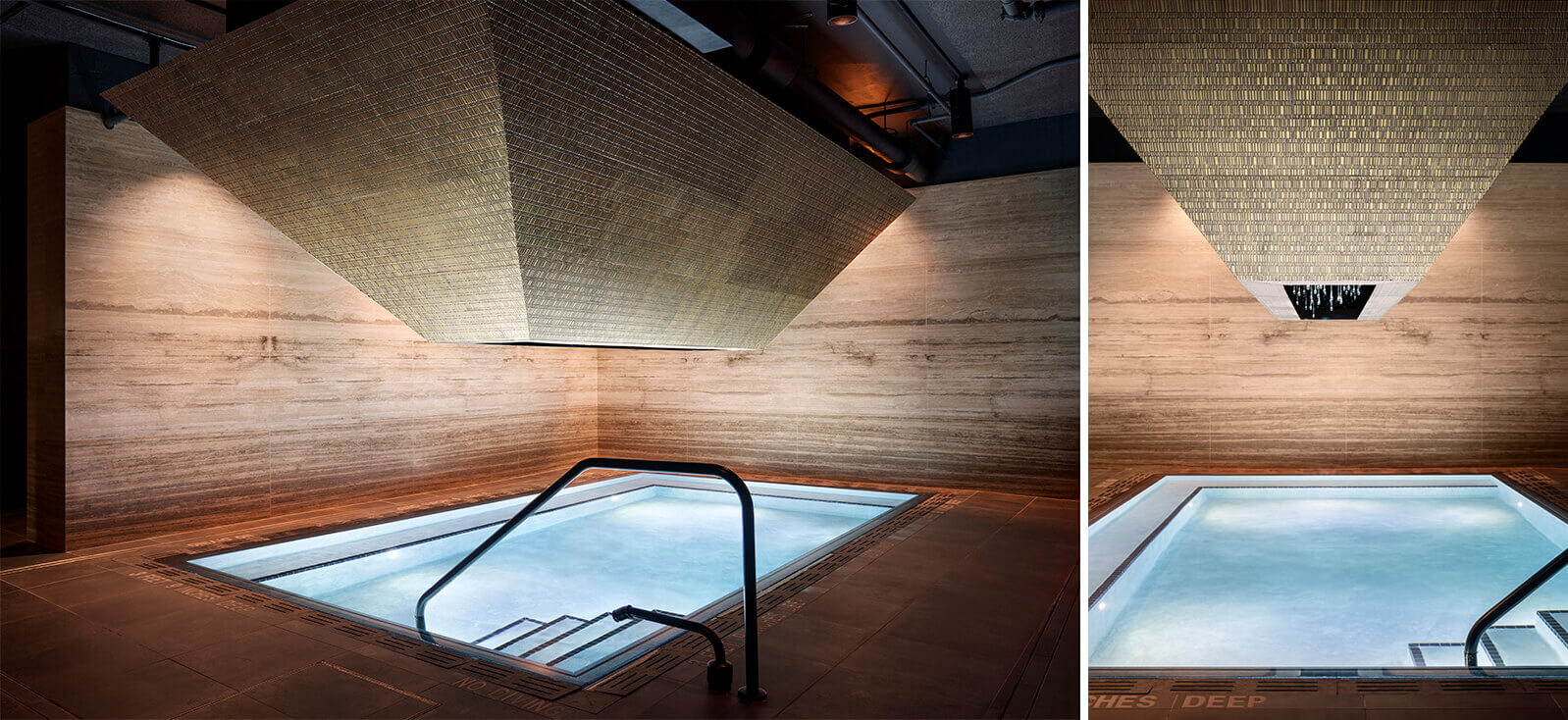
The project features plunge pools of different temperatures. Image courtesy of Emily Andrews -
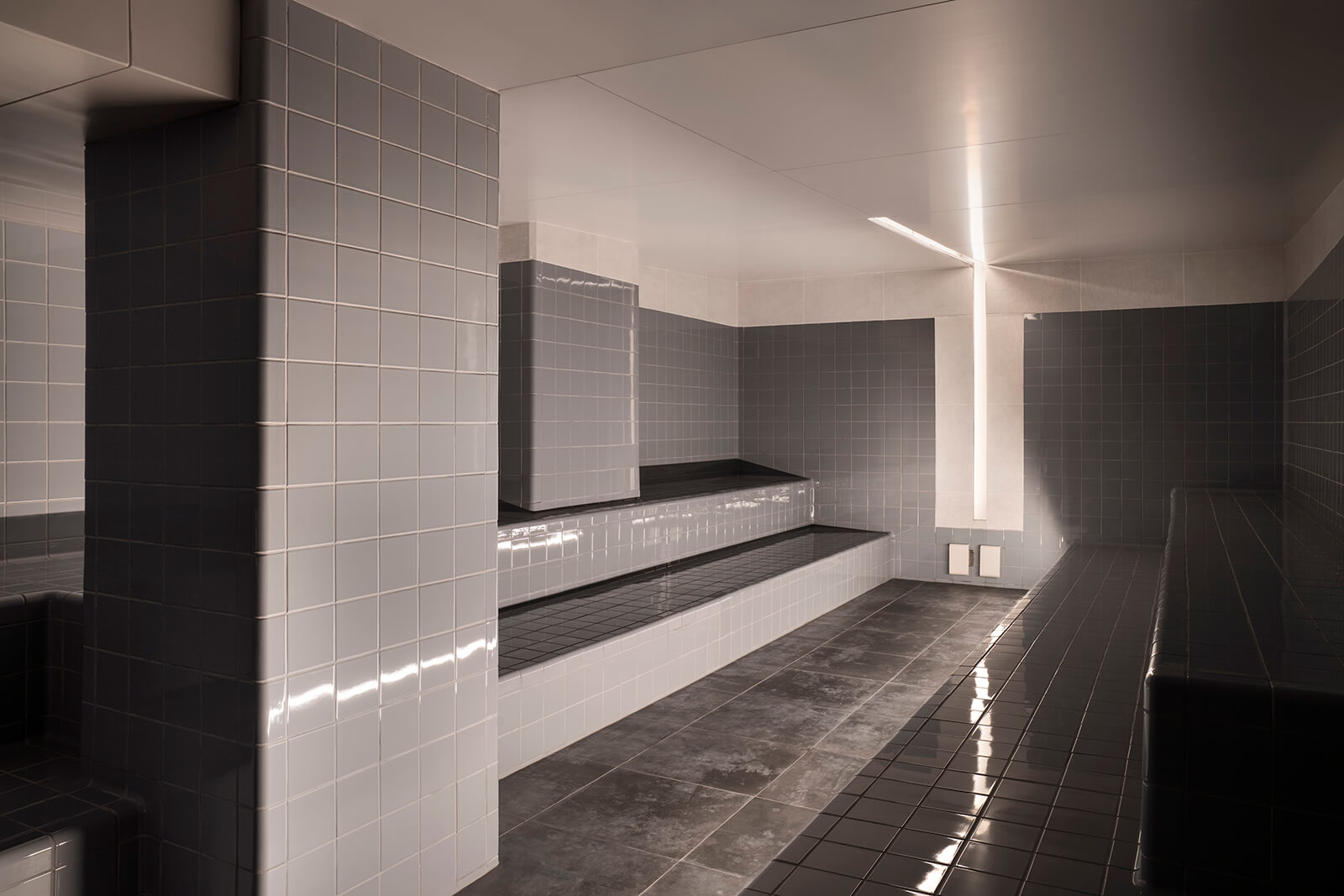
The steam room features Danish 3D tiles. Image courtesy of Emily Andrews
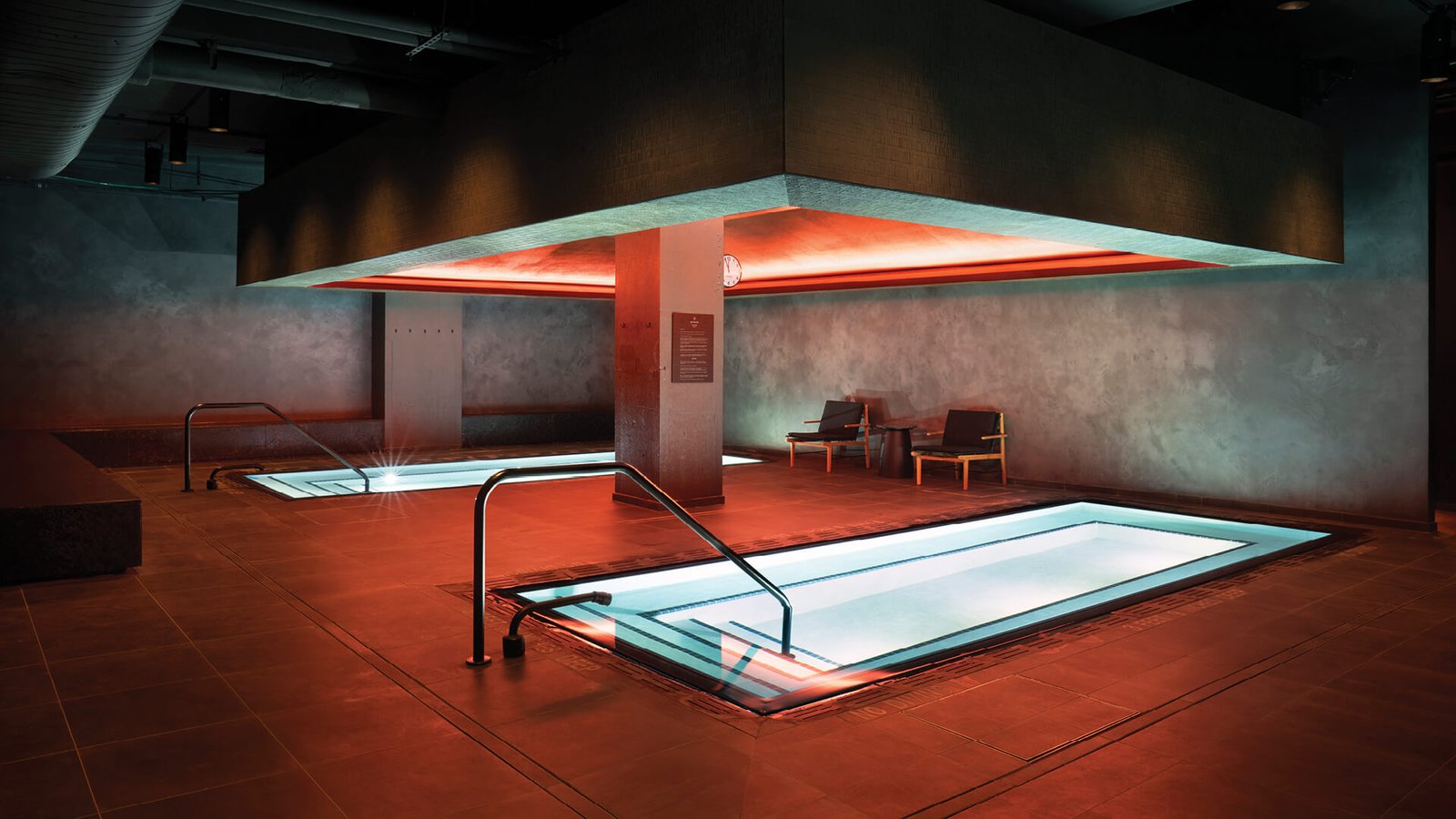
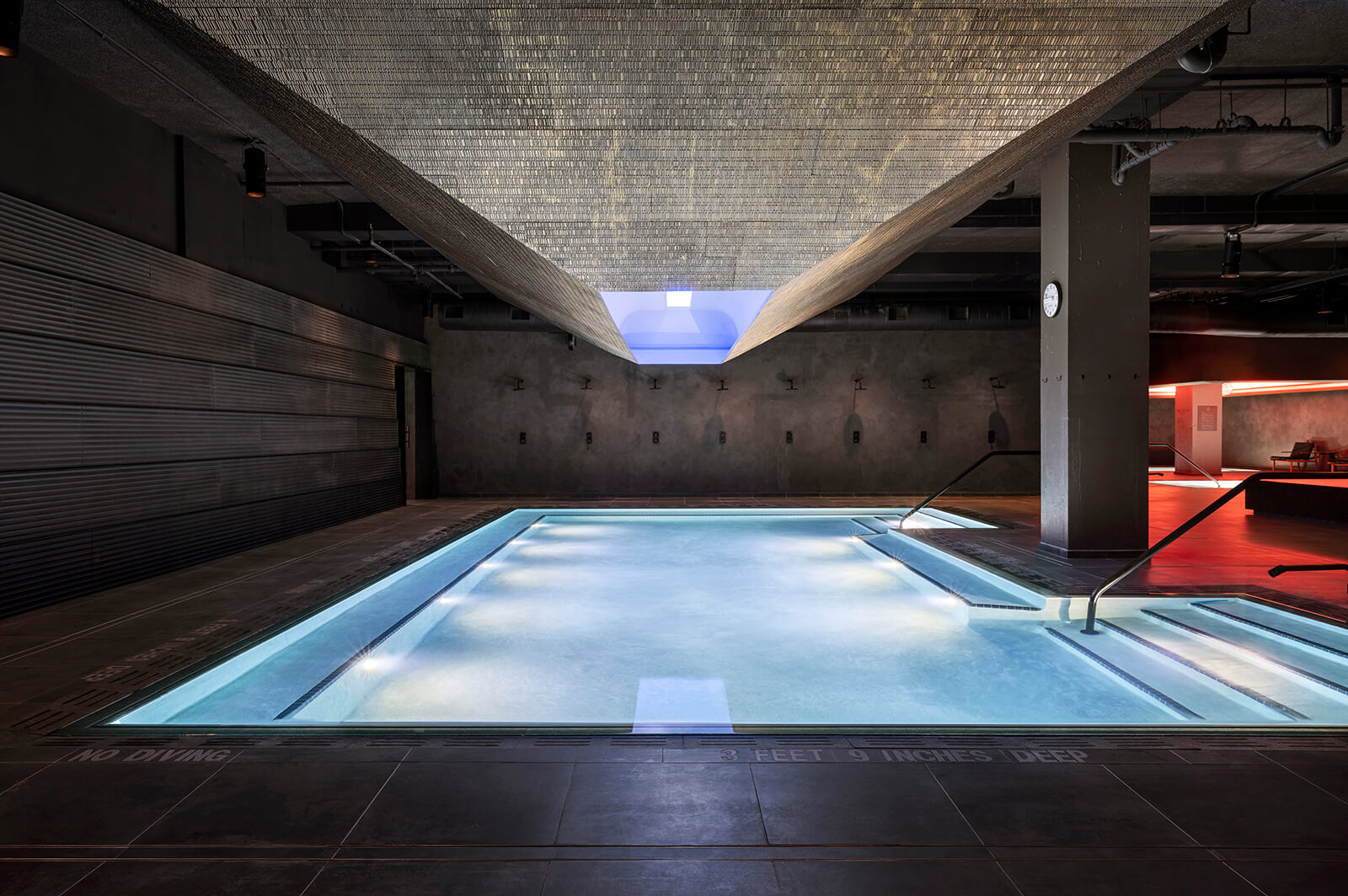
Descending to the second basement level, guests encounter a series of pool designs and treatment rooms. The six plunge pools are lit in different shades of blue (from cool to warm) to indicate different temperatures. Many of the pools have large pyramidal masses of metallic sheen hanging above them. Around the pools, heated black stone hammam benches rest on black tiled floors. Saunas and steam rooms are designed as stepped pyramids on horizontal black concrete panels and occupy the perimeter of the space. “Combined with the pools, these small architectural structures create the atmosphere of the ruins of a rediscovered civilization,” the official release reads.
-
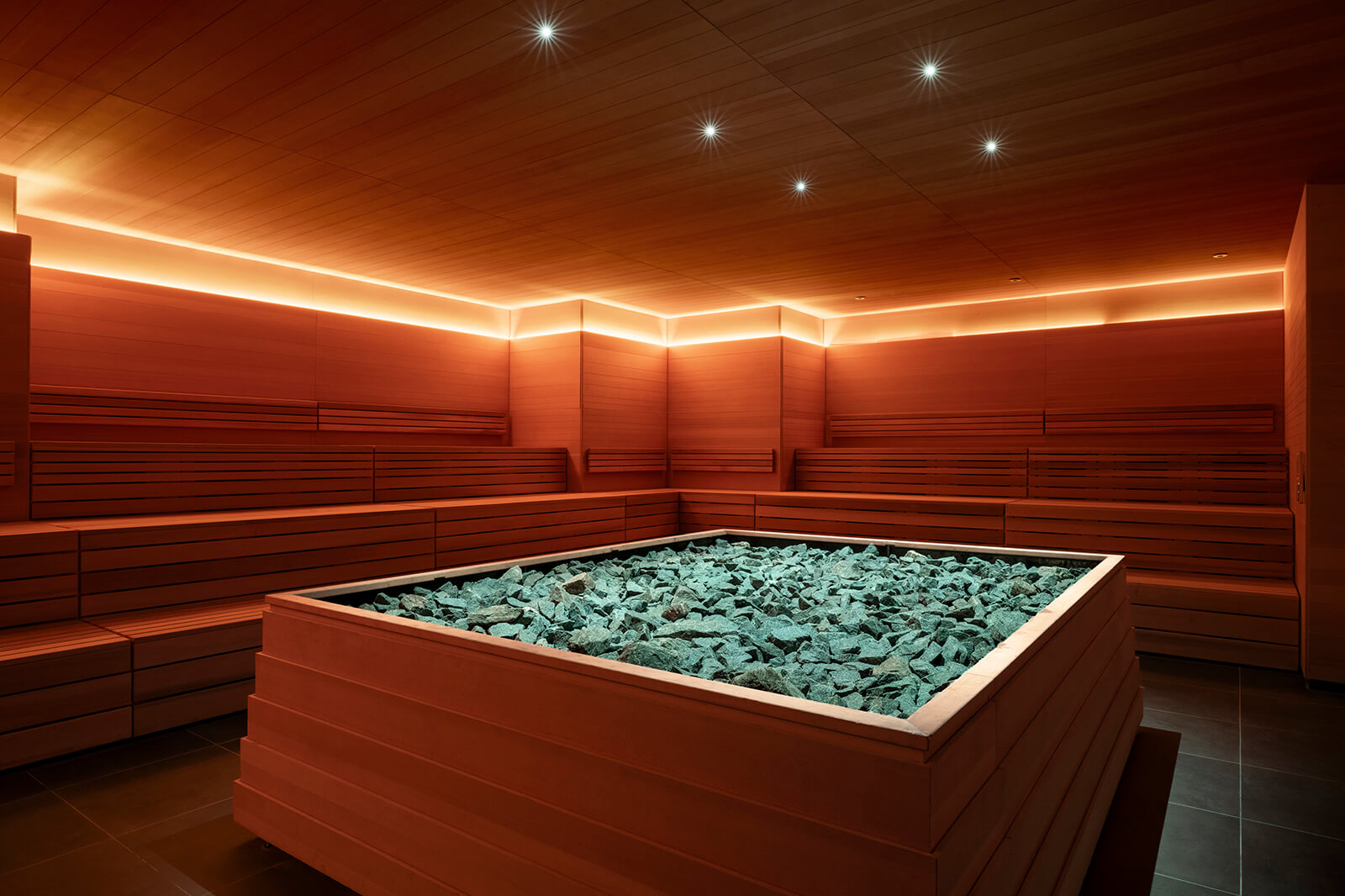
A ceremonial dry sauna covered in cedar wood Image courtesy of Emily Andrews -
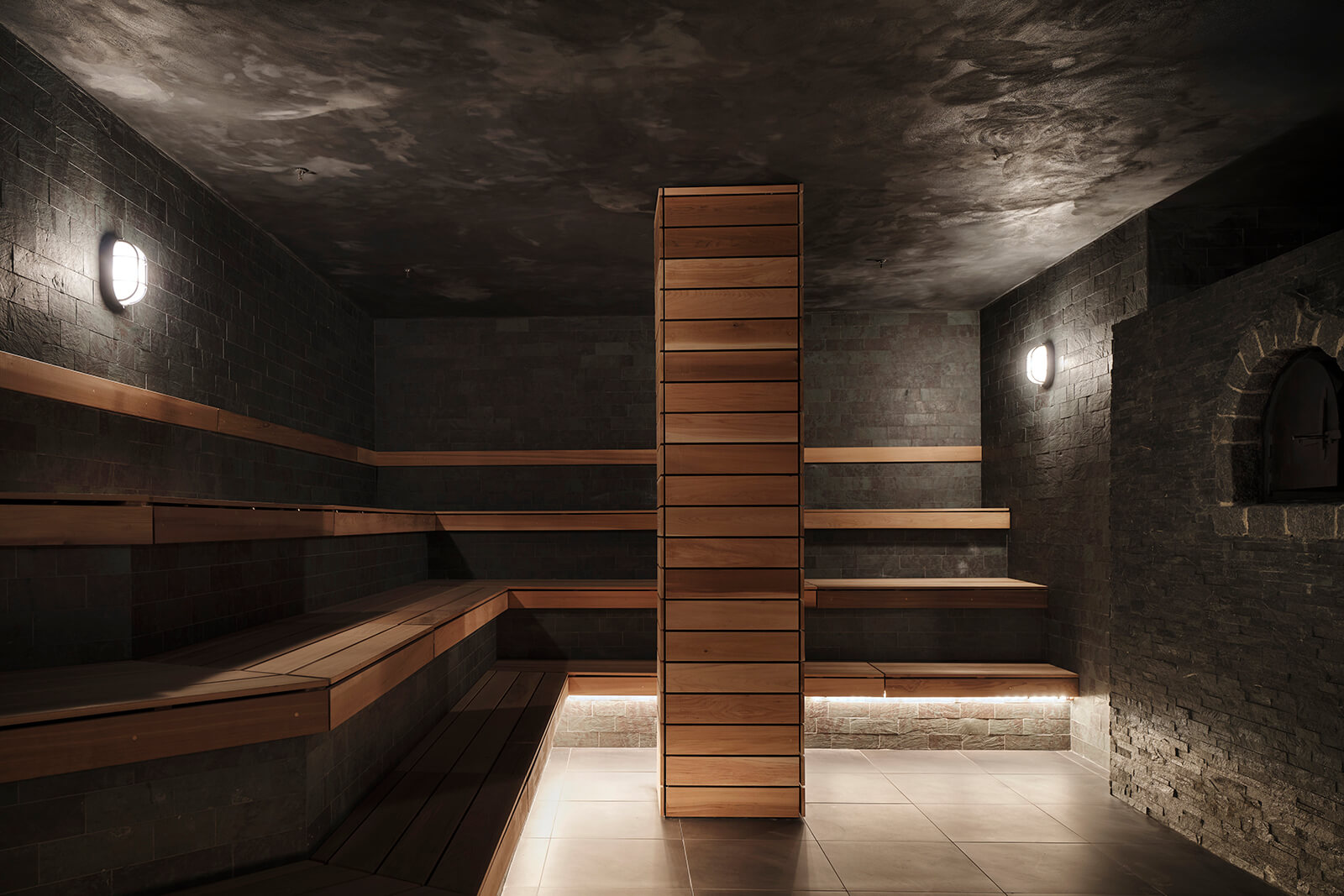
The banya is the hottest Russian sauna Images/Photos: Adrian Gout -

The project also includes an infrared sauna. Images/Photos: Adrian Gout
Guests can choose from a variety of sauna experiences offered in the baths. The ritual sauna is clad in cedar wood and surrounded by stepped bench seating. The heaters are illuminated by cove lights and downlights, with a central heater resembling an altar. In this restorative space, the sauna master performs the Aufguss, a sensory experience defined by fragrant oils, music and heat. Meanwhile, in the steam room, the atmosphere is guided by Danish three-dimensional tiles, a modular system that envelops the space and strips of light on the blue-grey tiled walls. The banya is the hottest Russian-style sauna, decorated with greenish-purple slate tiles, a black stone hearth and a gentle light emanating from a glowing strip on the bench below. Vertical hemlock wood panels evoke the forest heights of the infrared sauna. Windows allow silhouetted views of lush vegetation into the room.
-
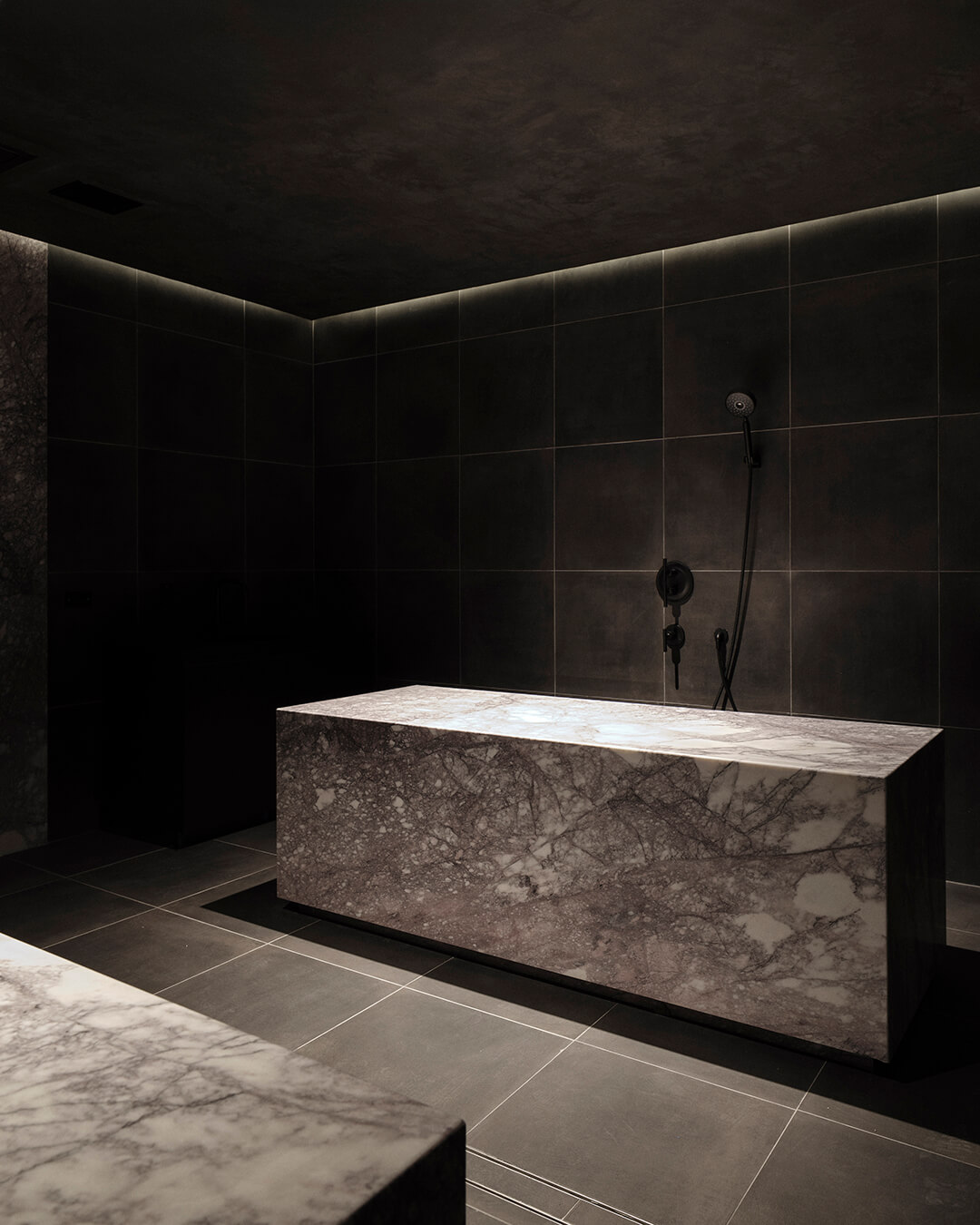
The scrub room is a sanctuary in the bathhouse. Images/Photos: Adrian Gout -
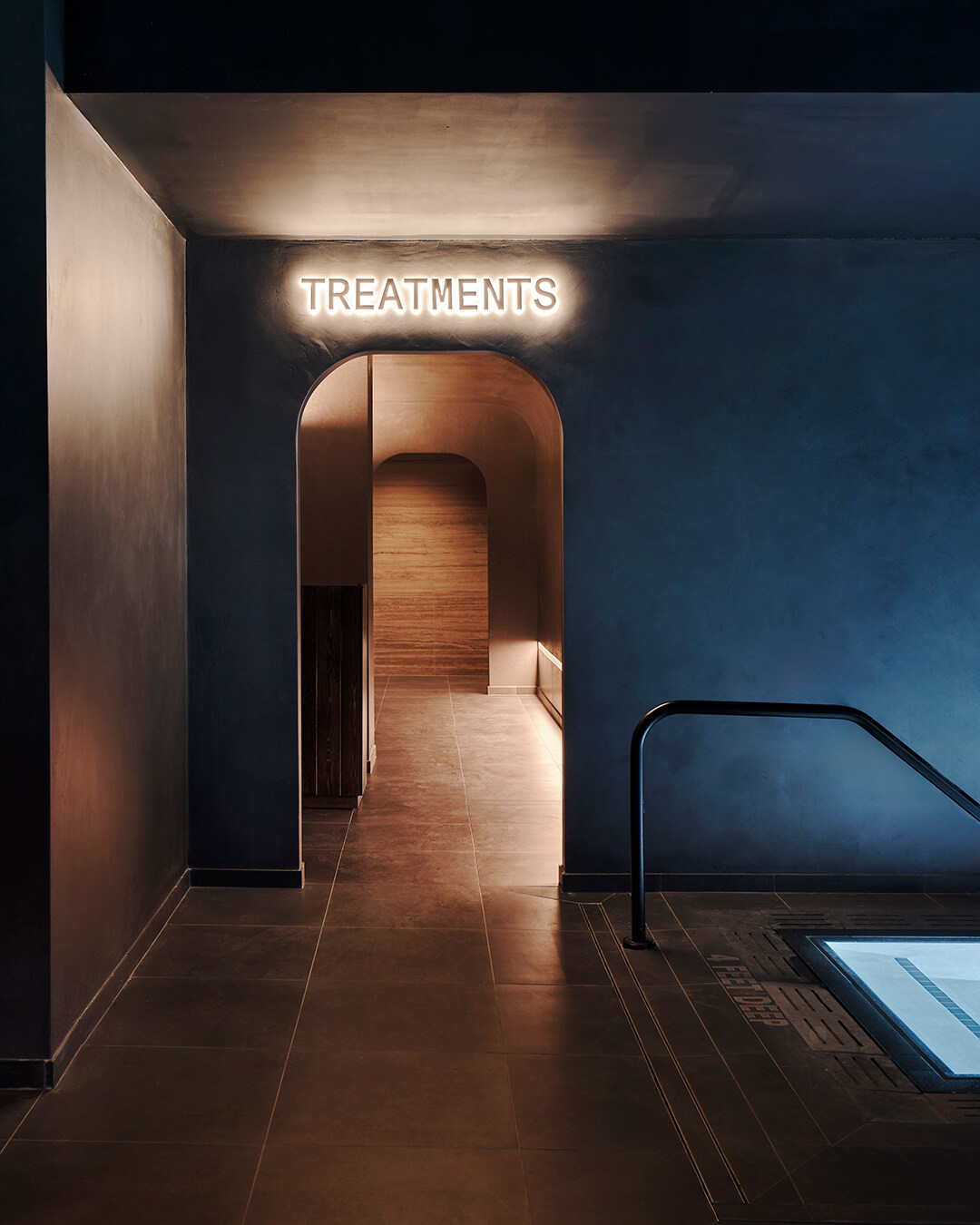
All treatment rooms are located on the second basement floor. Images/Photos: Adrian Gout
A dark and mysterious corridor leads guests to the core of the treatment room. A small lounge area features another pyramid suspended above a saltwater pool, gradient travertine walls, black-stained wood, benches and soft seating. The back of the pyramid is covered with a black mirror covered with 150 fiber optic cables, creating the illusion of infinity. The “inner sanctum” of the bath house or scrub room is a cave within a cave. “A lilac marble table floats under the ceiling, and the walls are gently lit by cove lights. A showerhead allows you to scrub your body, and the adjacent massage room is covered in a warm brown clay-lime finish, offering a return to nature and cocoon-like beauty,” explains the official release.
Rockwell Group’s experimental flair will transform the project’s canvas of an empty concrete skeleton into a three-storey hospitality design that inspires serenity, mystery and anticipation. The spa experience is heightened with a sensory delight as guests move from room to room through corridors that use light and shadow to express different emotions. The bathhouse is designed through the lens of a futuristic, almost otherworldly adventure, ultimately becoming a cocoon that aims to embrace the “hero’s journey”.
