

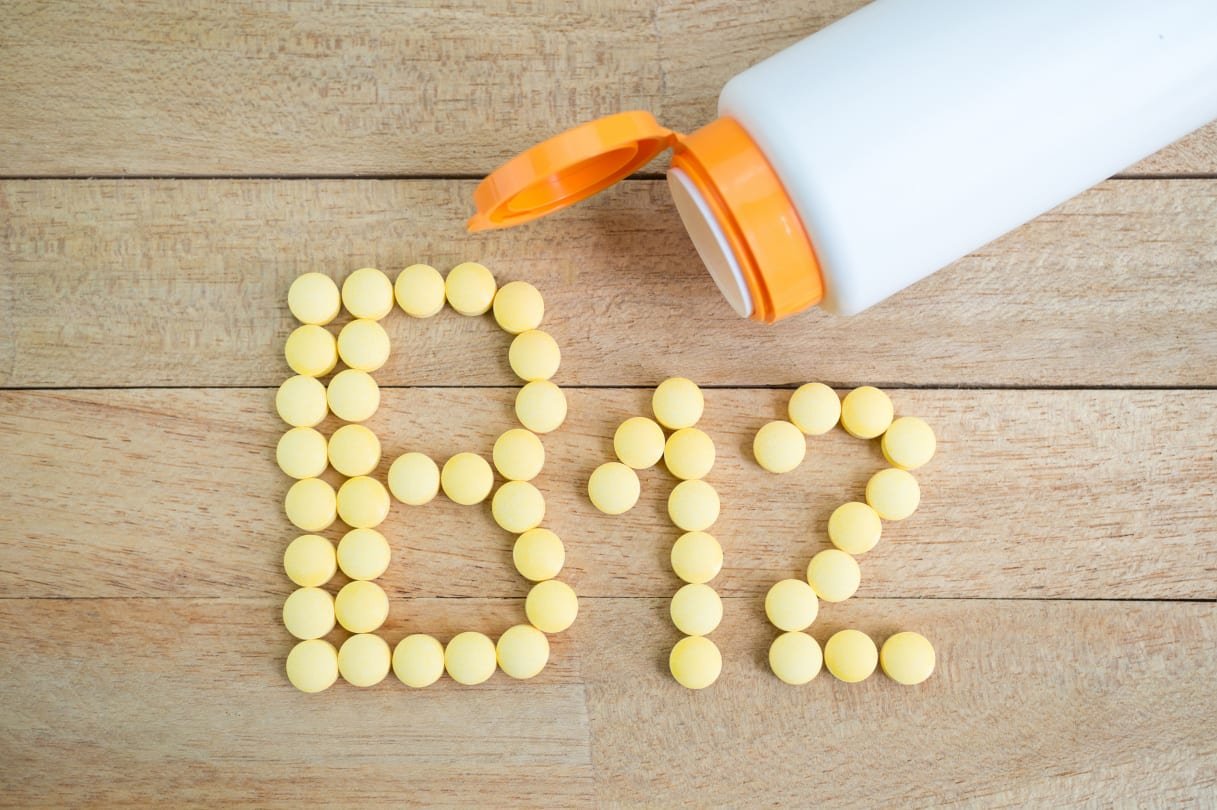
There’s good reason to make sure you have enough vitamin B12 in your body: it’s a vital vitamin that keeps blood and nerve cells healthy, converts food into energy, and contributes to the production of DNA, the genetic material of all cells.
However, most people in the U.S. don’t need to take vitamin B12 supplements every day, or even at all. Certain people (such as those over 50) may be at risk for vitamin B12 deficiency, but they probably get enough if they eat a balanced diet that includes animal foods such as beef, chicken, fish, eggs, and milk, or fortified breads and cereals.
Still, many people take vitamin B12 supplements: According to the National Health and Nutrition Examination Survey (NHANES), 24% of men and 29% of women reported taking supplements (multivitamins that contain vitamin B12, vitamin B complex, or a standalone vitamin B12 supplement). This was despite the fact that only 12.4% of people in the analysis were vitamin B12 deficient (i.e. borderline deficient) and only 3% were vitamin B12 deficient.
Of course, there are also certain situations in which you should talk to your doctor about possibly needing to take more vitamin B12, such as if you’re vegan (someone who doesn’t eat animal products), if you’re over 60, or if you have a medical condition or are taking medications that can lower your vitamin B12 levels and cause a variety of symptoms (see below).
“Although there are vitamin supplements available over the counter, you should always discuss vitamin supplements with your doctor,” says Gary Sofer, MD, an allergist and immunologist at Yale University School of Medicine who teaches the safe use of nutritional supplements at Smilow Cancer Hospital’s Integrative Medicine Program.
Below, Dr. Sofer offers some more advice on vitamin B12.
