

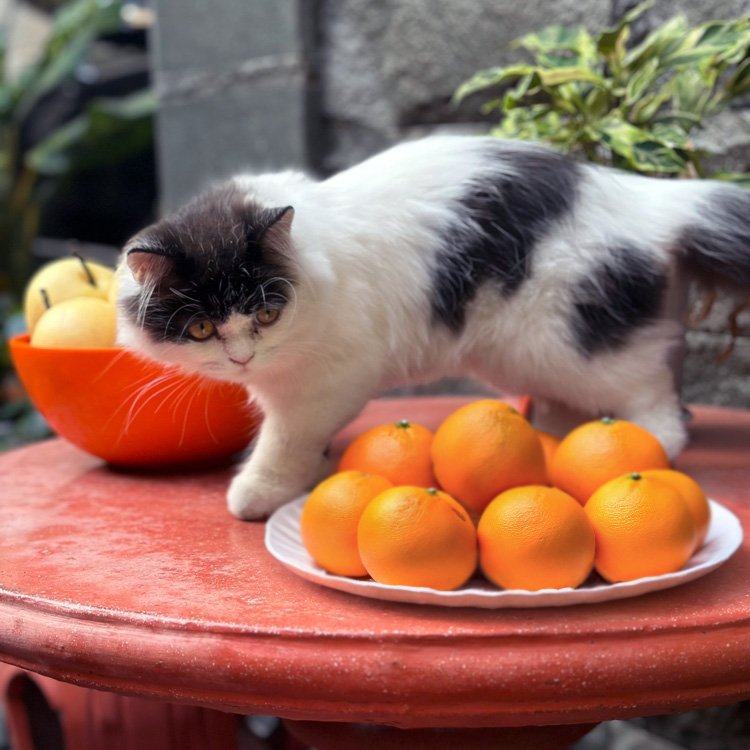
Yes, orange fruit is safe for cats to eat, but the truth is that most cats find the smell repulsive.Opens in new tab Cats do not like citrus fruits and will not be interested in eating them. Although oranges contain nutrients that are healthy for cats, they also have some unhealthy effects on cats. Read on to find out more about oranges and cats.
Orange nutrition for cats
Orange is Citrus sinensis Orange trees. These trees are native to tropical Asia and are cultivated to produce a particularly sweet and hardy hybrid. Oranges are highly hydrating, have fiber and contain many important vitamins and minerals, some of which are beneficial for cats.
Is orange good for cats?
Overall, oranges are not considered good for cats. Cats are obligate carnivores and should get the majority of their diet from meat, which is rich in protein, fat and certain other nutrients. That said, if you have a cat that likes to eat an orange every now and then, oranges can offer the following benefits:
-
Fiber: Oranges are rich in fiber, an important carbohydrate that has many benefits for digestive health. Fiber increases stool bulk and helps prevent constipation.Opens in new tabIt nourishes the beneficial microbes in your gut.
-
Water content: Oranges are about 86% water, making them a great hydrating snack. Cats tend not to drink much water, so find ways to increase their water intake.Opens in new tab This can be especially important if you have certain health conditions, such as urinary tract problems or kidney disease.Opens in new tab.
-
Vitamins and Minerals: Oranges are rich in vitamin C, calcium, potassium, thiamine and folate. Unlike humans, cats can synthesize their own vitamin C, so they don’t need to get it in their diet. However, oranges contain many other vitamins and minerals that are beneficial for cats.
Can cats eat any part of the orange plant?
No, the plant itself is considered toxic to cats. It is safe for cats to eat the fruit, but they should not eat the skin of the fruit or any other parts of the tree, such as the leaves or stems. This is due to compounds found in the plant called psoralens, as well as essential oils within the plant.
If ingested, these compounds can cause skin irritation, painful inflammation, and even digestive upset, such as vomiting and diarrhea. It’s no surprise that cats tend to dislike oranges: they often really dislike the smell, and therefore have no interest in eating them. This is an evolutionary strategy of many animals, and cats instinctively dislike toxic or dangerous foods.
Is orange completely safe for cats?
Oranges are not completely safe for cats. The plant parts of the orange are considered toxic to cats, and only the fruit itself is safe for cats to eat. Although the fruit is technically safe, there are reasons to be careful.
-
Toxic compounds: The fruit skin and the plant itself contain compounds that can cause skin irritation and digestive upset in your cat if ingested, so keep these parts out of your cat’s reach.
-
High sugar content: Oranges contain a lot of sugar, which cats have difficulty metabolizing, putting them at risk for weight gain.Opens in new tabEating too much sugar can lead to diabetes and other health problems.
-
fiber: Although fiber has many benefits, consuming too much fiber in a short period of time can cause digestive upset, including vomiting, especially in dogs who are not used to it.Opens in new tabdiarrhea, bloating, gas.
Be careful with citrus essential oils. Fresh Although orange fruit is safe when consumed in moderation, products that contain citrus oils may be toxic and should be avoided, including processed foods and essential oils. Opens in new tabIt is intended to be used as a spray or spread around the home.
Conclusion: Can cats eat human food?
Cats can eat human food, and there are many foods they can safely share with you.Opens in new tab When introducing new foods to your cat, it’s important to make sure they are safe and healthy for your cat, as well as to know which foods are toxic.Opens in new tab Keep it out of reach and, although sharing the occasional table scrap with your cat can be a fun bonding activity, it’s also important to make sure the majority of her diet comes from a complete and balanced cat food.
Cats have very unique nutritional requirements compared to humans and dogs, so they require a special cat diet to meet all their needs and stay healthy.Opens in new tabThis will ensure that your cat is getting all the nutrients they really need from a balanced diet and that they don’t unintentionally overeat.
Indoor cats tend to be less active, which puts them at higher risk of weight gain and related health problems if they overeat. For cats with a big appetite, the occasional treat or snack is a great way to keep them exercised with interactive toys.Opens in new tab There are also food puzzles.
Other Foods Safe for Cats
Other foods that are dangerous to cats
FAQ:
How many oranges can a cat eat?
Oranges are high in sugar and fiber, so your cat should only eat small amounts.
Is it okay to give oranges to cats?
Orange fruit is not poisonous to cats, but many cats are repelled by its smell and will not like to taste it.
Why do cats like orange?
Most cats don’t like orange.
Can cats eat oranges?
Yes, the fruit itself is safe for cats to eat.
Can cats eat any part of the orange plant?
No, only the fruit is safe for cats to eat. The peel, leaves, and all other parts of the orange are considered toxic to cats.
