

On a Saturday afternoon, Tallulah and Mitchen zigzag through the aisles of Sephora at Century City Mall. The store is crowded, but the girls can easily spot the products they’ve spotted on TikTok’s “For You” page, with their mothers dutifully trailing behind them.
Because Tallulah and Mitchen are 10 years old.
Michen bought some lip balm today, but she also bought an eye mask and a scrub, which are part of her long pre-bedtime routine.
“They see everything on TikTok, and then they come here and want to buy everything they see,” her mother, Dana Michels, said.
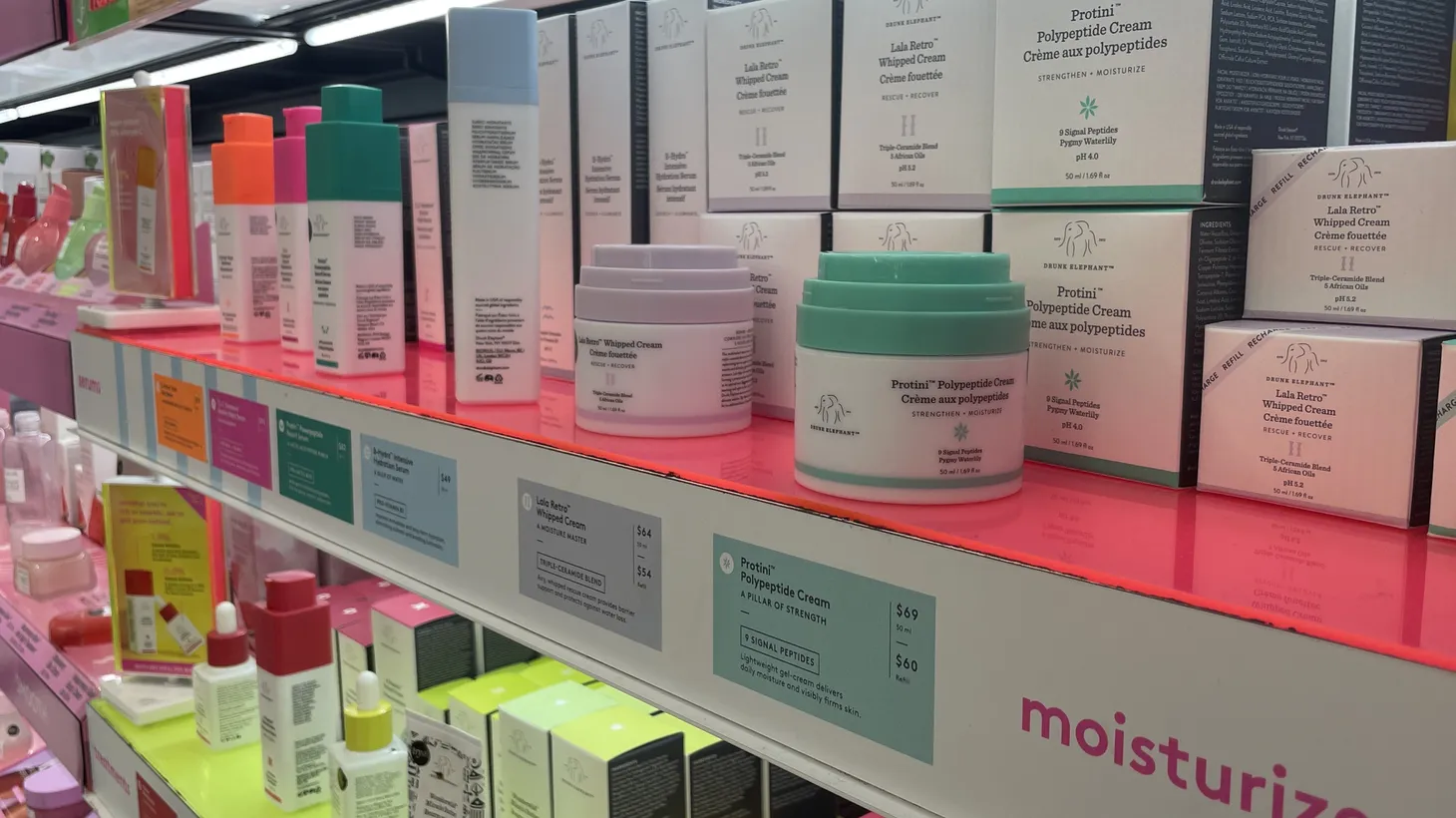
On TikTok, a ton of influencers are endorsing these products, including anti-wrinkle creams. These anti-aging products come in fluorescent bottles or tubes with a lid that dispenses just the right amount when you press it, like a toy. They cost $70 each.
And elementary school kids like Tallulah and Mitchen eat it with gusto.
“That’s bananas,” Michels says, playfully covering her daughter’s ears. “I feel like I’m fighting a losing battle. I don’t know if it’s a battle, it’s just reality.”

Sephora’s ads at Century City Mall target shoppers searching for products on social media “For You” pages. Photo by Caleigh Wells.
The reality is that it’s the result of good old-fashioned societal pressures as well as social media.
“Everyone at school is wearing them,” Tallulah says. “It makes me feel more grown up.”
Neither explanation comes as a surprise to Karen North, a psychologist and professor of social media at the University of Southern California.
“For almost forever now we’ve seen kids trying to act a little bit more grown-up, dressing up in fashionable clothes, wearing their mom’s shoes, putting on makeup,” she says, “and now they have TikTok as their big brother to emulate.”
North says these cosmetics have become collectible status symbols, much like kids used to collect baseball cards, but now the stakes are higher than bragging rights.
Some children actually damage their skin.
“You may experience inflammation, redness, burning sensation and even photosensitivity and sensitivity to the sun, which can lead to sunburn,” says dermatologist Evette Ramsay.
These are side effects of anti-aging products, which are designed to increase cell turnover rates and help prevent acne and wrinkles, but can be bad for the sensitive skin of young children.
“It’s often used by the wrong age groups, and people also use too many combinations of products that can be irritating,” she says.
These combinations are also known as “skin care smoothies.”
California lawmakers are working to protect children.
Bay Area state Assemblyman Alex Lee authored a bill this year that would have banned the sale of anti-aging products to children under the age of 13. The Personal Care Products Council, a cosmetics industry trade group, opposed the measure, and it died.
“We share Rep. Lee’s concerns about the prevalence of preteens and teens using anti-aging products on social media, but no matter how well-intentioned, California’s AB 2491 raises significant compliance issues,” they said in a statement to KCRW.
Lee said he might reintroduce the bill next year with some tweaks to the language. He’s not convinced the opposition is fair.
“If you’re 12 years old, you can’t go buy the next M-rated game, and you can’t buy a ticket to an R-rated movie on your own. … So when the industry acts as if it can’t self-regulate, I say that’s nonsense,” he says.
