

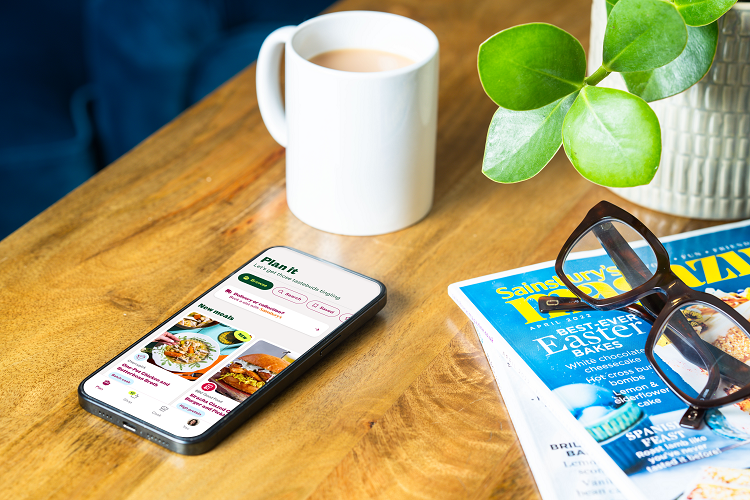
Recipe box companies have benefited greatly during the COVID-19 pandemic as more consumers avoided supermarkets and turned to meal kit delivery services. At the time, one such company, Mindful Chef, reported a 425% increase in new recipe box customers.
Demand for recipe boxes declined as the pandemic subsided, but by then consumers had become fascinated by the convenience, and many have continued to purchase meal kit subscriptions ever since.
Grocery delivery is also fuelling the convenience trend, with research conducted by e-commerce marketplace provider Spryker showing that in the UK, 60% of consumers now order groceries online.
But what if one operator could do both? Functioning as both a meal kit service and a grocery delivery platform, Cherrypick (formerly Lollipop) wants to revolutionize the retail experience for shoppers, with the health of people and the planet in mind.
Why Cherry Pick wants to influence consumers’ eating habits
Cherrypick is described as a “smart grocery shopping and dining platform” designed to help consumers “eat easier and tastier. ” It’s essentially a smartphone app that partners with retailers and brands to give consumers an easier, more personalized shopping experience.
How does Cherrypick work?
How does it work? Shoppers input information about their family, including dietary preferences, into the app. A customized meal plan is then generated, and consumers can choose recipes from in-house and celebrity chefs. Once a recipe is selected, all ingredients are automatically added to a virtual basket. Shoppers can also add the rest of their grocery order.
Delivery slots from Cherrypick’s partner retailers are selected and those groceries are delivered right to the consumer’s doorstep.
Cherrypick currently has over 330,000 households signed up to its platform and has partnerships with three of the UK’s biggest supermarkets: Tesco, Asda and Sainsbury’s.
The startup is the brainchild of Tom Foster Carter, the former COO of challenger bank Monzo, who wants to apply his experience building businesses (he grew Monzo into a unicorn) to a meal planning and shopping platform.
But Foster-Jones has another motivation, he explained at the food and agriculture technology conference F&A Next in the Netherlands: The entrepreneur wants to encourage consumers to make healthy and sustainable food choices.
“By 2035, half the world’s population will be overweight or obese. A third of greenhouse gas emissions come from food and meat. A sixth of the food we buy is wasted. We don’t have the time or the tools to do anything differently.”

Tackling food waste and reducing UPF consumption
Cherrypick hopes to solve these problems with the help of artificial intelligence.
To tackle food waste reduction, Cherrypick has incorporated a machine learning-powered meal planning feature: the model learns what ingredients each consumer already has in their cupboard, helping them avoid buying extra products and limiting food waste at home.
Foster Carter explained that optimizing shoppers’ baskets saves both food waste and money: “We have very low food waste because you only get the ingredients you need.”
Is it cheaper to buy ingredients from the supermarket than from a recipe box company?
A recent survey by the British newspaper The Observer found that consumers could save up to 74% on their food bills by buying ingredients individually at the supermarket rather than going through a meal kit company.
The findings are the result of analysis comparing food prices in Tesco with the cost of buying the same meals from four of the most popular recipe box companies – Hello Fresh, Gousto, Green Chef and Mindful Chef.
Beyond food waste, the co-founders are also keen to reduce the overall carbon footprint of their shopping basket, and that means eating seasonally: “Supermarkets have trained us to expect the same products all year round, but seasonality is hugely important in the battle to reduce our carbon footprint.” [for] sustainability…”

The startup is developing a sustainability data model to bring greater transparency to the environmental footprint of products, which it plans to introduce soon.
Another way Cherrypick influences consumers’ eating habits is by inviting them to share their dietary goals, such as eating less meat, eating more vegetables, cutting down on calories, etc. Another feature, the “Plant Tracker,” encourages consumers to log the number of plants they eat per week, aiming to reach at least 30 varieties.
Behind the scenes, the startup is also developing an Ultra-Processed Food (UPF) tracker, but it hasn’t been released yet.
Why should retailers partner with Cherrypick?
Supermarket retailers have long been delivering groceries to consumers, but more and more are developing recipes to inspire and engage shoppers. To some extent, retailers have already developed their own (but stripped-down) versions of cherry-pick propositions.
But Cherrypick’s business model relies on partnering with these companies. Why would a retailer want to partner with Cherrypick?
How does the Cherrypick app make money?
Until now, Cherrypick has been free for consumers: groceries cost the same as online, and like online shopping, consumers pay a delivery fee.
But CherryPick is looking for additional revenue streams. “Currently, our revenue comes from supermarket fees and advertising, but the profit margins on groceries are so low that they’re not enough to cover our costs,” explains founder Tom Foster Carter. “We need to find new, sustainable revenue streams.”
This week, Cherrypick announced it’s launching a paid premium tier. There will still be a free tier with “full features,” but users can otherwise choose Cherrypick Plus or Pro. The “finishing touches” are being added to the upgrade before the app announces new features and celebrity chefs for its premium offering.
That question has been a concern for Foster Carter, who is building the business with co-founder and CTO Chris Parsons. But while retailers often have their own solutions, they aren’t always easy to use. In many cases, they’re “clunky,” the startup’s CEO acknowledged.
“It’s a tough game. You have to develop great content and make it so cool that great chefs want to create more content. You have to have the right UX. [user experience].
“We make everything work and we help with cooking.”
