

However, openly discussing symptoms and causes will not reduce incidence if strategies to address those causes are not also discussed. Open dialogue can gain leadership’s attention and, from there, can be used to facilitate important conversations about the many ways in which stress impacts employee health, performance, and ultimately business profits.
A secondary impact of this increased openness on the issue has been a shift in how we think about stress. It is no longer seen as a sign of weakness, but rather as visible evidence of a higher level of commitment to the company’s purpose. The stress response is neither of these things; it’s simply an innate neurophysiological response that stems from the core of what makes us human.
Stress and Mental Health
Physiologically speaking, the structure of the brain has not changed much over the past hundreds of thousands of years, but the environment, social conditions, and pace of life have changed beyond recognition. The truth is that life is changing faster than the brain can keep up. The brain’s innate plasticity, which enables a baby to absorb the cultural developmental cues provided by its environment no matter where in the world it is born, means that the brain can, and does, adapt.
But this process takes time. When stimuli change, the brain initiates its own software upgrade, but the upload takes a little longer than a smartphone. For our purposes, the current prevalence of stress in the workplace should be recognized as evidence that the struggle is happening. It should never be seen as a deficiency, but rather as a continuous process of employees adapting to a rapidly changing environment. The pandemic year has seen a dramatic increase in the negative impact on people’s mental health, with the prevalence of anxiety and depression increasing by 25% worldwide.
The Mental Health Continuum
If mental health can be viewed as existing on a continuum with the far right being very good and the far left being very bad, then the stress response should be marked as being to the left of the midpoint. In such a model, stress should be viewed as existing to the left of center, because there is no such thing as “positive stress.” When people use the term, what they usually mean is “positive pressure.” We call this the “Goldilocks Zone” of external stimuli that sharpen your awareness and focus and prepare you for action. This is enough stimulation to make you feel energized, engaged, fully alive, and ready to take on the challenge. This is a “when the going gets tough” kind of mindset, with enough pressure to stimulate an engaged and alert response, but not so much that you go into cognitive fight or flight mode.
It is an important distinction to make if it calls into question the surprisingly widespread view that stress is good for performance and should be expected and encouraged to some extent. These complex changes come at a high cost if repeated regularly. This is an unhelpful and potentially harmful conflation of the terms pressure and stress. The former is a neutral input that can be positive or negative, the latter a negative outcome. A full-blown stress response induces powerful hormones that drive the rapid changes in blood chemistry necessary to support the physical effort required for fight or flight. These complex changes come at a high cost to health if repeated regularly. It is no wonder, therefore, that stress is a contributing factor in numerous mental health problems, including depression (poor mood and interest) and anxiety (excessive or persistent anticipation of future threats).
The UK Health and Safety Executive estimates that around one in six people of working age have a diagnosable mental health problem (HSE 2022), yet the culture of silence that still exists in many businesses effectively insulates management from the true extent of the problem, although it is important to note that this does not mean that they are not personally affected.
Culture of silence
Employees may hide stress or emotional conflict from coworkers and superiors for a variety of reasons, including fear of being seen as weak, unreliable, or unsuitable for promotion. Discussion time Campaign or Works correctly Campaigns have gone a long way to encouraging employees to speak up about their experiences, but the number of people who don’t far outnumber those who feel able to speak up about their feelings.
On a related note, research conducted by psychologist Jamie Whitehouse suggests that human stress behaviors may have evolved as a communication tool to aid social cohesion. His work raises the question of whether external stress behaviors in humans serve a similar function to primates, where stress signals seem to function as conflict avoidance. A lack of acceptance and openness to the legitimacy and inevitability of stress responses may further exacerbate the disconnect between coworkers and managers.
Our ancestors, a social species, took cues from each other. As modern humans, we have become so obsessed with performance and career advancement that we have forgotten the value of human well-being and the justification for protecting work-life boundaries to protect it. While many of the companies we work for seem to embody a culture of “every man for himself,” research tells us that we are hardwired to communicate and share our struggles, rather than hide them, so that others in the group can benefit. In other words, feeling unable to talk about stress and mental health increases both short-term distress and long-term onset.
There is clearly a need to openly discuss stress and mental health issues in the workplace. But ultimately, most people who suffer from stress at work are not comfortable talking about the psychological or physiological impacts they are experiencing. This means employers remain unaware of not only the damage to their human assets, but also the contribution and profitability lost as a result of that stress. It truly is a lose-lose situation. Addressing this issue is essential to creating a healthier and more productive work environment for all involved.
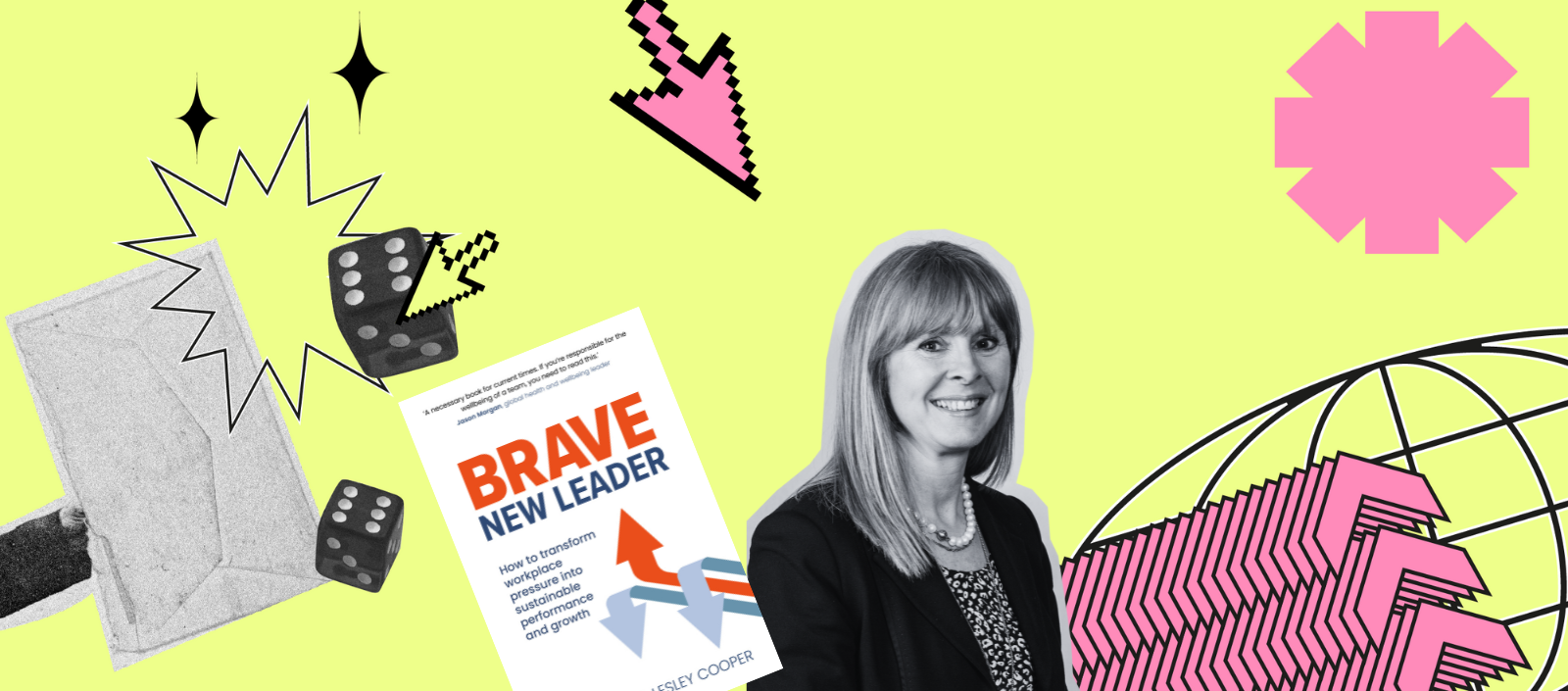
Leslie Cooper is a management consultant with over 25 years’ experience in designing and implementing all elements of employee benefits management programs. In 1997 Leslie founded WorkingWell, an award-winning specialist consultancy helping businesses manage workplace pressures in a way that promotes growth and development. She also Brave New Leaders: How to Transform Workplace Pressures into Sustainable Performance and Growth.
