

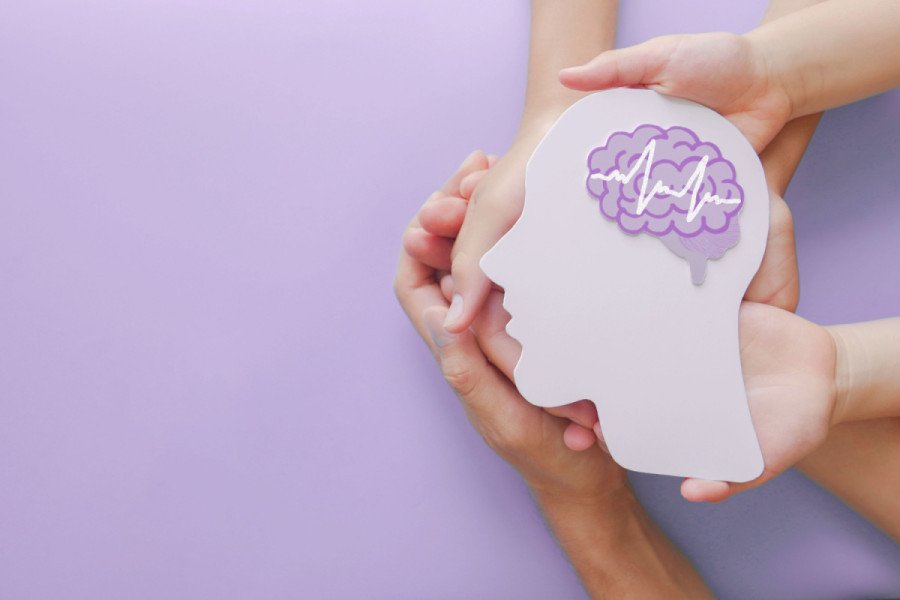
The Kathmandu Metropolitan Municipality is training doctors and paramedics working at urban health promotion centres in mental health screening.
Metropolitan health department officials hope that the move will help hundreds of mentally ill patients in the city get timely treatment.
“Access to free treatment for mental health problems is part of the right to free essential health care,” said Sajna Maharjan, the department’s acting director. “Training doctors and paramedics to screen for mental health problems will help in timely diagnosis of problems and initiating early treatment.”
At least 32 doctors and dozens of paramedics from the city government’s Urban Health Promotion Centers took part in the five-day testing training. The city has upgraded urban health clinics to Urban Health Promotion Centers and started providing doctor services.
“Due to a shortage of doctors at urban health promotion centres, patients suffering from mental illnesses were unable to get proper treatment,” said Nari Bajracharya, a senior public health officer at the department. “Now, patients suffering from mental illnesses and seeking treatment at our health centres will also be able to get treatment for their mental illness.”
Neither federal agencies nor city hall have data on the number of people with mental health issues in the nation’s capital, but doctors estimate there could be a large number of people suffering from various forms of mental health problems, including anxiety and depression.
Officials say they also plan to provide free medicines to patients with mental illnesses.
Healthcare workers say many urban residents suffer from mental health issues but do not seek treatment, instead turning to drugs and substances to cope. Deep-rooted social stigma, fear of discrimination and other factors mean many patients in Nepal do not discuss their mental health problems.
Doctors say the stigma surrounding mental health problems and the general tendency for people to hide them also pushes patients to turn to substance abuse.
They say that while drugs and alcohol may provide short-term stress relief, they are not the answer and can have a negative impact on mental health and well-being in the long term.
“Patients have better outcomes if they treat mental illnesses at an early stage, which is why early diagnosis is crucial,” said Dr Pomawati Thapa, head of the Non-Communicable Diseases and Mental Health Division at the Department of Epidemiology and Disease Control. “Other provincial departments should follow suit in providing training in mental health screening to health workers, including doctors.”
Nepal has one of the highest suicide rates in the world, which is an extreme manifestation of mental health issues.
According to data from the Nepal Police, 6,993 people took their own lives in the 2022-2023 fiscal year, translating to an average of more than 19 deaths per day. 56% of those who committed suicide were men.
Doctors say it is not one single reason that makes people attempt suicide, but a complex situation resulting from multiple issues.
Experts say rising costs of living and the difficulty of affording even the most basic needs like food, housing, healthcare and work are causing an increase in people struggling with mental health issues.
Whatever the cause, doctors say suicide or attempted suicide has a ripple effect, affecting family, friends, colleagues, communities and society.
According to a previous survey conducted by the Nepal Health Research Council, about 13 percent of Nepalis suffer from some kind of mental illness. This means that about one in eight Nepalis suffer from mental health problems. Moreover, the country lacks specialists who can treat mental health issues, the council added.
Research shows that the suffering, burden and cost caused by mental illness to individuals, families and society in Nepal is alarming.
“Without a doubt, mental health issues have emerged as a major cause of morbidity and mortality in the country,” Thapa said. “All local governments must take the lead in addressing this issue. Federal agencies alone cannot do much.”
According to the World Health Organisation, one in four people worldwide will be affected by a mental or neurological disorder at some point in their lives and approximately 450 million people currently suffer from such conditions, making mental illness one of the leading causes of ill-health and disability worldwide.
