

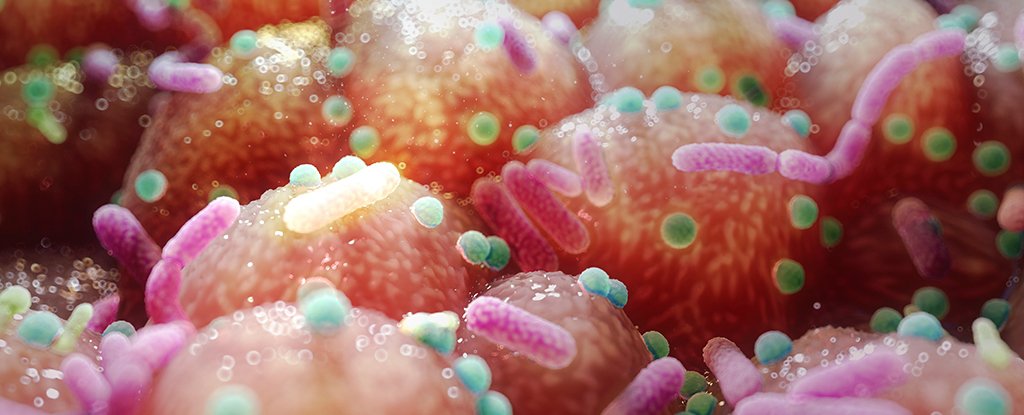
Researchers have long suspected that the gut-brain connection plays a role in the development of Parkinson’s disease.
A new study identifies a possible role for gut bacteria and shows a link to reduced levels of riboflavin (vitamin B2) and biotin (vitamin B7), paving the way for a surprisingly simple treatment that may help: B vitamins.
“It is likely that some Parkinson’s disease patients in whom intestinal flora abnormalities play an important role would benefit from riboflavin and/or biotin supplementation,” medical researcher Hiroshi Nishiwaki of Nagoya University and his colleagues wrote in the paper.
This neurodegenerative disease affects approximately 10 million people worldwide, and at best there are no treatments that can slow or alleviate the progression of symptoms, which typically begin with constipation and sleep problems and progress to dementia and muscle weakness over up to 20 years.
Previous studies have found that Parkinson’s patients experience changes in their microbiome long before other symptoms appear, so Nishiwaki and his team analyzed fecal samples from 94 Parkinson’s patients and 73 relatively healthy controls in Japan, and compared their results with data from China, Taiwan, Germany, and the United States.
Although different groups of bacteria were involved in different countries, they all affected the pathway that synthesizes vitamin B in the body. The researchers found that changes in gut bacteria populations were associated with reduced riboflavin and biotin in people with Parkinson’s disease.
Nishiwaki and his colleagues found that vitamin B deficiency is associated with a decline in molecules that help form a healthy mucus layer in the intestine. They believe that a weakened protective layer could make the intestinal nervous system more vulnerable to toxins that we now encounter more frequently, including cleaning chemicals, pesticides and herbicides.
These toxins lead to increased inflammation in the nervous system and the overproduction of alpha-synuclein fibrils, a molecule known to accumulate in dopamine-producing cells in the substantia nigra portion of the brain, ultimately leading to the more debilitating movement disorders and dementia symptoms of Parkinson’s disease.
A 2003 study found that high doses of riboflavin helped patients who also eliminated red meat from their diets recover some motor function, leading Nishiwaki and colleagues to suggest that high doses of the B vitamin may prevent some of the damage.
All this suggests that ensuring a patient’s gut microbiome is healthy may have a preventative effect, as may reducing toxic pollutants in the environment.
Of course, because Parkinson’s disease involves such a complex series of events, not all patients experience the same causes, so each individual must be evaluated.
“We can conduct analyses of the patient’s intestinal microbiota and fecal metabolites,” Nishiwaki explains.
“These findings could be used to identify individuals with specific deficiencies and potentially develop effective treatments by administering oral riboflavin and biotin supplements to those with reduced levels.”
This study npj Parkinson’s disease.
