

Editor’s note: This story was produced for the Mosaic Journalism Program, an intensive journalism course for Bay Area high school students. Students in the program report and photograph stories under the tutelage of professional journalists.
High school student Amrita Venkatesh recalls nights when she would sit in her room in a panic, stressed out about her college admissions and the fate of her education.
As she frantically pored over her transcripts and spiraled into a whirlpool of doubt, she turned to her most trusted source of support: ChatGPT. As she input her anxieties and fears, the program responded with just the comfort she needed: a reminder to stay calm. It also offered advice on college applications.
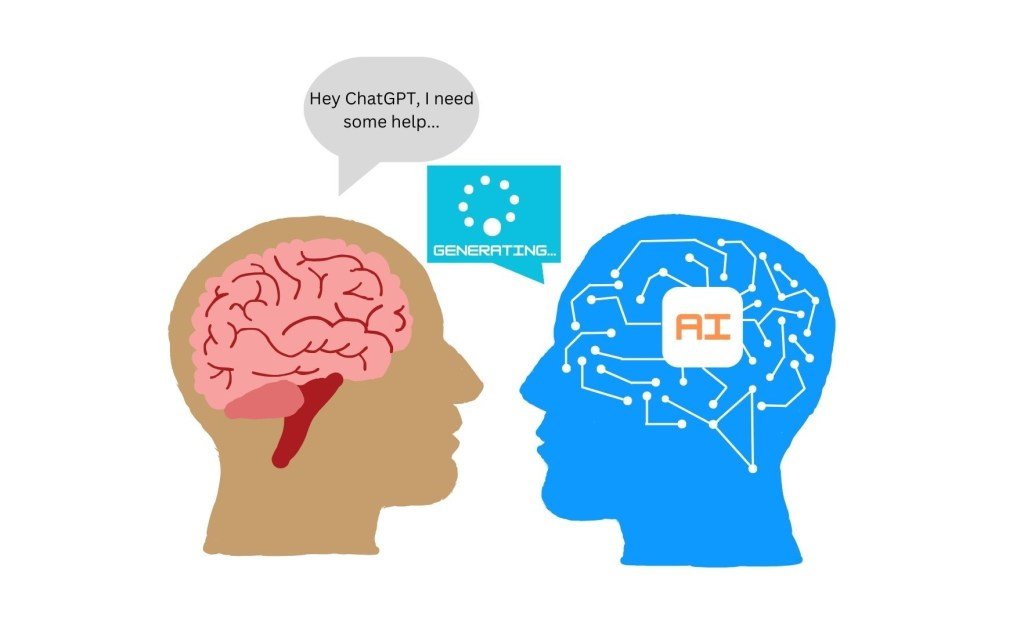
For many teens, digital tools, such as programs that use artificial intelligence (AI), have become the go-to option for emotional support, providing an easy and inexpensive option for young people learning how to navigate and cope in a world where mental health care is in high demand.
Venkatesh, who will be in his senior year at Fremont American High School in the fall, said he often tells himself he doesn’t need therapy: “Rather than pay the cost, I’d rather take a different approach, because the cost of therapy isn’t going to change anytime soon.”
Luz Campuzano, a senior recreation leader at the Alum Rock Youth Center in San Jose, works with teens every day and said she isn’t surprised by this new way of dealing with it. “It makes it easier, right? They don’t want to tell their parents they need help. Their parents, especially in the Latino community, are evasive. They’re like, ‘No, deal with it yourself, be an adult, get over it.'”
Downloading free apps that use AI-powered mental health support, such as Calm and Fabulous, is becoming more common among teenagers in the Bay Area.
But Jasmeet Lakra, a licensed substance abuse counselor, said there are some concerns about relying on robots for responsive communication, especially when people are at their most vulnerable.
“AI is not a bad tool in that it can understand your mental health and give you advice and strategies,” she said. “But it’s a robot, so it has no emotions, no empathy, no compassion. When you’re talking to a person, you can tell when they’re upset or angry, but with a robot, you can’t understand that.” Lakra works for Prodigy Healthcare in Fresno.
Dwija Kothari, a senior at American High School in Fremont, has been using Fabulous, an AI-based self-care app, to support her mental health, and said she prefers it to in-person therapy.
“When you’re depressed, it’s really hard to take care of yourself,” she says. “Therapy isn’t something you do on an ongoing basis. It’s unrealistic to have therapy every day. I don’t think in therapy, the therapist is telling you to get out of bed, eat food, take a shower, brush your teeth. The AI is there for you all the time.”
Many apps, like Fabulous, leverage AI to create reminder systems that act as habit trackers, aiming to turn small daily tasks into “big, lasting changes,” according to the Fabulous website.
Some students, like Brooke Jolly, who will be a junior at Moreau Catholic High School in Hayward in the fall, appreciate the AI’s candor when asking for advice or mental health tips.
“I’ve asked an AI for advice a few times because I wanted an accurate answer rather than someone I know fudged it,” she said via text during an interview.
The privacy and consistency that AI promises young users provide a compelling justification for opting for mental health care delivered via an app.
Venkatesh, who has suffered from depression himself, said he appreciates ChatGPT’s lack of prejudice: “There’s a lot of stigma attached to depression, and if you talk about how you’re depressed, like skipping meals or not taking showers, people will judge you for that. I think it’s easier to talk to a non-human in that case, because an AI won’t judge you for that.”
AI can provide a safe space for teenagers to be vulnerable when the adults around them aren’t supportive of mental health care.
“It was a big thing for parents to acknowledge that their child needed help,” Kothari said, “so downloading the app was definitely an easy and helpful way to help them.”
Campuzano, the director of the San Jose Youth Center, said he thinks the appeal of using AI for mental health support has a lot to do with control.
“This is their world right now, and they can’t do any better. The lack of control in their lives definitely plays a big role. They want to go places they can’t go. They want to do things they can’t do. And their parents won’t let them, their teachers won’t talk to them a certain way. So I think being that age, they don’t have much control over their lives.”
Getting personalized care is important, Kothari said. “I think a really big benefit of these apps is that you can personalize it to your preferences and your needs,” she said.
Campuzano agrees that AI, as opposed to a human therapist, caters to specific needs and desires, “but a therapist will tell you what you need to hear, not what you want to hear. So I don’t think AI is good for mental health.”
Some mental health apps
Calm – Basic plan: Free, Premium: $14.99/month
Happy Faith – Basic plan: Free, Premium: $14.99/month
Yooper – $69.99 per year with a 7-day free trial
Mood Kit – One-time payment of $4.99
wonderful – Basic plan: Free, Premium: $39.99/year, $250 lifetime subscription, other payment plans
Nanki Kaur is a member of the Class of 2025 at American High School in Fremont.
