

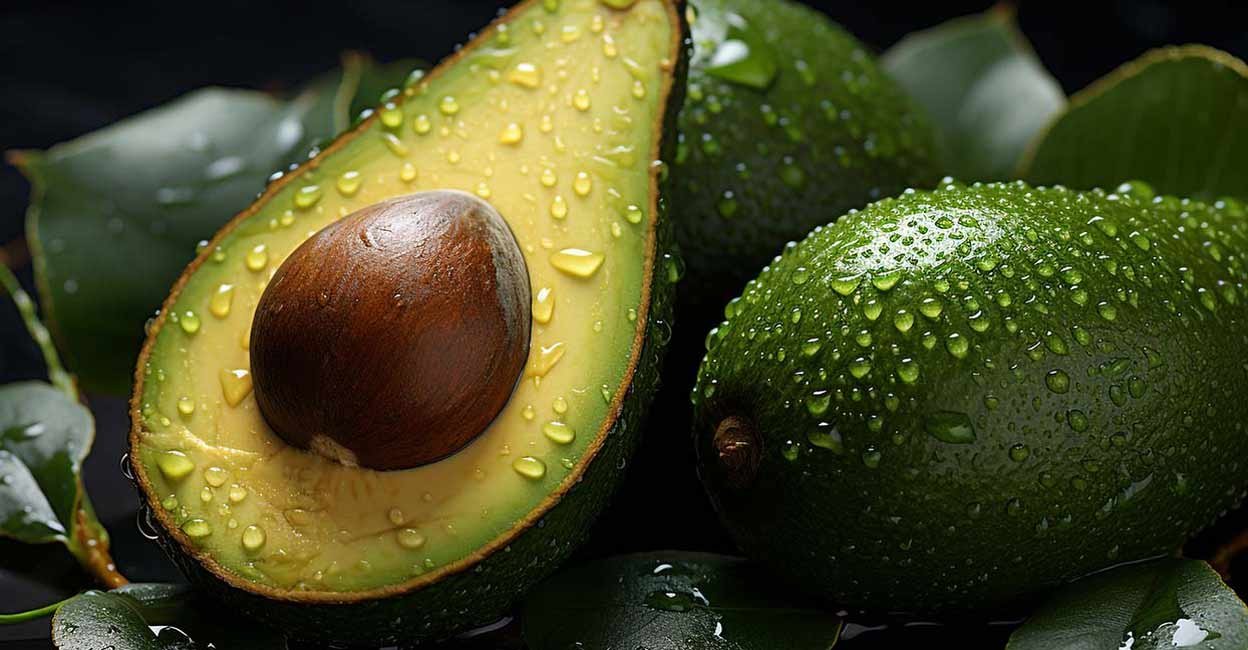
LANCASTER: Surging demand for avocados in Europe and North America has tripled global production in just over two decades, but the popular fruit has become increasingly controversial due to the environmental impacts of its cultivation and distribution around the world.
These issues are not specific to avocados themselves – avocados can still be part of a sustainable, healthy diet – but rather reflect some of the deeper issues associated with avocado production.
Avocados are native to Central and South America, where warm climates make them ideal growing conditions. There are hundreds of varieties, but the one most of us know today is the Hass variety, which can be traced back to a single tree planted almost 100 years ago.
Avocados have become increasingly popular in recent decades, in part because of their promotion as a superfood, and while the health claims may be exaggerated, they are certainly a good source of vitamins, minerals and unsaturated fats, which give them their creamy, satisfying texture.
So why have avocados become so controversial? Like much of modern agriculture, most avocado farms rely heavily on fertilizer and fossil fuels, contributing to rising greenhouse gas emissions. Avocados have lower yields than many other crops, which means they produce more carbon per kilogram of fruit.
On average, the carbon footprint of an avocado is about 2.5kg of CO2 equivalent per kg (kg CO2e), which is the warming CO2 equivalent of all the greenhouse gases that come from producing and transporting avocados, including carbon dioxide, methane and nitrous oxide.
The carbon footprint of an avocado is more than twice that of a banana (0.9kg CO2e per kg) and more than five times that of an apple (0.4kg CO2e per kg), but only slightly worse than a tomato (2kg CO2e per kg).
However, these figures are small compared to the global average carbon footprint of most animal-derived products: 1 kg of eggs has a carbon footprint of 4.6 kg CO2e, 1 kg of chicken has a carbon footprint of 9.8 kg CO2e and 1 kg of beef averages a whopping 85 kg CO2e.
For people living outside the Americas, the long distances avocados often travel may not be as big a problem as commonly thought, at least from a carbon perspective. Most avocados are transported by ship, but the carbon footprint is relatively small because only a large amount can be transported per voyage. Even when transported thousands of miles, shipping produces only 0.2kg CO2e per kg of avocado, which is often much less than the emissions from growing them.
Shipping brings other problems: Overreliance on shipping has created a food system that is vulnerable to shocks and disruptions, meaning congestion, logistical bottlenecks (such as the blockage of the Suez Canal by a container ship in 2021), famine or war in one part of the world can lead to disruptions and food shortages in many others.
This problem is likely to grow as the climate crisis intensifies, and while it’s not specific to avocados, a shift to more locally grown foods could help build resilience and prevent future food shortages.
Environmental burden
The avocado tree is a very water-hungry plant, needing an average of about 1,000 litres of water per kg, which is higher than most other fruits and vegetables but lower than some cereals such as rice. The main problem is that avocados are grown in areas that are already suffering from water shortages.
Mexico, the world’s largest producer of avocados, is experiencing prolonged drought, and irrigating avocado plantations could undermine local people’s access to water, making the problem of equitable water distribution even worse in coming decades.
The impact on nature must also be considered. Traditionally, avocado trees were planted alongside other crops and harvested for subsistence, with only the surplus exported. This practice has changed with increasing demand from the US and Europe.
Avocados are now primarily grown as an export crop, and to maximise productivity, production has been switched to large monoculture plantations. These monocultures crowd out other native crops and are much more vulnerable to pests and disease than mixed cultivation.
All this means that more pesticides and chemical fertilisers need to be used, with resulting negative effects on biodiversity, soil quality and human health.
To make matters worse, new avocado plantations are causing deforestation in some areas: In Mexico’s main avocado-producing state of Michoacan, which supplies most of the avocados sold in the United States, as many as 25,000 hectares of forest are cut down each year.
Michoacán is covered in lush forests and is home to many endangered animal species, including jaguars, cougars and coyotes, so increased avocado production in the region could pose a major threat to biodiversity.
Finally, there is the human impact to consider: the avocado trade brings in income for farmers and helps local people, but it is also local people who bear the brunt of the environmental problems. Additionally, avocado plantations have been linked to organized crime and human rights abuses, and some towns and villages have grown so fed up with the problems that they have banned avocados altogether.
Unfortunately, there are no easy answers. While looking for fair-trade or organically produced avocados may help in terms of impacts on people and biodiversity, the certification process is far from perfect and is often too costly for small farmers in developing countries. And it may not result in lower emissions than monoculture farms.
Avocados are not the only food that puts a strain on the environment – they have a much smaller carbon footprint than most animal-based foods, and are just one of many crops where a single variety dominates the market – but we should not ignore the damage that avocado production causes to nature and local people.
The best advice for consumers is to consider alternative avocado varieties where possible to reduce demand on monoculture farms. If alternative varieties are not available, the next best thing is to try to keep avocados as a treat rather than a daily staple.
