

Mentis, a leader in mental health and one of Napa County’s oldest nonprofits, has announced that Kaiser Permanente will contribute $250,000 to Mentis’ plans for a new centralized mental health and wellness campus in Napa.

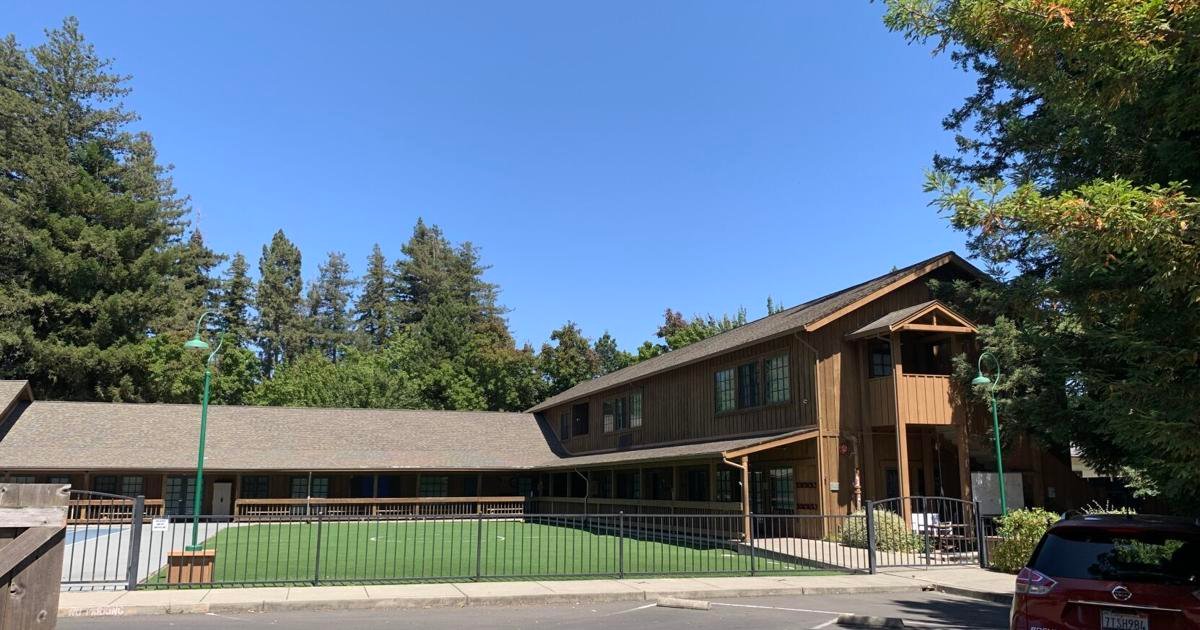
Mentis has purchased the Blue Oak Middle School campus on Hayes Street in Napa, and the nonprofit plans to relocate to the site in 2025. Blue Oak is building a new middle school campus on Polk Street.
Jennifer Huffman, Register File Photo
“Kaiser Permanente is a critical partner in Mentis’ work to improve availability and access to mental health care for all who live and work in Napa County,” said Rob Weiss, Mentis executive director.
“They are deeply committed to helping their local residents thrive, and we are honored that they have chosen to invest in our innovative Mental Wellness Campus as a way to make a lasting positive impact on the well-being of people in their Neighborhood of all ages and backgrounds.”
The proposed campus, formerly occupied by Blue Oak Middle School, is located at 1272 Hayes St. in Napa. With 13,000 square feet of space — more than 10,000 square feet larger than Mentis’ current headquarters at 709 Franklin St. — the campus will consolidate Mentis staff, expand programming for people of all ages, provide youth-focused arts and wellness space and eventually serve as a hub for mental health resources, from prevention programs to mental health treatment, according to a news release.
Anyone else reading this…
Kaiser Permanente will name the outdoor sports court with a $250,000 investment that will allow Mentis to offer innovative programs that improve both physical and mental health, the company said in a statement.
“Kaiser Permanente is deeply committed to the mental health and wellness of our community,” said Darryl Curry, senior vice president and area manager for Kaiser Permanente Napa Solano. “We are proud to support the soon-to-open Mentis Wellness Campus and increase access to important prevention and treatment services for our community, especially those who experience barriers to receiving mental health care.”
“Thanks to a generous donation from Kaiser Permanente, a significant investment from Napa Valley Vintners, a significant grant from the State of California, and several other notable donors, fundraising for the new Mental Wellness Campus is well underway,” the press release stated.
Mentis plans to continue raising funds this year to bring the total project price to $14 million, enabling it to open the new space in early 2025.
For more information, visit mentisnapa.org and inthecommunity-ncal.kaiserpermanente.org.
Working from home: good or bad for mental health?
Working from home: good or bad for mental health?

It’s an ongoing debate that plays out every week on LinkedIn. As companies call employees back to the office, a percentage of employees quit or express dissatisfaction after thriving remotely for a long period of time. Then there’s the hybrid debate: is hybrid once a week or twice a week? Four times a week could be called hybrid, but in most people’s eyes it’s clearly not. One thing is certain: the COVID-19 pandemic has permanently changed the landscape for working professionals.
Many companies have fully adopted remote models and have been very successful (Shopify, Airbnb, Microsoft), while others are slowly reverting to pre-COVID policies (Disney, Google, Amazon). Mark Zuckerberg, leader of Meta, which has been calling for employees to return to the office, previously weighed in on the debate, saying, “Working from home has been much more productive than we expected. Some people thought everything was going to fall apart, but that didn’t happen.”
But which environments are best for mental health? The folks at Statista wanted to find out, so they surveyed over 5,000 people who work from home, offices, and factories.
Interestingly, Way.com found that remote workers had slightly higher rates of mental health issues (46%) than office workers (39%) and factory workers (42%). When it came to catching a cold, the rates were essentially the same across the three environments.
Gastrointestinal problems were most prevalent among home workers, at 40%, compared to 34% of office and factory workers.

Stratford Productions // Shutterstock
Health issues aren’t the only thing affecting workers

While these results give a slight edge to in-office work, other studies looking at the happiness of remote and hybrid workers have found that 88% of those surveyed reported being most satisfied with flexible work schedules. An Ergotron survey of 1,000 people found that 56% of hybrid or remote workers reported improved mental health and better work-life balance. Remote workers’ physical health improved by 75% due to a more active work style.
The debate over working from home is not absolute: some people believe it saves them time from commuting and helps them focus better, while others believe being in the office with others is best for their overall well-being.
Several studies suggest the key can be summed up in one word: flexibility. Perhaps Virgin Group founder and chairman Richard Branson put it best when he said, “We want to give our people the freedom to work wherever they want, with the security of knowing that they have the drive and expertise to perform well, whether that’s at their desk or in the kitchen.”
This story It was produced by Way.com Reviewed and distributed by Stacker Media.
Way.com
