


As of March of this year, the number of single-person households nationwide has exceeded 10 million. Of the total number of households in Japan, approximately half are single-person households, of which there are approximately 24 million in total.
One of the problems facing single-person households is finding a way to get by on meals. Delivery apps require a delivery fee, which is a big burden, and the high cost of food makes it difficult to cook at home. In order to save on food costs, you have to buy in bulk, which is too much for a single person, and the kitchen facilities in single-room and two-room apartments, which are mainly used by single people, are often poor.
To solve these problems, Seo Seong-jin, president of the Single Life Institute, founded the company in July last year. The Single Life Institute runs the online home cooking platform Mamma.com.
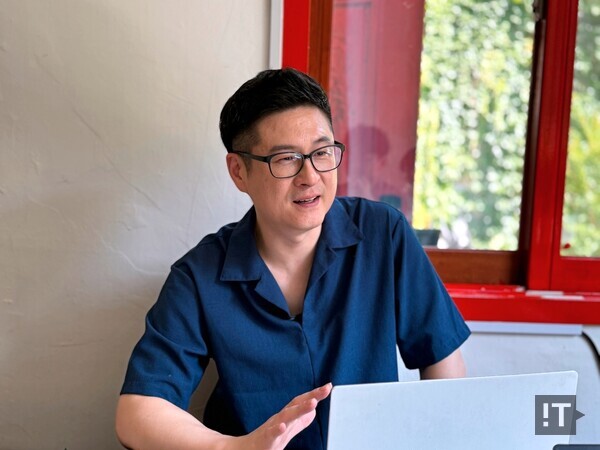
Mamma.com is a service that introduces home cooking recipes from local cooking experts to single and double occupancy families. The service is currently available in Seodaemun-gu, Eunpyeong-gu, Mapo-gu, Yangcheon-gu, Jungnang-gu, and Yongsan-gu in Seoul. In Busan, the service is underway in Nam-gu, Jin-gu, and Suyeong-gu. IT Chosun met with Seo Seong-jin, CEO of the Single Life Research Institute, to discuss the vision for Mamma.com.
Targeting home cooking needs of small households
Mamma.com is a platform where “mama” cooks and delivers food to customers. CEO Seo Seong-jin got the idea to start a business when he realized that the side dishes his parents and their acquaintances prepared for him while living alone were too much for one person. He noticed that the response was good when he shared the leftover side dishes on a secondhand goods trading platform.
The Single Life Research Institute directly employs moms and markets their cooking skills and traditional family recipes. The primary target demographic for Single Life Research Institute’s Mamma.com is single and two-person households.
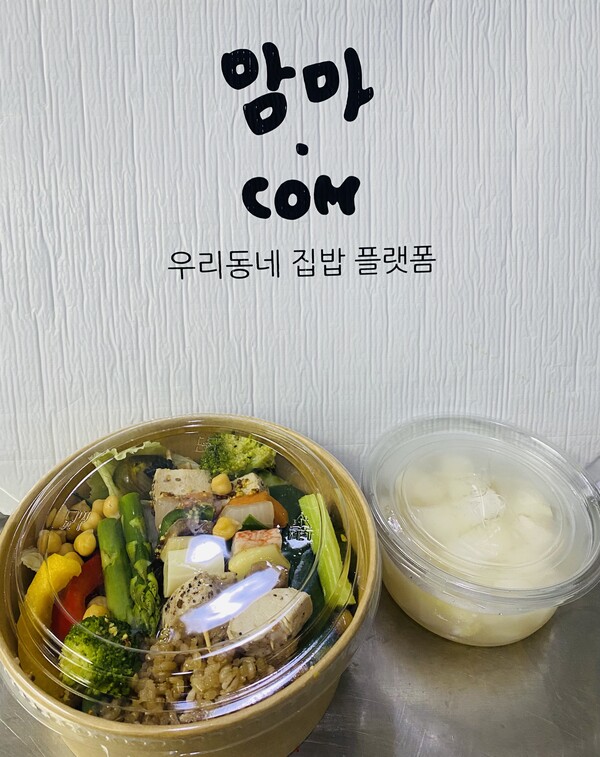
Seo Seong-jin said, “Recently, three moms made boiled tofu, and although they all looked similar, they all had different flavors – some were salty and rich, some light, and some spicy. Even though they may look similar, the taste can change so much just by changing the ingredients or sauce a little. I wonder how many recipes like this there are.”
“Our main target is single-person households and households with two people, but we also get a lot of orders from households with three or four people. In particular, new mothers who are tired of cooking for their children often order for themselves,” he says.
Building a home cooking recipe database
Mamma.com operates by having local moms choose the “menu of the week,” take customer orders Tuesday through Thursday, and deliver the side dishes and bento boxes in bulk on Fridays.
“The first Mamma on Mamma.com was my mother’s side dishes. Home cooking is not just a meal made at home, but a ‘meal made and eaten at home’ that includes recipes and cooking techniques that have been passed down from generation to generation in each household,” said Seo.
He also said, “The frequent appearance on TV of people saying, ‘I miss my friend’s kimchi, but I don’t know how to make it,’ seems to indicate that people are increasingly eating store-bought products and home recipes are disappearing. If the system that Mama.com is aiming for takes root, I hope that the various recipes that have been passed down in families will continue to be preserved.”
Discover your hidden culinary talents
Mamma.com moms are self-employed restaurant owners, friends’ mothers, young people looking to start a food business, etc. It’s a kind of C2C (consumer-to-consumer) model.
However, the moms cannot immediately sell the food they make. According to the Food Sanitation Act, in order to sell food, they must register as a business, obtain a hygiene certificate, and prepare the food in a registered store. The Single Life Institute solves this problem by first holding two or three sharing sessions, which also serve as market research. If customers respond well to the food made by the potential mom, the Single Life Institute will employ her. Currently, about 40 moms are employed, six of whom have sales rights.
The issue of registering stores was resolved by the Single Life Institute partnering with existing food businesses, such as cafes, to rent kitchens. Mama.com products are usually sold for less than 10,000 won. This was possible because 10 moms don’t need to operate 10 separate stores to sell food.
CEO Seo Seong-jin explained, “By cooking together in the kitchens of our partner stores, we can reduce operating costs and set product prices more reasonably.”
Moms can earn their own health certification. Moms who receive sales rights can sell their cooking skills and recipes through Mamma.com. When these products are sold, Single Life Research Institute promotes the moms, not the Mamma.com brand, and shares profits with the moms.
CEO Seo Seong-jin said, “When I talk to mothers, I notice that there are a lot of middle-aged women. I want to support those who want to work despite feeling alienated from society, and those who find meaning in seeing people enjoying cooking, so that they can continue cooking and do meaningful work.”
She added, “The short-term goal of the Single Life Institute is to produce star moms from among a diverse range of moms. Ultimately, we would like to continue developing solutions for single-person and two-person households.”
no@
