

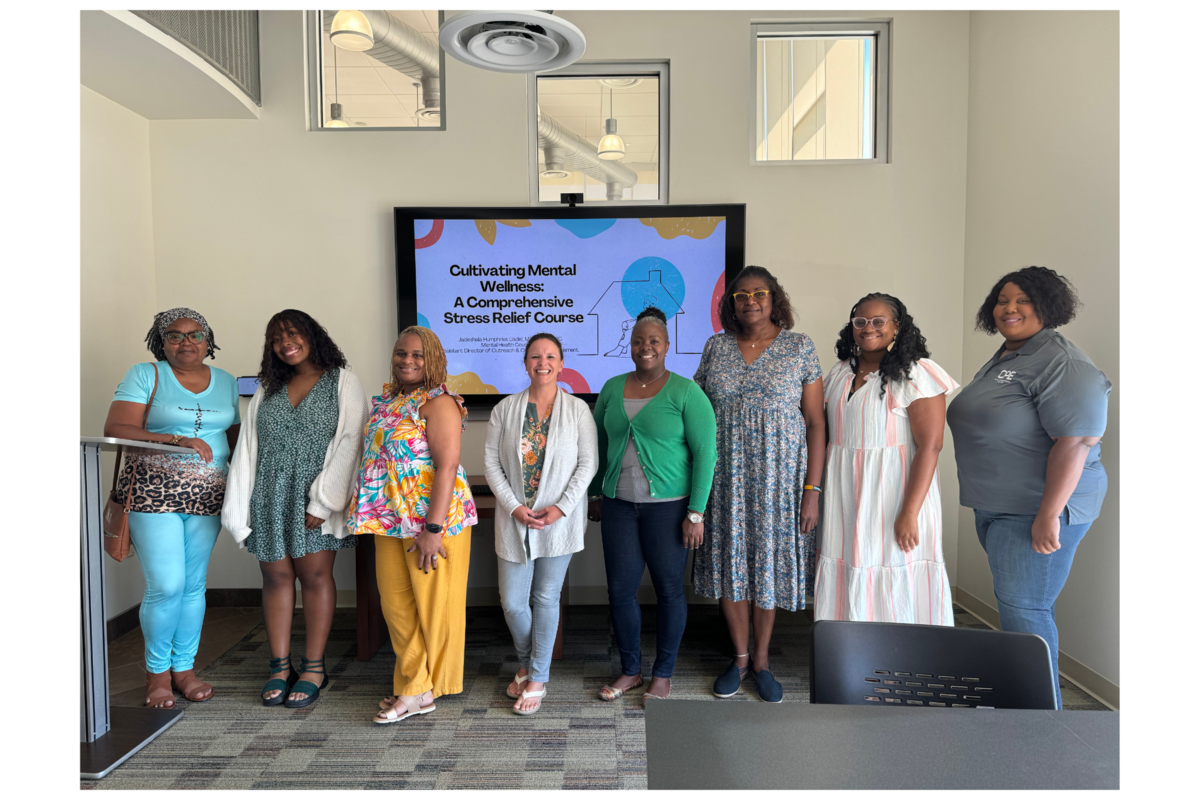
Early Friday morning, June 14, 2024, at the Georgia Southern University CPE Center. Jade Humphries The workshop began with a conversation about stress and mental health, with Humphreys delivering an impactful presentation focused on identifying different types of stressors and different components of well-being.
The free two-hour class introduced participants to acronyms that were new to them. Cow, this is What to do if the symptoms are not health symptomsSymptoms of COWS, such as stiff shoulders, overeating or undereating, and lack of sleep, can send important signals reminding us to focus on the core causes of stress.
Humphreys distinguished between different types of stress: appropriate stress, acute stress, and chronic stress. Appropriate stress is when you respond appropriately to the situation. For example, it’s natural to feel stressed after a car accident.
Acute stress is short-term stress that will go away once that report is due, but chronic stress, like caring for a loved one with a terminal illness, has no foreseeable solution. Even if you can’t change the situation, there is still hope.
“Sometimes you can’t solve the problem, but you can mitigate how draining it is for you,” Humphreys explained.
Self-care can be simple things like making healthy food choices, moving regularly, and getting enough sleep. For some people, meditating or journaling helps, while for others it’s setting boundaries or scheduling mental health days. The key is to know what works for you and make sure you do it.
Humphreys reminded the audience that we have the power to change how we think about situations — in other words, we can recalibrate how we respond to things.
“We can control how stressed we are about stressors,” she said.
If the situation gets out of hand, it may be time to seek professional help. Psychology Today, Mental Health America, the National Alliance on Mental Illness, and the CDC are all reputable websites that can offer help and hope. If you or a loved one are in immediate danger, the 988 Suicide and Crisis Lifeline is also available.
For more information about the CPE Center’s monthly community programs at 10449 US-301, Statesboro, GA 30458, visit the center’s website
