

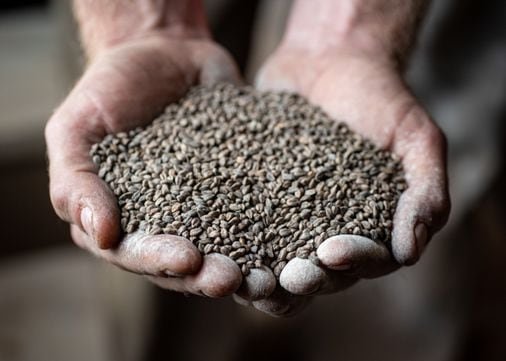
Buckwheat is back in the spotlight, and that’s a bright spot for this nutritionally dense yet under-appreciated food. Whether used in crackers, snacks, pancakes, or breads, or as a “grain” in salad bowls or side dishes, buckwheat is packed with healthy nutrients and it’s gluten-free.
To clear up a common misconception, buckwheat is neither wheat nor a grain. Buckwheat is a flowering plant in the Polygonaceae family, related to the radish plant. Its seeds are harvested for food, and although they resemble cereal kernels, they are not a grain or grass.
Buckwheat is believed to have originated in South Asia and China over 6,000 years ago. It is widely grown in Russia, China, Ukraine, France, Poland, and in the northern United States in states such as North Dakota, New York, Maine, and Minnesota. Buckwheat is considered a pseudocereal, a seed disguised as a grain, similar to quinoa and amaranth. The small three-sided seeds or groats, with the outer husk removed, are cooked like grains such as wheat grains, bulgur, spelt, and barley, and eaten as a breakfast porridge. The groats are sometimes ground into flour for use in baked goods. Other related products include buckwheat tea, beer, milk, and honey.
Professor Iago Hale of the University of New Hampshire’s School of Agriculture, Nutrition and Food Systems explains that there are two types of buckwheat: common buckwheat and tartary buckwheat. Common buckwheat is the most common buckwheat grown and eaten around the world. Tartary buckwheat is a different species, grown primarily in parts of Asia. While tartary buckwheat has a few more health benefits than common buckwheat, the latter is more nutritious and a “beneficial food,” Hale says.
Buckwheat is an excellent source of complex carbohydrates, protein, fiber, B vitamins, minerals such as phosphorus, potassium, magnesium and manganese, and antioxidants, especially rutin and quercetin. Buckwheat starch is absorbed more slowly than other carbohydrates, so it doesn’t cause unhealthy spikes in blood sugar.

Buckwheat is a great pantry staple and cooks faster than most whole grains. Use a 1:2 buckwheat to water ratio. Rinse the groats quickly in cold water and add to boiling water with a pinch of salt, reduce heat, cover and simmer for 10 to 15 minutes or until tender. Cook the groats with sautéed onions and other chopped vegetables for a healthy side dish or to stuff peppers or pumpkin.
Roasted (or toasted) buckwheat is called kasha and is used in traditional Eastern European and Jewish dishes such as kasha wanischke (bow-tie pasta) and as a filling for knishes and cabbage rolls. Kasha has a richer, darker, nuttier and more distinctive flavor than untoasted buckwheat. It pairs well with meat dishes, stews and hearty soups. Buckwheat’s flavor can range from rich and grainy to mild and slightly grassy when used in pancakes, crackers and breads.
Noodles made from buckwheat, known as soba, are a staple in Japanese cuisine. Buckwheat pancakes and crêpes are popular in Europe, including France, where galettes bretonnes (buckwheat crêpes) are sometimes stuffed with ham, cheese, mushrooms, and eggs. Russian bliny often contain buckwheat flour in addition to wheat flour, and thin buckwheat pancakes can be found in Asian countries such as India and Nepal.
In northern Maine, buckwheat flour is used to make ploy, a traditional French-Acadian flatbread. Ploy (rhymes with toy) are thin, round crepes that are quickly cooked on a hot griddle and are usually buttered, rolled up and eaten with a meal. The batter for ploy is just buckwheat and wheat flour, baking powder, salt and water, but eggs, milk and butter are added for crepes and pancakes.

The Bouchard Family Farm in Fort Kent, Maine, grows Tartary buckwheat, which was introduced to the St. John Valley generations ago. Like other farms along the U.S.-Canada border, the Bouchard family stopped growing potatoes in the mid-1980s because it became too difficult to grow the potato tubers, says fifth-generation farmer Joseph Bouchard. Bouchard and his son Philippe harvest the berries, dry and store them, then mill them into flour year-round. The farm sells buckwheat flour and the family’s ply mix, but not whole buckwheat. (For more information about the Bouchard family’s buckwheat and ply, visit www.ployes.com.)
Buckwheat flour has become increasingly popular in crackers, breads and other baked goods over the past 20 years because of its gluten-free nature and nutritional benefits. The Bouchards’ largest buyer of buckwheat flour is Maine Crisp Company, a manufacturer of gluten-free buckwheat crackers in Winslow, Maine. The crackers start out as small chunks, are sliced very thin and baked twice to create a super crispy cracker, according to CEO Lewis Goldstein. The popular Maine Crisp comes in five flavors, including Wild Blueberry Walnut, Savory Fig & Thyme and Cranberry Almond. The company, which makes all of its products in a dedicated gluten-free facility, is rolling out a new Better with Buckwheat snack cracker line.
Another Maine company, Digables, buys buckwheat flour from the Bouchards and makes buckwheat puffs, which have a similar texture to cheese puffs but are a more nutritious, gluten-free snack. The puffs come in three flavors: sea salt, garden herb and white cheddar.
The 100% gluten-free Bonte Bakery in Montpelier, Vermont, buys Bouchard’s flour to make its buckwheat boule, olive rosemary boule, and buckwheat sourdough, and bakery founder and co-owner Anne Marie Shea swears by the farm’s quality buckwheat in her homemade breads.

Not only is buckwheat highly nutritious, it’s a useful rotation crop that grows quickly in 10 to 12 weeks in the summer after other crops are harvested in the spring. Bouchard plants his buckwheat in early June and harvests it in late August. “If you plant it at the right time, buckwheat grows quickly, spreads widely and kills a lot of weeds, so you don’t have to spray pesticides or insecticides,” he says.
“As a cover crop, buckwheat captures and retains nutrients in the soil that would otherwise be lost,” Hale added. Buckwheat is drought tolerant, requires minimal water and can survive dry conditions that would kill other crops, he said. “It doesn’t suffer from pests or disease.”
Crop diversification is becoming increasingly important as climate change poses challenges for farmers around the world. Hale, who has studied Himalayan buckwheat, says buckwheat’s resilience and other benefits fit well into a strategy to grow plant-based foods that suppress weeds, improve soil health and thrive in changeable weather conditions.
Buckwheat is becoming more and more appealing as a nutritious food and an environmentally sustainable crop. The growing demand for gluten-free foods has undoubtedly benefited both the Bouchard family farm and producers of gluten-free buckwheat, flour and other products. What’s old is new again.
Contact Lisa Zwirn Email:
Lisa Zwirn can be contacted at lzwirn9093@gmail.com.
