

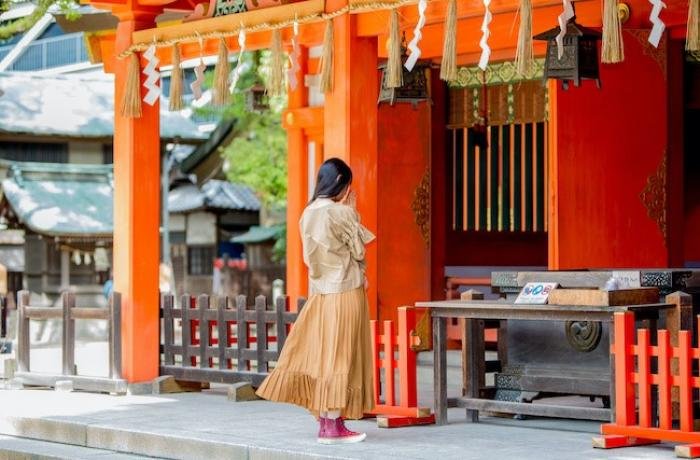
According to a Pew Research Center report on Japan, Korea, Taiwan, Hong Kong and Vietnam, even people who claim to have no faith engage in some form of ancestor worship, burning incense and making offerings at temples. The survey highlights the difficulty of conducting research given local religious beliefs, as local languages often only associate religion with hierarchical organization. The region has the highest religious switching rates anywhere in the world.
Milan (AsiaNews) – At first glance, it may seem that religion is absent from East Asian life: adults are rarely seen praying, many say they do not consider it important and the rates of secularisation (people who abandon religion) are among the highest in the world.
However, detailed analysis shows that the majority of today’s population still practices traditional rituals, especially those relating to their ancestors, and maintains a strong spirituality. Latest Report The Pew Research Center surveyed more than 10,000 adults in Japan, South Korea, Taiwan, Hong Kong and Vietnam.
The study points out that the term religion itself is a key point of study: “Common translations of ‘religion’ (e.g. Muneyoshi In Chinese, Training Japanese and Jeonggyo “‘Asian spirit’ (‘Asian spirit’ in Korean) is often understood to refer to organized, hierarchical forms of religion, such as Christianity or new religious movements, rather than traditional Asian spirituality,” the report said.
Most adults (ranging from 27 percent in Taiwan to 61 percent in Hong Kong) say they have no religion, but about half make offerings to their ancestors or burn incense, at least four in ten believe in a god or other higher being, and more than a quarter believe in spirits that inhabit the material world, such as mountains, rivers or trees.
“In short, religion in these societies is measured by what people want. believe and do“Whether you would call yourself religious or not, this area is more religiously active than it might seem at first glance.”
In this sense, Buddhism, which has historical roots in several Asian countries, has been defined by people of different faiths as a set of ethical teachings that guide behavior and a culture to which one belongs, rather than a religion that one chooses to follow.
Specifically, in Japan, 42% of the population does not believe in any religion, but 46% identify as Buddhist and 70% have made offerings to a temple in the past year.
In Hong Kong, 30 percent of people pray to Guanyin, the Buddhist deity of mercy, but only 14 percent identify as Buddhist and 20 percent as Christian.
In Vietnam, the only Southeast Asian country surveyed, 48 percent of respondents said they had no religion, 38 percent were Buddhist, and 10 percent were Christian, but 86 percent said they had performed a ritual for their ancestors in the past 12 months. Among those with no religious affiliation, that figure rose to 92 percent.
In general, ancestors are important in this region and many say they have felt and continue to feel the support of their ancestors in their lives.
The report also confirms a famous Japanese saying that people are born Shinto, marry Christians, and die Buddhists.
The proportion of people switching from one religion to another is 17% in Vietnam, 53% in South Korea and Hong Kong, compared with 32% in Japan and 42% in Taiwan.
These are the highest rates the Pew Research Center has ever recorded for any country around the world.
A few also feel a personal connection to the “lifestyle” of other faiths or philosophies: for example, 34% of South Korean Christians said they feel connected to the Buddhist lifestyle, while only 26% of Buddhists feel the same way about Christianity.
But in general, all countries surveyed have seen a sharp rise in defectors, whether they are Buddhist, Christian or Taoist in origin (especially Taiwan), except in Vietnam, where the figure is just 4% and where the proportion of people professing to be Buddhist is on the rise.
It is not surprising, therefore, that the percentage of people who believe religion is very important in life is very low: 11 percent in Hong Kong, 6 percent in Japan, 16 percent in South Korea, 11 percent in Taiwan, and 26 percent in Vietnam. However, 87 percent of Taiwanese, 75 percent of Vietnamese, and 76 percent of Hong Kongers believe in karma.
In Vietnam, 42% of respondents said they had been visited by their ancestors in dreams, compared with 40% in South Korea and 36% in Japan and Taiwan.
In South Korea, 59% practice or have practiced meditation, but only 21% pray daily.
