

Protein and fiber are essential for overall health, and many protein- and fiber-rich foods provide a variety of vitamins and minerals. Protein is the building blocks of bones, muscles, cartilage, skin and blood. Fiber adds volume to your food, makes you feel fuller faster, aids digestion and helps with weight management.
Research shows that a high fiber intake slows the release of sugar into the bloodstream, helping to stabilize blood sugar and prevent spikes. Protein also breaks down more slowly than carbohydrates, which may help keep you fuller longer and help manage blood sugar levels. High protein intake also improves blood lipid levels and lowers blood pressure.
The recommended protein intake is 10-35% of daily calories, with a minimum of 0.8 grams (g) per kilogram of body weight to prevent deficiency, although 1.2 g per kilogram (kg) can help prevent muscle and bone loss as you age. Research shows that most adults can tolerate up to 2 g/kg or more per day.
For dietary fiber, adult women (ages 19-50) should aim for 25g per day, and adult men 38g. For adults over 50, women need 21g per day, and men need 30g per day.
Starting your day with a high-protein, high-fiber breakfast can help you reach your nutritional goals and keep you energized and satisfied throughout the morning.
Dairy products such as Greek yogurt contain nutrients such as protein, calcium, and phosphorus. One 7-ounce (oz) container of low-fat plain Greek yogurt contains 19.9 g of protein.
Top it with antioxidant-rich berries, such as raspberries, which have 8 grams of fiber per cup, and granola for flavor, protein, and fiber. Look for granola that contains nuts and seeds, like walnuts and sunflower seeds, which are rich in protein, fiber, healthy fats, and antioxidants.
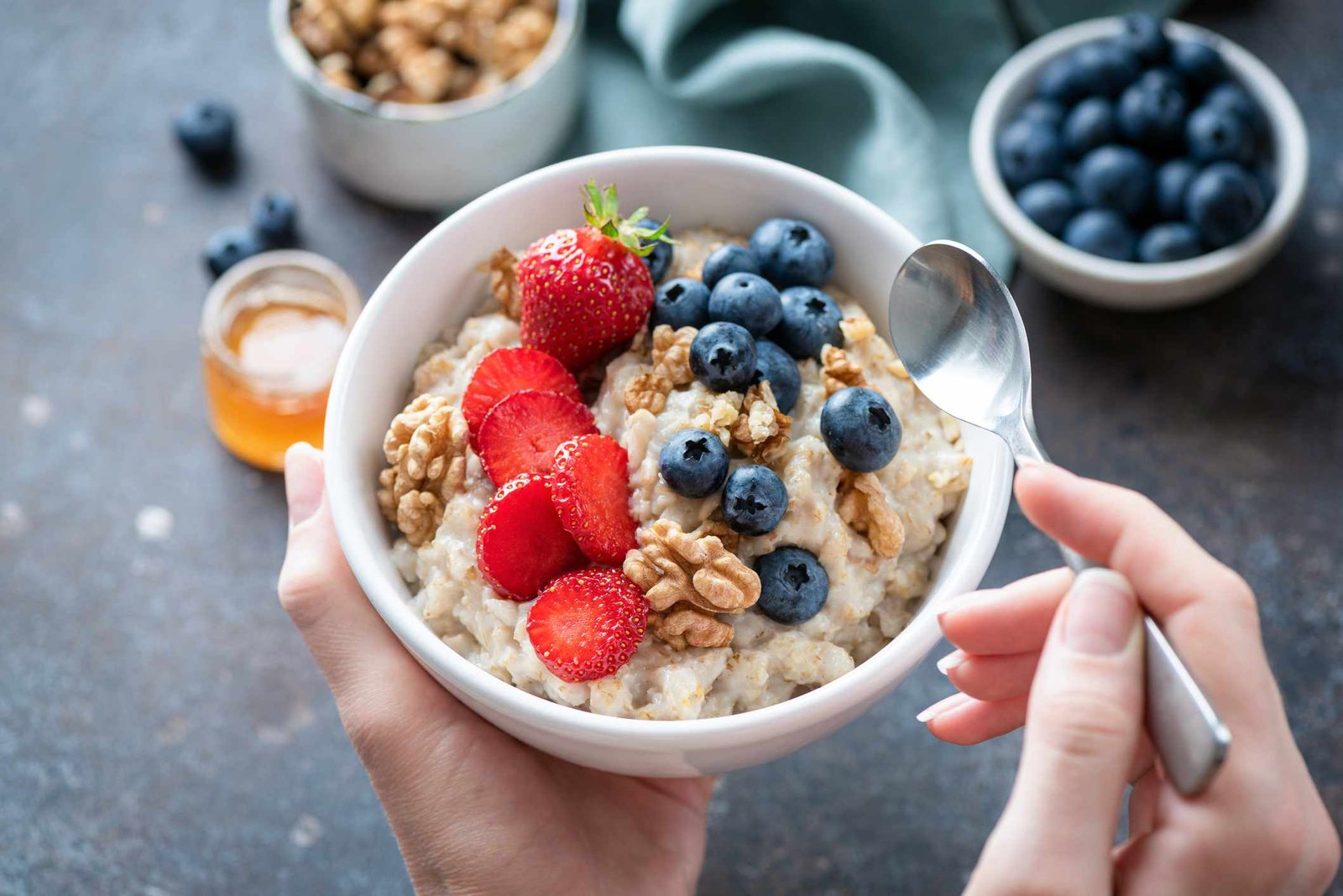
Oats contain beta-glucan, a dietary fiber that supports gut health and helps control appetite. One cup of cooked instant oatmeal contains 5.55 g of protein and 3.98 g of dietary fiber.
Top your oatmeal with cinnamon, 1 ounce of almonds (6.01 g protein, 3.54 g fiber), and 1 cup sliced apples (2.29 g fiber). If you want to get more protein, consider cooking your oatmeal with milk (such as 2% low-fat milk), which contains 8.23 grams of protein per cup.
Quinoa is a gluten-free grain that is rich in nutrients such as protein, fiber, magnesium, phosphorus, and manganese. One cup of cooked quinoa contains 8.14 g of protein and 5.18 g of fiber.
Mix in 1 cup sliced strawberries to add 3.32 g of fiber and sweetness. The addition of hemp seeds adds a crunchy texture and mild nutty flavor, and each 3-tablespoon serving provides 9.48 g of protein and 1.2 g of fiber.
Choose high-fiber bread for toast and sandwiches: one medium slice of bread has about 3-4 g of fiber and 3 g of protein.
Spread cottage cheese on your toast. Cottage cheese has about 6 grams of protein per 1/4 cup serving. Topping it with 1 cup of avocado slices adds 9.78 g of fiber and 2.92 g of protein. Avocados are also a good source of healthy unsaturated fats.
Eggs are rich in nutrients such as protein, vitamin D, B vitamins, and choline that are essential for brain health.
Making an omelet with two to three large eggs provides about 12 to 19 grams of protein, and adding shredded cheddar cheese adds an additional 6.49 grams of protein per ounce.
Mix in some vegetables like onions, mushrooms and spinach for extra nutrients and fiber, and serve with some high-fiber toast, which has about 3-4g of fiber and 3g of protein per slice.
High-protein pancake mixes typically contain ingredients such as eggs, whey protein concentrate, and/or soy protein concentrate and provide about 15 grams of protein per serving. Look for mixes that have simple ingredients and minimal additives, and you’ll also find recipes for making protein pancakes at home.
Top the pancakes with blueberries for 3.55 grams of fiber per cup and drizzle with maple syrup for sweetness.
Smoothies are a convenient way to get some protein and fiber in the morning. To make a nutritious smoothie, mix dairy, soy, or pea milk (each of which has 8 g of protein per cup) with 1 cup frozen mixed berries, which contain 3 g of fiber. Adding one ounce of chia seeds, which are rich in omega-3 fatty acids, provides 4.68 g of protein and 9.75 g of fiber.
You can also increase the protein content with a protein powder, such as a whey-based protein powder, which provides over 20 grams of protein per 1/3 cup serving.
A premium high fiber cereal (over 5g fiber per serving) with fruit for extra fiber and seeds for extra protein. For example, one ounce of pumpkin seeds contains 8.56 grams of protein.
Pour your cereal with dairy, soy, or pea milk, all of which contain about 8 grams of protein per cup.
Spread peanut butter, rich in healthy fats and vitamin E (about 8 g of protein per 2 tablespoons), on high-fiber toast (3 to 4 g of fiber and 3 g of protein per slice). Top with banana slices and you’ll get 3.9 grams of fiber per cup.
Enjoy with dairy, soy or pea milk (approximately 8 g protein).
Egg sandwiches are easily customizable and serve as a filling, nutritious breakfast. Start with a whole-grain English muffin, which provides 4.42 g of fiber and 5.81 g of protein. Add 2 large eggs (about 12 g protein) and a slice of high-protein cheese, such as cheddar (6.41 g protein).
Adding avocado to your sandwich adds flavor and provides 5 grams of fiber per half-cup serving. You can also increase your fiber intake by adding your favorite vegetables, such as spinach or bell peppers.
Choose high-protein frozen waffles, usually fortified with soy or whey protein concentrates, which provide about 10 to 12 grams of protein per two waffles. When toasted and served with two tablespoons of almond butter, they provide 6.72 g of protein and 3.3 g of fiber.
Serve with sliced pear for 4.34 grams of fiber per cup.
Use high-fiber tortillas for your breakfast tacos or burritos: A small (1 ounce) high-fiber tortilla has 7 g of fiber and 3 g of protein. For the filling, scramble 2 large eggs (12 g protein) and mix with 1/2 cup canned black beans (7.25 g protein, 8.3 g fiber).
Adding ingredients like bell peppers, salsa, and avocado can provide extra nutrients and fiber.
Chia seeds are rich in minerals like magnesium and zinc and are a good source of omega-3 fatty acids. They also provide 4.68 g of protein and 9.75 g of dietary fiber per ounce. To make chia pudding, mix 1/4 cup (2 ounces) of chia seeds with 1 cup of milk (8 g protein if using dairy or soy milk).
Refrigerate overnight to allow the seeds to absorb the liquid and expand. For extra fiber and nutrients, top with fresh fruit, seeds, or nuts.
Kefir is a probiotic-rich, sour, fermented milk drink that is similar to yogurt but has a thinner viscosity and contains 9.21 grams of protein per cup.
Combine kefir with protein powder (approximately 20 g per serving) and frozen fruit, such as dragon fruit (5.58 g of fiber per cup), for a nutritious and refreshing smoothie bowl. Top with almonds, berries or granola for extra texture and nutrition.
A whole wheat bagel sandwich is a great option for a high-protein, high-fiber breakfast. A regular-sized whole wheat bagel (105 g) has 10.7 g of protein and 4.3 g of fiber. Adding turkey deli meat or seitan provides 13.5 g of protein per 3.5 ounce serving, and adding sliced avocado provides 9.78 g of fiber per cup.
Beans are rich in nutrients such as dietary fiber, iron, and B vitamins. Make a plant-based hash by mixing canned black beans (14.5g protein, 16.6g fiber per cup) with calcium-fortified tofu (11.4g protein per half cup). Sauté the tofu with your favorite spices and add the black beans.
Serve with avocado, salsa and cilantro for a flavorful and nutritious vegetarian dish.
Buckwheat, or hulled seeds, are a gluten-free whole grain that is rich in magnesium, copper and manganese. One cup of cooked buckwheat contains 5.68 g of protein and 4.54 g of dietary fiber.
To cook buckwheat, simply add water, bring to a boil, and simmer according to package directions. Adding Greek yogurt (19.9 g protein per 7 oz.) and nuts or seeds will increase the protein and fiber content.
Like yogurt, cottage cheese makes a creamy, protein-rich base for your parfait: One cup contains 23.5 grams of protein.
Layering cottage cheese with 1 ounce of nuts such as pistachios (5.73 g protein, 3 g fiber) and 1 cup of fruit such as peach slices (2.31 g fiber) makes for a nutritious and flavorful breakfast.
Rich in healthy omega-3 fatty acids, canned tuna is a convenient source of protein for any meal.
Make a tuna salad by mixing canned light tuna (21.7 g protein per 3 ounces) with a little mayonnaise or plain Greek yogurt and a boiled egg (6.24 g protein) chopped into large chunks. Serve the mixture with high-fiber toast (3 to 4 grams of fiber per slice).
Use leftover cooked chicken and rice to make fried rice for breakfast. Skinless chicken breasts have 25.9 g of protein per 3 ounces. Start by scrambling the eggs in a frying pan (6.24g protein per large egg) and setting aside. Chop and sauté sautéed vegetables like peppers, carrots, peas, and onions (about 4 grams of fiber per cup).
Dice the remaining chicken and add it to the brown rice (3.23 g fiber per cup) and return the eggs to the skillet. Season with reduced-sodium soy sauce and sesame oil and stir-fry until cooked through.
If you’re new to meal planning and want to incorporate more protein into your diet, start with ready-to-eat, low-protein foods like yogurt, protein-rich cereals and breads, and plant-based foods like canned beans and soy milk. Protein powders can also be particularly helpful in reaching your protein goals.
For fiber, keep fruits, nuts and seeds close by and mix them into your cereal, smoothie bowls or enjoy them as snacks on their own. Keep whole grains on hand, like oats, quinoa and whole wheat bread, for protein and fiber. Include a variety of foods in your meals to get a variety of nutrients and keep your meals interesting.
A high-protein, high-fiber breakfast is not only good for your overall health, it will also give you the energy, satisfaction, and nutrients you need to start your day.
High-protein breakfast foods include Greek yogurt, eggs, cottage cheese, black beans, and protein-fortified pancakes and cereals, while high-fiber breakfast foods include berries, avocado, and high-fiber breads.
Many of these foods work well together to create a balanced, nutritious and flavorful breakfast.
