

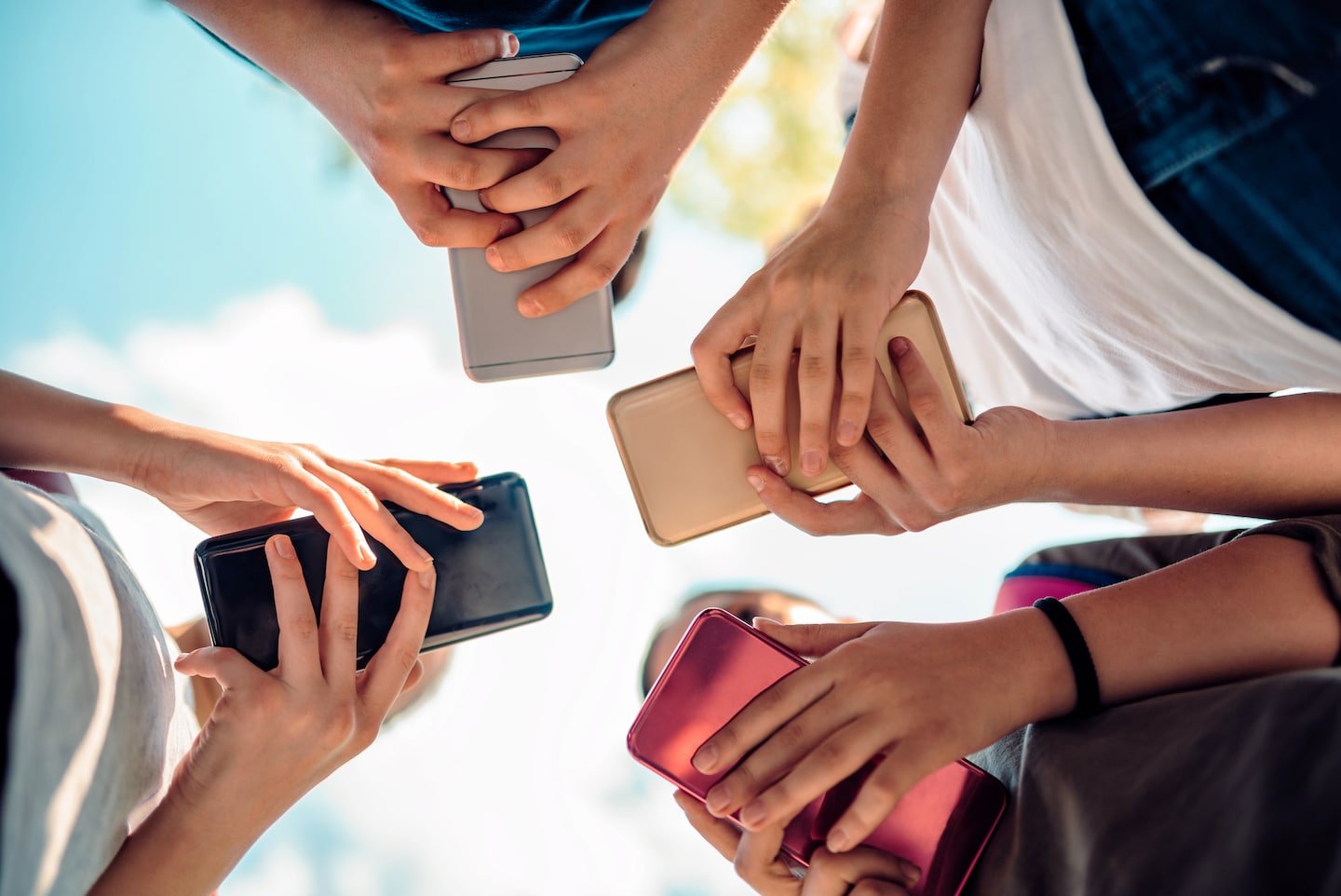
But experts, from leading psychologists to free speech advocates, have repeatedly cast doubt on the idea that time spent on social media apps like TikTok, Instagram, and Snapchat directly leads to poor mental health. They say the debate is nuanced and it’s too early to draw broad sweeping conclusions about kids and social media.
Here’s what we know about kids and teens, social media apps, and mental health.
Why is it so hard to get a clear answer?
There is evidence of a sharp rise in negative mental health symptoms among children and teenagers, beginning around the time of the 2007 global financial crisis and surging at the start of the pandemic, but research on the role of social media has produced conflicting conclusions.
While many studies have found that social media use is correlated with less well-being, many others have found the opposite. Analysis of existing studies suggests that the problem may be that terms like “social media use” and “mental health” are broadly and inconsistently defined. Whatever the reason, it is difficult for researchers to find a causal relationship between social media and mental health (i.e., A causes B) without strict controls for children’s behavior.
Still, health groups continue to issue warnings: In 2011, the American Academy of Pediatrics’ Council on Communications and Media, for example, urged parents to beware of “Facebook depression,” though a 2013 study suggested such warnings were “premature.”
Get caught up in
Stories to keep you up to date
To answer the question, “How does social media affect kids?” researchers need more robust data.
In a New York Times opinion piece on Monday, Murthy also called on social media companies to share data and research on health effects so that they can be verified by independent experts. “The platforms claim they’re making their products safer, but Americans want more than words: we want evidence,” he wrote.
Vulnerable children are more likely to struggle
A 2022 analysis of 226 studies found that social media can increase anxiety and depression, but it can also increase happiness and connection.
So whether social media is a hub of community for LGBTQ+ youth or a rabbit hole of distorted information, the answer could be both. A bigger factor may be teens’ existing vulnerabilities and what they’re actually doing on social media apps, says Mitchell Prinstein, chief science officer at the American Psychological Association.
Some studies have shown that children and teens who already have problems with their mental or emotional health are more likely to feel anxious or depressed when they are away from social media. It’s hard to tell if social media is causing symptoms of depression. One 2018 study found no correlation between time spent on social media and depression, but found that young women with depression tended to spend more time on social media.
It’s not clear why social media affects mental health
Some studies suggest that social media makes some people feel bad, but scientists don’t yet understand why.
One possible culprit is social comparison, where people compare their lives to those of others, said David Yeager, a developmental psychologist at the University of Texas. Or it could be guilt, feeling lazy or unproductive after spending time scrolling. Of course, disappointment and guilt are old emotions, but social media can trigger them, Yeager said.
Social media isn’t the first new technology to raise concerns. Newspaper clipping An 1882 document has the author claiming that the telephone is “such a terrible and malevolent entity that it deserves public denunciation.” In the 1920s, people worried that radio would stop people from interacting with each other in person.
Rather than arguing about whether social media is good or bad, Jaeger said it’s more important to find ways to minimize the harm caused by its negative elements and maximize the benefits of its positive elements.
“Technology has changed, but human nature hasn’t,” he says. “The things that drive us, that drive us, that capture us are still the same.”
Social media companies are designing their products to keep us scrolling
Like every other business, social media companies exist to make a profit, which means creating experiences that keep users scrolling through apps and watching ads.
One of the ways they achieve this is by manipulating our attention and emotions: For example, The Washington Post reported that there was a time when Facebook’s algorithms weighted angry responses more highly than “likes” because anger tends to generate more engagement.
“Instead of scaring kids and parents with half-truths, we should be demanding policies that force companies to end harmful business practices like surveillance ads and sneaky design features,” said Evan Greer, director of the digital rights nonprofit Fight for the Future. Surgeon General Mursi called for similar measures in a Times essay.
Why some people overestimate (or underestimate) risks and fears
While most experts call for a cautious approach when discussing social media’s potential impacts on health, not all do. For example, social scientist Jonathan Haidt recently published a book called The Anxious Generation, which blames social media for the poor mental health of teenagers. In the book, Haidt writes: The book urges parents to stop allowing their kids to use apps until they reach high school, and to ban them from using smartphones altogether until they turn 16. Other researchers, including psychologist Candace Odgers of the University of California, San Francisco, say the book misinterprets existing research and stokes moral panic.
“This book will sell a lot because Jonathan Haidt tells the scary story about child development that so many parents have been led to believe,” Odgers wrote in an essay in Nature. Meanwhile, some of Haidt’s readers were pleased by what they felt was a direct acknowledgement of difficult issues.
Future studies may tackle this controversial issue from new directions: For example, an article published last month in Nature recommended that researchers look at how adolescent behavioral and cognitive changes interact with social media and potentially put mental health at risk.
