

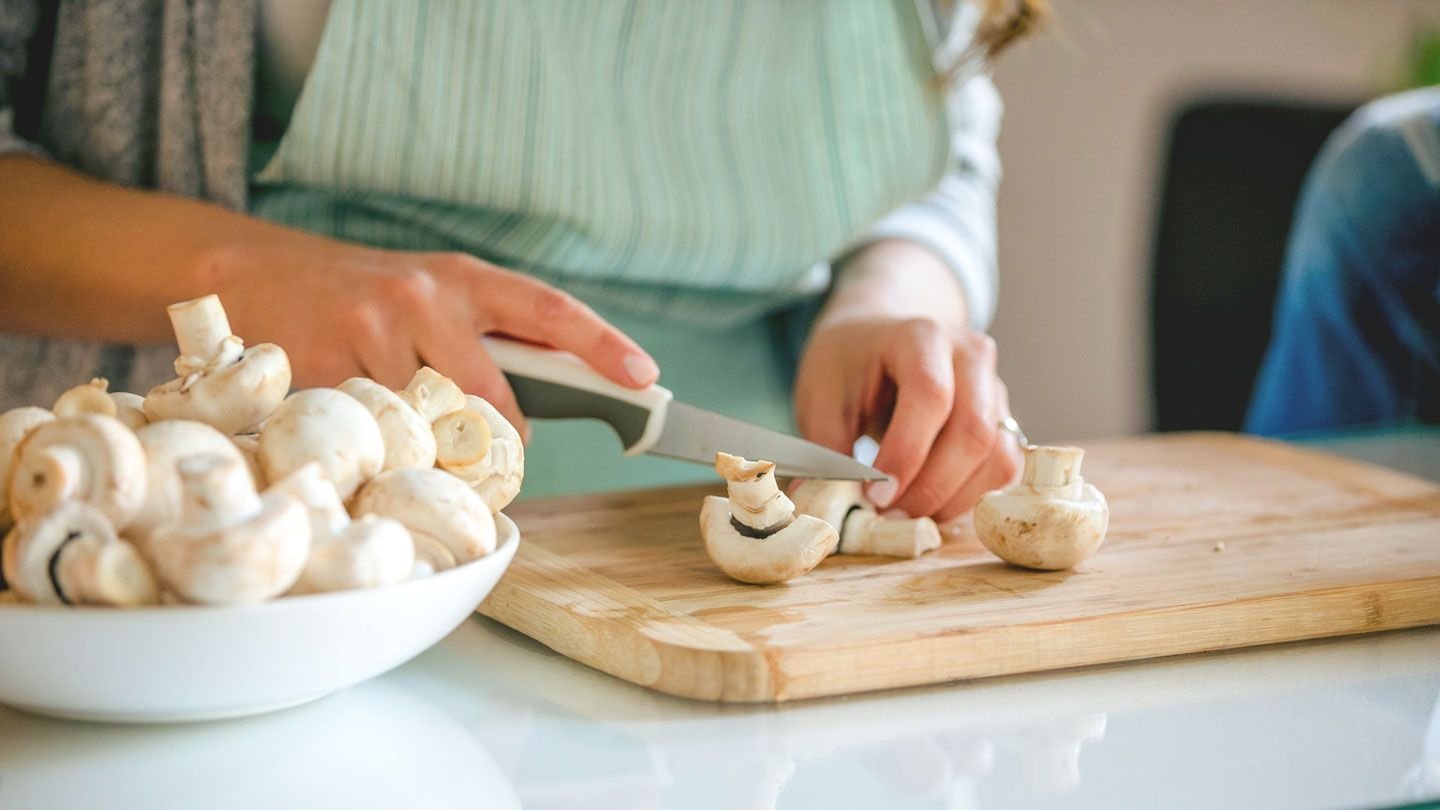
Mushrooms are packed with protein, fiber, and a variety of vitamins and minerals, so it’s no surprise they’re a popular salad and pizza topping. “Mushrooms aren’t just a passing fad these days; they’re a cultural phenomenon, with mushrooms continuing to top almost every superfood and culinary trend list,” says Pam Smith, RD, president and founder of Shaping America’s Plate in Orlando, Florida.
That being said, the way you choose and prepare your mushrooms is important to your health.
To reap the benefits of flavorful mushrooms, here’s what you need to keep in mind:
Which tastes better: raw or cooked mushrooms?
While some mushrooms are safe to eat raw, cooking them can help prevent the gastrointestinal problems caused by many types of mushrooms and kill bacteria that can cause dangerous infections.
“In most cases, cooking mushrooms is preferable,” says Heather Hallen Adams, PhD, chair of toxicology for the Mycological Society of North America and associate professor of food science and technology at the University of Nebraska-Lincoln.
Another reason to cook mushrooms is that they’re good for you and satisfy your taste buds, says Jerry Angelini, education director for Fungi Perfecti, a company that specializes in mushroom cultivation.
- selenium It helps produce antioxidants that prevent cell damage.
- Vitamin B6 Supports the nervous system and helps form red blood cells.
- Riboflavin, Niacin, Pantothenic Acid Aids metabolism.
- potassium Promotes healthy muscles and normal blood pressure.
- zinc Supports the immune system and healthy development of babies and children.
Store-bought vs. foraged mushrooms: are they both safe to eat?
Dr Harren Adams said most shops only sold a limited number of mushrooms that were easy to grow, while foragers sought out harder-to-cultivate varieties that were only found in the wild.
“A big advantage of buying mushrooms from a local grower or store is that you know where the mushrooms are from and what type they are,” Angelini says. “This takes a lot of the guesswork out of foraging for mushrooms.”
To safely forage for mushrooms you can’t find in a store, Angelini recommends taking a local field guide and an experienced forager with you, as wild mushrooms can be poisonous.
“Some mushrooms look very similar, and some are edible while others are poisonous,” Angelini says. “To be clear, poisonous means your body reacts with nausea, vomiting, diarrhea, and even death, so make sure you read your field guide.”
If you’re heading to the grocery store, there are some easy ways to choose the best mushrooms when shopping.
“Look for healthy, good-looking mushrooms with no dents, slime or moldy areas,” says Haren Adams. “Mushrooms, like any fresh produce, are subject to spoilage.”
Which mushrooms can be eaten raw?
Fresh mushrooms available at the grocery store are generally safe to eat raw as long as they show no signs of spoilage, Angelini said. This includes mushroom species of the same mushroom, such as white button, cremini and portobello, which have different growing periods, as well as oyster mushrooms, Angelini said.
“In small amounts, as long as it’s fresh and clean, it’s fine,” Angelini said.
Mushrooms that should not be eaten raw
Don’t eat any mushrooms you forage for raw, says Lindsay Chmieleski, PhD, a naturopath, acupuncturist and registered herbalist who teaches plant and mushroom identification in Hamden, Connecticut.
“Wild mushrooms should always be properly cleaned and cooked,” Chmireski says, “and it’s also good practice to only eat small amounts of wild mushrooms, especially if it’s your first time trying a particular mushroom variety.”
Haren Adams said raw morels are particularly dangerous because they have caused serious poisonings, including deaths, on several continents for decades.
Smith said some mushrooms, like reishi mushrooms, are too tough to eat raw and are usually sold dried or crushed.
Smith added that other mushrooms you may find at your local grocery store, such as chanterelles and porcini, shouldn’t be eaten raw as they can have an adverse effect on the digestive system, and in any case they taste better cooked.
Special precautions regarding pregnancy and raw mushrooms
Mushrooms are packed with nutrients and can be part of a healthy pregnancy diet, but how you prepare them matters, says Chmielski, and store-bought is the best option.
“Raw mushrooms are not recommended due to the potential for discomfort from abdominal bloating,” says Chmireski, “but it is safe to eat cooked mushrooms during pregnancy.”
The one exception is enoki mushrooms, which are often imported from Asia and sold in stores, but Haren Adams says there have been several reported outbreaks of listeria infections and they should be avoided or thoroughly cooked during pregnancy.
“Listeria has a disproportionate effect on fetal development and can cause miscarriage, so any mushrooms you eat should always be thoroughly cooked,” says Harren Adams. “The standard advice for pregnant women is that if they eat mushrooms, they should always be cooked.”
How to cook mushrooms to get the most out of their nutritional value
According to Smith, there are many ways to prepare mushrooms to make them safer, more digestible and more flavorful, without sacrificing their nutritional value.
“Roasting or grilling mushrooms at high temperatures and with very little oil or water will change the texture, develop a flavorful caramelization, and add even more flavor,” says Smith. Grilling or microwaving are also great options, she adds.
Sautéing is an especially great way to bring out flavor, but it works best when you choose healthier fats like olive oil, ghee or coconut oil, Angelini says.
Ultimately, you can’t really go wrong with cooking mushrooms, because it eliminates the potential health issues that can come with eating them raw, Angelini points out.
“You can maximize their health benefits by preparing mushrooms in a variety of ways,” Angelini says. “You can roast them, make soups with them, or even add them to homemade pizzas and flatbreads.”
summary
Most store-bought mushrooms are safe to eat raw, but it is safer to cook them because they eliminate the risk of unpleasant digestive problems. Choose foraged mushrooms carefully, always cook them, and consume them in small amounts. Do not eat raw mushrooms if you are pregnant.
