

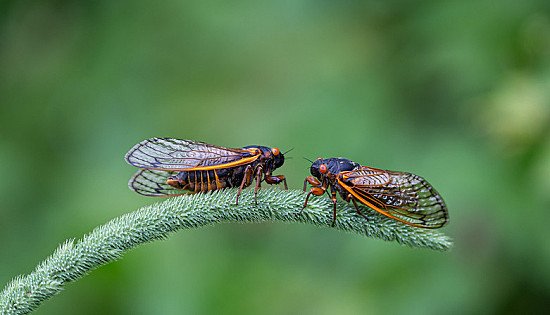
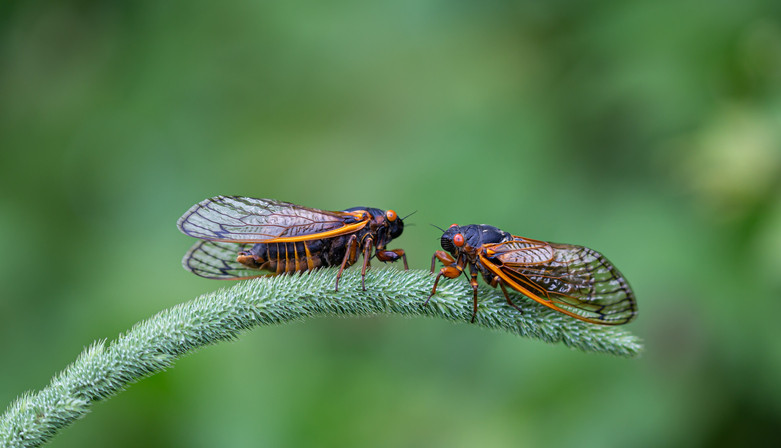
You’ve probably heard on the news that cicadas are coming. No, wait, they’re already here.
And yes, it is true! Due to an unusual overlap in the life cycles of two types of cicadas (or swarms), trillions of cicadas are expected to emerge across the United States, especially the Midwest, by the end of June.
If you want to know where the cicadas have already arrived, track them here. And if you’re wondering whether this swarm of cicadas will help you save on your grocery bill, read on to decide for yourself how appealing and safe eating cicadas is for you. Their pros and cons may change your perspective on the impending swarm.
What you need to know about cicadas
Don’t worry, cicadas are largely harmless to humans, and in fact their appearance is welcomed in many places where they are routinely eaten as a source of cheap calories and protein.
Estimates suggest that up to 2 billion people regularly eat insects, mostly in South and Central America, Asia, Africa, Australia, and New Zealand. When available, cicadas are the most popular. If you think no one eats cicadas in the United States, check out this video of a baseball game in May 2024.
Do you want to eat a cicada?
Cicadas are not a favorite food for many people. Some can’t get over the idea of eating insects as food, and that’s understandable. After all, the culture we grow up in strongly influences what we consider acceptable in our diet. What some Americans find distasteful (like eating snakes) is common in China and Southeast Asia. Meanwhile, people outside the U.S. find some parts of the typical Western diet (like root beer, peanut butter and jelly, and processed cheese) unappealing.
However, eating cicadas can be dangerous, so some people shouldn’t eat them.
Why you should and shouldn’t eat cicadas
Eating cicadas is common in many parts of the world because they
- Nutritious: Cicadas are low in fat, high in protein and rich in essential amino acids.
- Low cost or free
- Delicious (or so we’re told): The flavors vary from nutty to citrusy to smoky to slightly crunchy.
In years when cicadas appear, recipes for dishes using cicadas also appear.
But there are several reasons avoid Here are some ways to incorporate cicadas into your diet:
- There’s just no getting around the “gross” factor. While the adventurous among us may be happy to try or even embrace the idea of eating cicadas, others will likely find it nothing but horrifying.
- I don’t like the taste or consistency.
- You are “cicada intolerant.” Some people experience stomach upset, nausea, and diarrhea when they eat too many cicadas.
- If you’re pregnant, breastfeeding, or have young children. Advisories have been issued to these groups not to eat cicadas due to concerns that they also contain low levels of pesticides and other toxins, which suggests we should avoid them too. At least for now, there’s no evidence that cicada toxins cause health problems.
But there’s one more very important item on this list: people with shellfish allergies shouldn’t eat cicadas. Strange, right?
The connection between shellfish and cicadas
Cicadas are biologically related to lobsters, shrimp, crabs and other shellfish. Therefore, if you are allergic to shellfish, you may also be allergic to cicadas. The cause of the allergy is a specific protein called tropomyosin, which is found not only in shellfish but also in many insects, including cicadas.
An allergic reaction occurs after eating a cicada, not just from being near or touching the cicada.
For people with shellfish allergies, experiencing an allergic reaction after eating cicadas can be a bigger problem than it appears: up to 10% of people have shellfish allergies, and as mentioned above, ingesting insects is common worldwide.
Is it safe for dogs and cats to eat cicadas?
Taking your dog for a walk after the cicadas have emerged may be a new and fun experience for you and your pet. Dogs may chase and eat the cicadas. Cats may do so too if given the opportunity. This can be problematic as some pets develop stomach upset or other digestive issues if they eat too many.
Cicadas are considered harmless to dogs, but the American Kennel Club says it’s best to keep your dog away from them after he’s eaten a few.
What other insects cause allergies?
Although insect-related allergic reactions (e.g., bee stings) and infections (e.g., Lyme disease) are well known, the link between insects and food allergies is a relatively recent discovery.
One recently recognized condition is alpha-gal syndrome, in which people who are bitten by certain ticks develop a meat allergy. The name comes from a sugar called galactose-alpha-1,3-galactose (or alpha-gal), which is found in many types of meat, including beef, lamb, pork, and rabbit. According to the CDC, up to 450,000 people in the United States may have developed the condition since 2010.
There aren’t many rigorous studies on the overlap between insects and food allergies, so there are probably more waiting to be discovered.
Conclusion
As for eating cicadas, I’d pass. Not because there’s any risk — I’ve never had a problem with shellfish, and the health risks from eating cicadas seem to be pretty small for most people. It just doesn’t appeal to me, and I’m not a particularly adventurous eater.
But be kind to people who like to eat cicadas: Insects are a great source of calories and protein, and just because eating insects is uncommon in the United States doesn’t mean it’s wrong.
If you love eating cicadas and you don’t have a shellfish allergy or other reason to avoid them, go for it – this could be a very good summer for you.
