

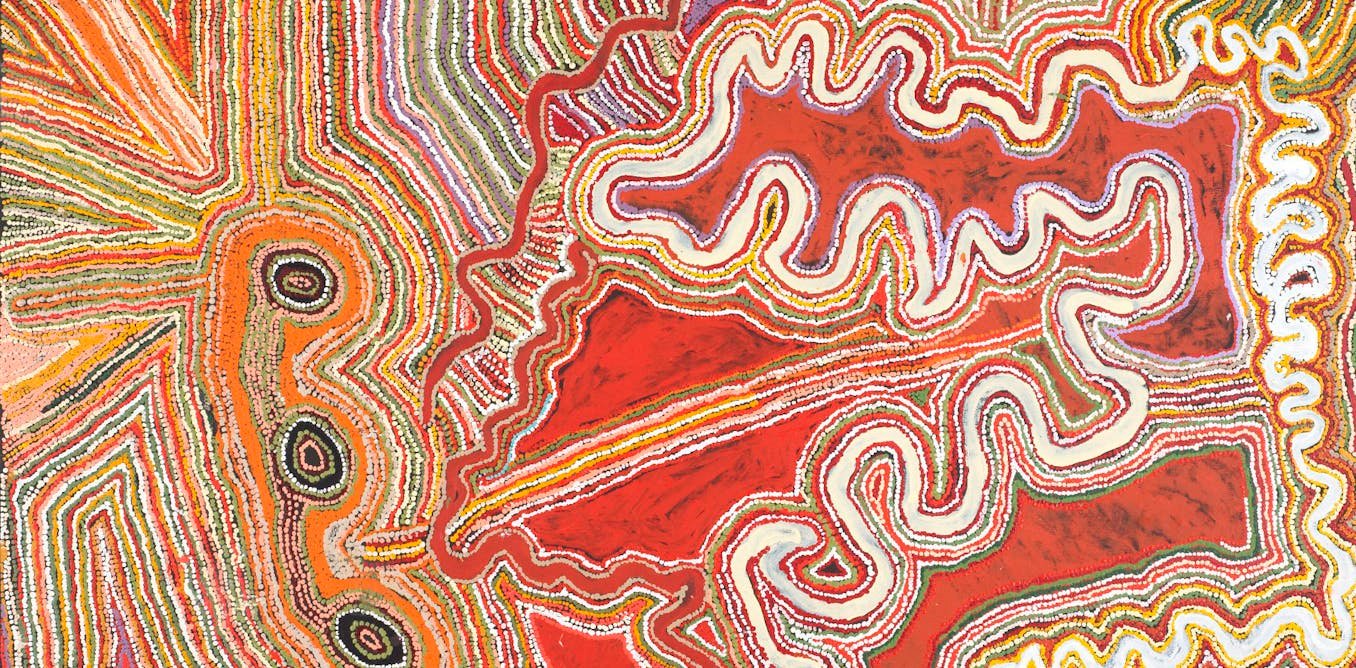
Indigenous peoples have inhabited the Australian continent for more than 65,000 years. During this time they have built and maintained an uninterrupted connection to the land, water and sky.
Understanding the deep interconnectedness of humans with their relatives and ancestors (human and non-human) instilled a sense of responsibility as stewards of the environment, with the goal of survival and promoting a sense of ecological and cosmological balance.
Indigenous Australian spirit understands this balance as essential to living in harmony with all of creation.

Dean Ruins/AAP
With more than two-thirds of young Australians feeling eco-anxious and almost half of Australians believing our country is in “decline”, Indigenous spirituality may hold the answers.
Dreaming Ancestors
Australia’s more than 250 different Indigenous language groups are linked by different strands of spirituality.
In a general sense, spirituality concerns one’s relationship with oneself, others, and God.
In an Indigenous context, spirituality is the foundation of Indigenous existence. Essentially, it is a way of life that shapes our relationship with all of creation, including our plant and animal kin.
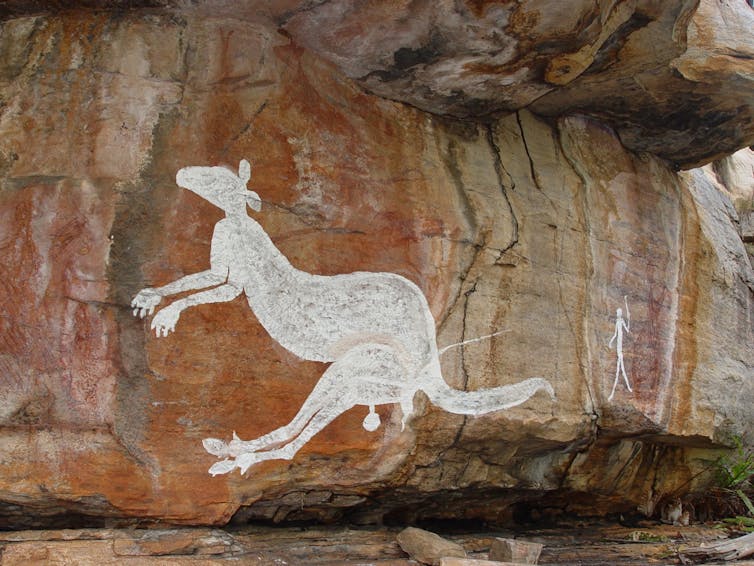
Peter Cook with his family/AAP
The concept of creation itself is shaped by each group’s particular cosmology: a deeply rooted belief in a creative force that has shaped and continues to shape all things, personified as the Dreaming Ancestor.
These beings take many forms and permeate all corners of the universe, and are said to exist in a “time outside of time” or “dream world.”
The existence of these beings, the paths they travelled, the conflicts and interactions they experienced, and in some cases their subsequent deaths, were inscribed on the surface of the Earth.
The areas and landmarks where they lived in Dreamland are now depicted as sacred or culturally significant places, and the memory of their presence is honored through rituals and ceremonies that perpetuate the laws and customs of each community.
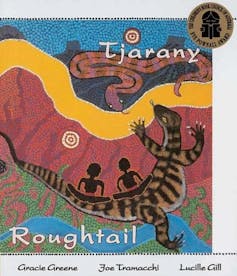
Cultural practices such as stories, songs and dances have been used as memory aids to transmit knowledge for thousands of generations and to maintain the laws and customs passed down from each of their dreaming ancestors.
Kombumeri and Mnunjali legal scholar Christine Black suggests that these cosmologies define Indigenous principles, ideals, values and philosophies that promote inclusive laws of relationship and inform us of the importance of Indigenous practices to promote balance and harmony, while respecting diversity and interconnectedness across species.
Intersecting and connecting across the continent, songlines support individual groups to trade materials and intellectual property, and spread spiritual practices and processes centered on social and ecological health.
Maintaining balance and harmony
Despite the significant differences between Aboriginal and Torres Strait Islander groups, the primary purpose of their spirituality is to develop, maintain and perpetuate cosmic order through balance and harmony.
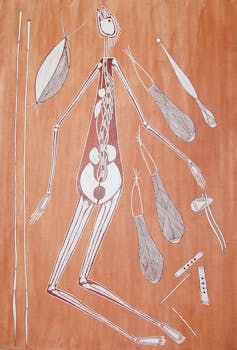
Charles Darwin University/AAP
Balance is a dynamic and changing process that plays a key role in how the universe works. This is true in many of the fundamental laws of physics, the human body and at the quantum level. This concept is also reflected in Australian Aboriginal languages.
Waraimai historian Victoria Greaves-Williams explains that the Yarrarin people of the north-central Northern Territory say that when a person feels fully alive, they are “punyu” – which means good, happy, strong, healthy, wise, responsible, beautiful and clean.
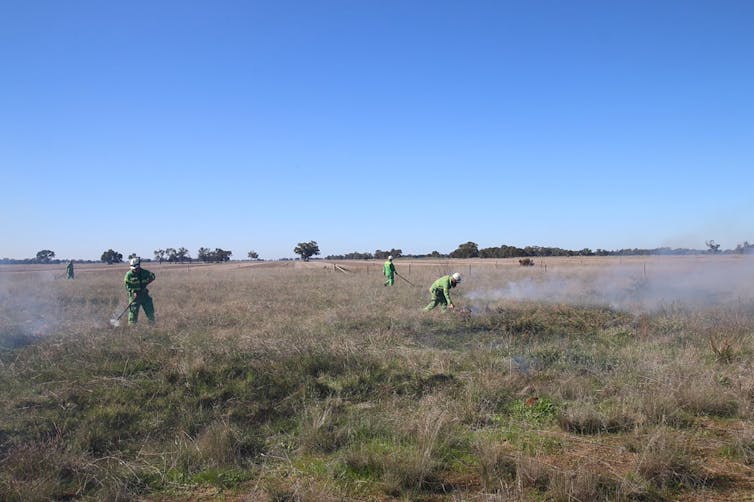
Similarly, punyu can also refer to a time when people burn tall grass in the appropriate season. Yaralin people explain that such cultural burning ensures that their country is “cared for and happy” and “clean and good.”
Australian anthropologist Deborah Bird Rose has argued that when the universe is puny, there is homeostasis, meaning that the universe is always working towards perfect balance and harmony, and humans can be seen as its key facilitators (stewards).
Greaves-Williams extends this concept of homeostasis to also capture balance with the human body, suggesting that punyu is the term closest to caring for the holistic functioning of living systems (both individual and planetary), health, and well-being.
Australian Airlines
Australia’s ability to connect with Indigenous spirituality through Indigenous cosmology may be a door to finding a deeper meaning for ourselves and the universe, and the vital role of humans as guardian species and facilitators of a greater cosmic order.
Rekindling connections
Indigenous spirituality promotes a strong sense of interconnectedness and connection between all things, especially between humans and the Earth.
Indigenous elders say we are a reflection of the land. When the land is sick, we are sick. When the land is healthy (punyu), we are healthy. Wik First Nations scholar Tyson Yunkaporta says our collective well-being can only be maintained through communication with the sentient land and all that resides on it.
As we, the global human race, navigate the complex challenges of our time, immersion in indigenous spirituality may help us live in harmony with all things, and above all with ourselves and each other.
We can explore the depths of these teachings and learn to appreciate (rather than appropriate) them by reconnecting with the land in meaningful ways, with the guidance of Indigenous Elders and Traditional Custodians.
This article is part of a series on religion and spirituality. You can read the other articles in the series here.
